John Lobb Barros : Things I have cherished for a long time.
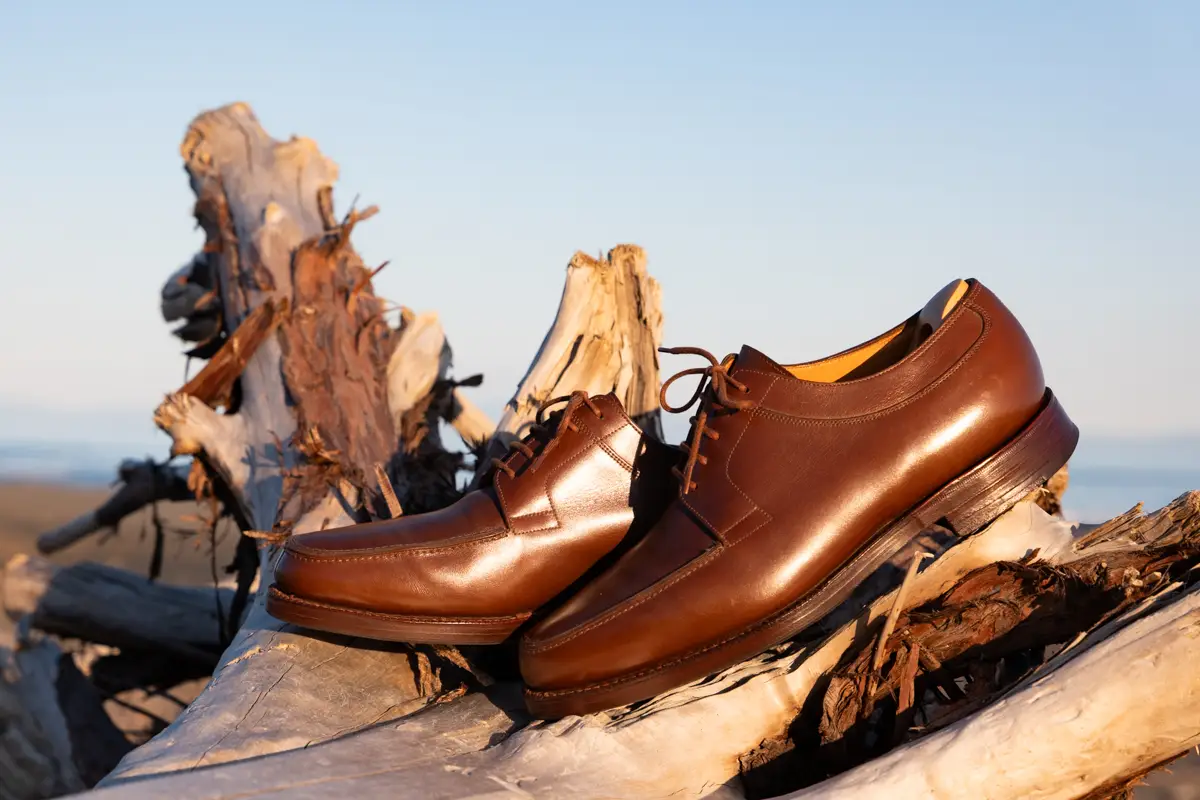
I present my John Lobb Barros, a pair I have cherished for over a quarter of a century, more than 25 years. This was my first pair of John Lobb shoes, and I hold them in very fond regard.
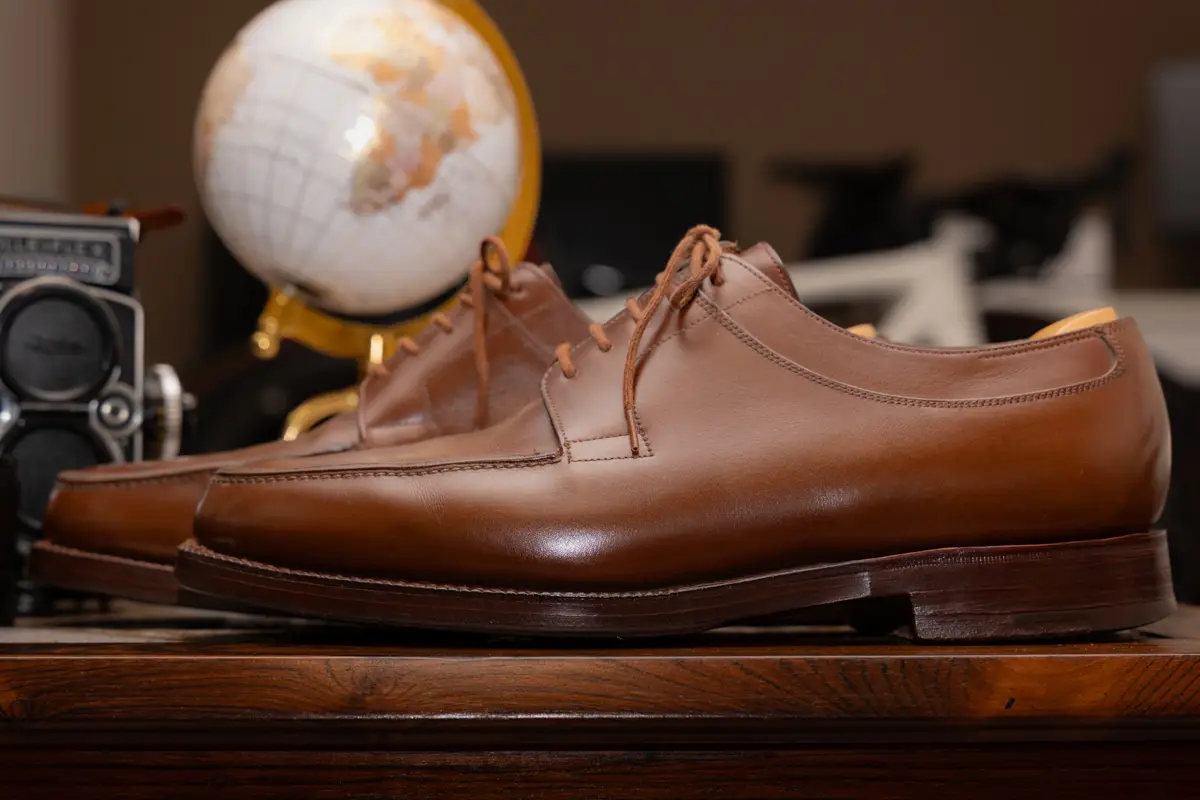
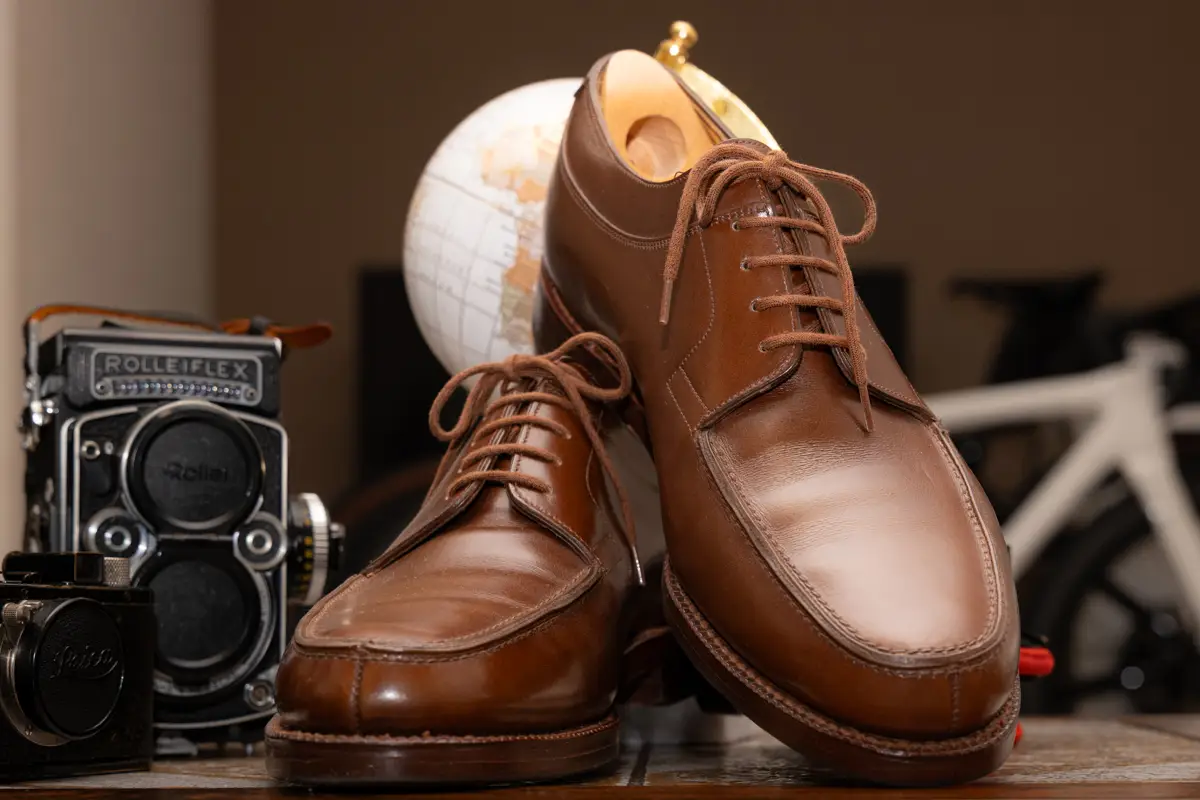
Their form differs from the refined, clean lines of modern John Lobb designs, featuring the slightly rounded U-tip of a traditional British Derby shoe. I originally purchased them to pair with a navy blazer and grey flannel trousers.
I bought them during the era when there was a flagship store in Minato Mirai, Yokohama, and John Lobb sales were operated by Candy Co., Ltd. Candy was a company that sold very interesting things; whilst operating John Lobb, they also sold shirts from the British brand Hilditch & Key. Later, they became famous for selling Belgian chocolate, Pierre Marcolini.
Back then, there were only two John Lobb flagship stores in the Kanto region: the Minato Mirai store and the Aoyama flagship store along Route 246 in Gaien. The Minato Mirai store where I bought my Barros closed down, leaving only the Aoyama flagship store operating as the sole flagship outlet for a while.
Subsequently, I purchased the Darby and Chambord models consecutively at the Aoyama flagship store. The manager there was a fascinating character. Despite the store’s reputation for selling the world’s finest gentlemen’s shoes and its high-end brand atmosphere, he had the personality of an old-school shoemaker’s father figure. He himself seemed like a leather enthusiast, genuinely loving John Lobb shoes and running the shop for that reason.
I always enjoyed chatting with that manager and would invariably pop into the shop whenever I visited Aoyama. Back then, Gaien had the flagship store of my favourite shop, and strolling around the Gaien area – Cassina > Berluti > John Lobb > then on to Omotesando – was a real pleasure.
My purchase of Berluti shoes came some time after acquiring John Lobb, but the manager at the Aoyama flagship store was a woman with an exceptional knowledge of men’s fashion. As my style at the time differed somewhat from the typical Berluti clientele (I favoured Carpe Diem), she often struck up conversations with me, and I rather enjoyed these fashion discussions.
Through that manager’s kindness, I was invited to events like new collection launch parties. I recall Kazuhiko Kato, a great admirer of Berluti, attending one such occasion. Though he was of a certain age, he was youthful, tall, and had an impeccable figure. I remember how incredibly stylish he looked, wearing Berluti shoes with such flair.
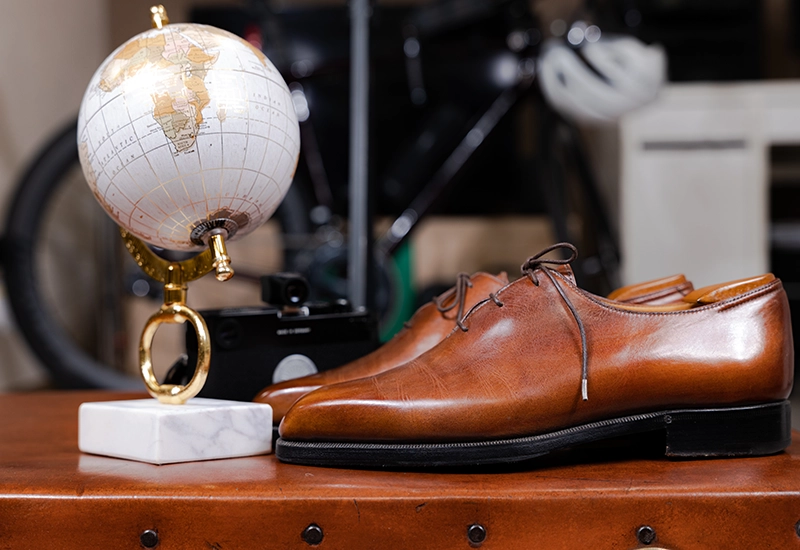
I have passed on my Berluti shoes to a junior colleague, but as it is such an excellent shop, I am writing an article about it.
Incidentally, in my mind, Candy, Cassina, and Sazaby League are three companies that introduced the world’s finest products to Japan faster than anyone else.
Candy handled John Lobb shoes and Hilditch & Key shirts. Cassina’s Mario Bellini Maralunga sofa and Frank Lloyd Wright coffee table, alongside Cassina’s own original bed, dressing table, and dining set – I actually purchased these pieces for my home and still cherish them today.
Though I passed on the Hilditch & Key shirts to a junior colleague fond of British fashion, the John Lobb shoes and Cassina furniture remain true masterpieces I’ve cherished for over a quarter-century.
The Maralunga has had its leather reupholstered once, yet remains in daily use in the living room. Its robustness is such that it shows no sign of wear or wobble; it truly is a sofa for life. I use an L-shaped arrangement comprising a single-seater sofa, an ottoman, and a wide two-seater sofa.
It is on this single-seater sofa and ottoman, relaxing, that I write this blog on my MacBook Pro. (I also purchased and love the Dyson crane-like lighting fixture I use when working on my Mac, which I bought through Cassina’s introduction).
I still have the Agnès b. striped shirt I bought when I was young (I did eventually get rid of it), as well as Ron Harman denim, T-shirts, and Frank and Irene shirts. When it comes to Sazaby League, it has become so commonplace, probably due to its operation of Starbucks Coffee, that it would be difficult to find someone who has never used it.
Introduction.
I purchased my John Lobb shoes 25 years ago and at one point rotated between three pairs. However, when I stopped wearing suits daily, opportunities to wear them diminished. Recently, due to a change in my mindset, I’ve gradually begun wearing them again.
At the time of purchase, I didn’t fully grasp the shop assistant’s claim that they were shoes for life. Yet, 25 years on, I truly understand what they meant by “a pair for life”.
This brand embodies a philosophy of what truly constitutes a fine product – encompassing not only robust construction but also timeless, enduring design.
The meticulous craftsmanship and decades of accumulated expertise mean that, with wear, the shoes gradually mould to the wearer, becoming an extension of the body. One can personally experience the legendary notion that once John Lobb shoes have been broken in, they become utterly indispensable.
At first glance, the design appears simply well-made, lacking ostentatious flair. Yet when worn, their intrinsic quality emerges naturally – true masterpieces backed by history.
The three pairs of Derby shoes I cherish are now discontinued, making new purchases impossible. It’s also regrettable that, with the changing times, John Lobb has discontinued the double-soled Derby itself.
In the past, I would only wear John Lobb shoes with a suit or blazer style. However, as I’ve grown older and become less constrained by such particulars, I’ve started wearing them again.
As I shall detail in another article, I recently purchased a pair of John Lobb Lawry boots for the first time in 25 years. The customer service at the Marunouchi store where I bought them was precisely the kind of personal, old-school shoemaker’s workshop experience I remember.
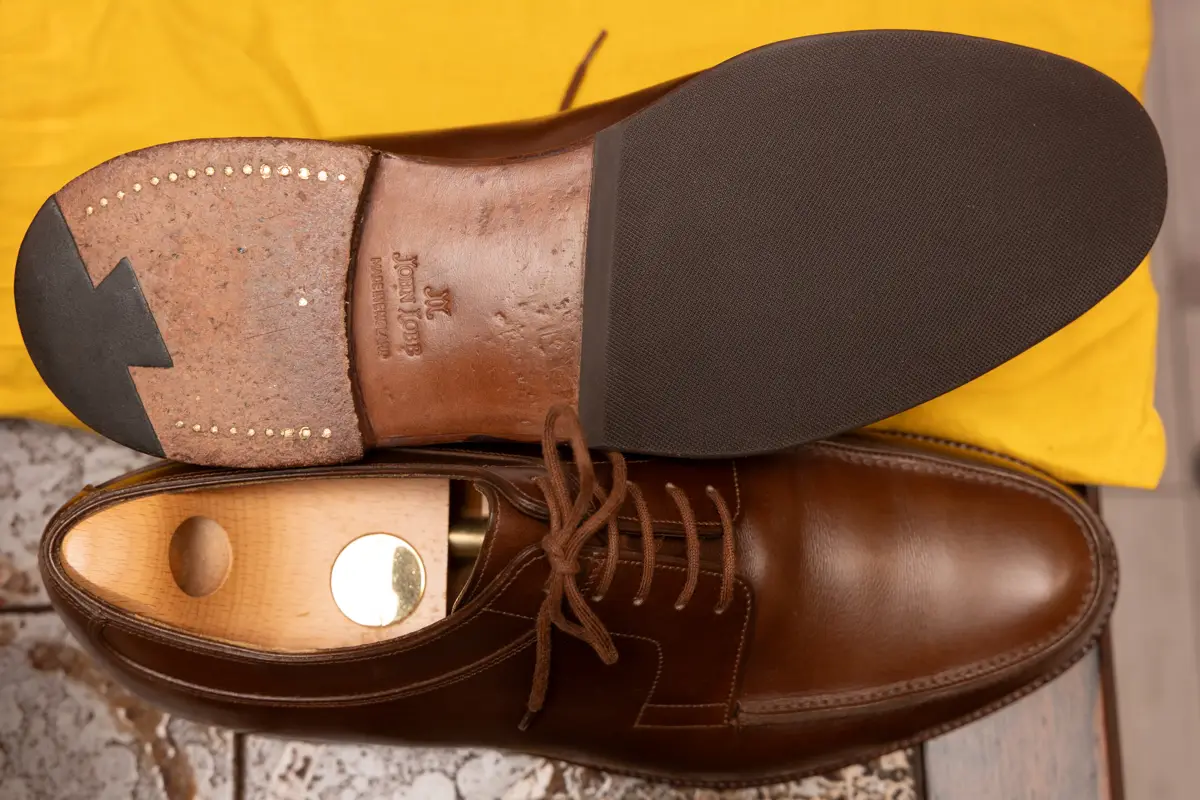
The service and attention were truly excellent. I also had the shoes I bought 25 years ago serviced, and they even fitted rubber soles to the leather ones – something I would never have considered back then.
In my youth, I held rather fundamentalist views and would never have considered rubber soles. However, leather soles have a significant drawback: they become extremely slippery on surfaces like marble floors, causing me to nearly fall on numerous occasions. Addressing such shortcomings is part of the shoemaker ethos that continues to be upheld by John Lobb today.
Two John Lobb
There are two John Lobb entities frequently mentioned in discussions: John Lobb London and the Hermès-owned John Lobb Paris. However, the vast majority of John Lobb shoes encountered in Japan are produced by the Hermès-owned John Lobb Paris. My own John Lobb shoes are also Parisian products.
To put it simply, John Lobb London is a traditional bespoke (full custom) shoemaker, whilst John Lobb Paris operates more like a luxury shoe manufacturer, selling ready-made shoes and offering bespoke services akin to London upon request.
Purchasing John Lobb London shoes requires travelling to London to place an order, making it rather inaccessible for the general public. In the past, they would visit Japan annually in June, holding an ordering event at the Hotel Okura.
Some twenty years ago, I considered placing an order at this Hotel Okura event, but as opportunities to wear suits diminished, I ultimately did not proceed.
The dream associated with John Lobb London’s bespoke service lies in the preservation of one’s own last, much like the storied lasts of its renowned patrons (including the British Royal Family and Churchill). Such a dreamlike experience is exceedingly rare.
From what I recall, the minimum order at the Hotel Okura event was two pairs. You could choose from several Derby and Oxford styles, select the leather, and specify the shape of the toe, heel, and sole. I believe the price was around £4,000 per pair.
Derby and Oxford
When I first purchased John Lobb shoes, British footwear conjured images of wing-tip derbies, with full brogue detailing and eyelet work epitomising the British style.
The double soles were quintessentially British in construction, robust and sturdy – the sort of no-nonsense, rugged footwear suited to walking on country soil, embodying the country gentleman aesthetic. Such shoes were precisely to my taste. (This preference remains unchanged to this day.)
Regarding John Lobb’s Oxfords, iconic straight-tip styles like the City and Philip come to mind. For a time, John Lobb was practically synonymous with the Philip 2 due to its extensive media exposure, so even if you didn’t know the name, you’ve likely seen them.
My perception of Oxford shoes was that they were slightly more formal than Derbies, intended for ceremonial or formal occasions. If Derbies were the shoes worn in the English countryside, then Oxfords were the shoes worn in cities like London – that might make it easier to understand.
I used to frequently browse the John Lobb London website back then. The image that stuck in my mind was one of bespoke excellence, catering to many historical figures, representing the pinnacle of gentlemen’s footwear.
Viewing the actual photographs of the shoes they produced, however, revealed surprisingly simple, almost primitive designs – in a way, rather clumsy in their styling. Yet, it is precisely that clumsy Derby form that embodies the image of British shoes I adore.
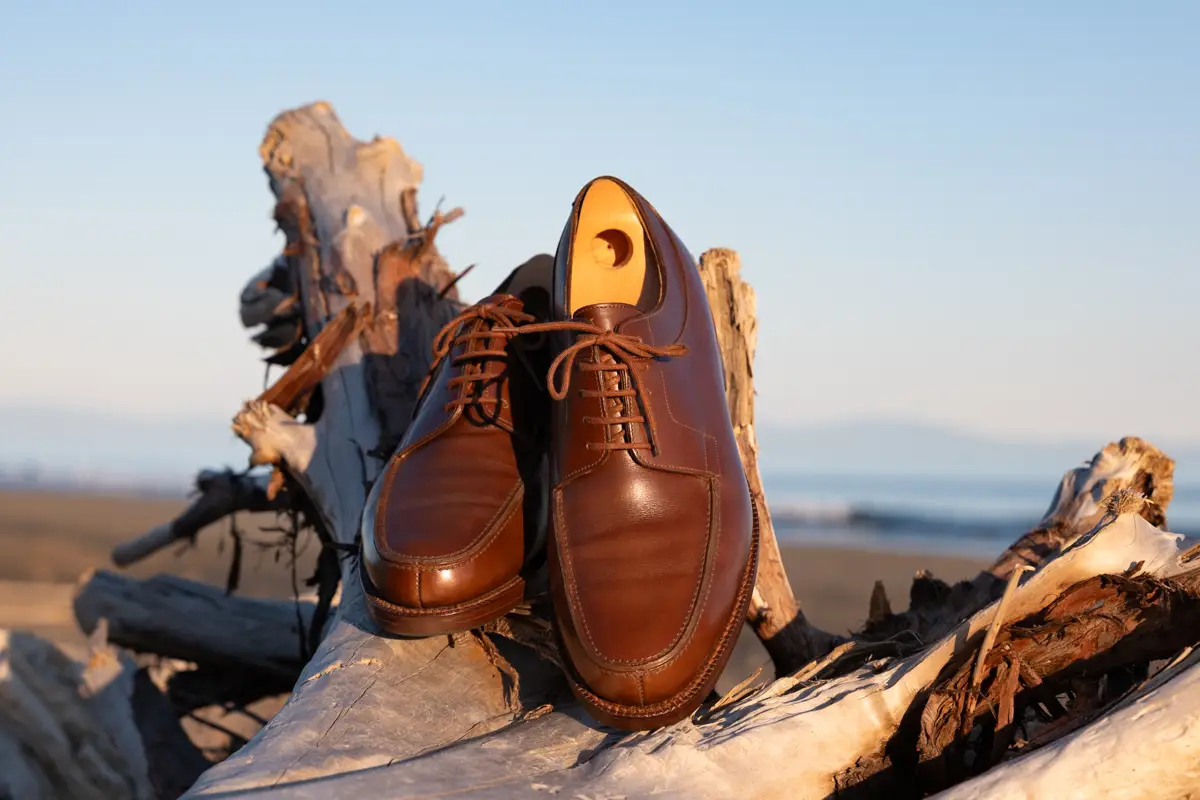
The Barros I’m introducing this time isn’t a full brogue wing tip Derby, but it is a U-tip wing tip Derby sharing that same robust, no-nonsense image common to full brogues. The double sole is precisely why I chose Barros.
From my youth, I have favoured a slightly more relaxed style over sharply tailored suits, preferring blazers and such. Naturally, my taste in footwear leans towards derbies over Oxfords.
The practicality and robust simplicity of John Lobb’s derbies at the time, embodying the British country gentleman aesthetic, aligned perfectly with my own preferences. This motivated me to purchase three pairs of double-soled derbies within a short period.
This time I’m introducing the Barros, but I hope to feature the Darby and Chambord double-soled derbies in a separate article. For introducing these two pairs, I’m considering taking photographs wearing suits I hardly ever wear anymore.
Barros
My Barros was purchased in 2000, so the last used at that time was 2998. Whilst I do like shoes, I’m not a specs maniac, so this is based on general knowledge: 2998 is a last exclusive to Barros, manufactured at the John Lobb factory.
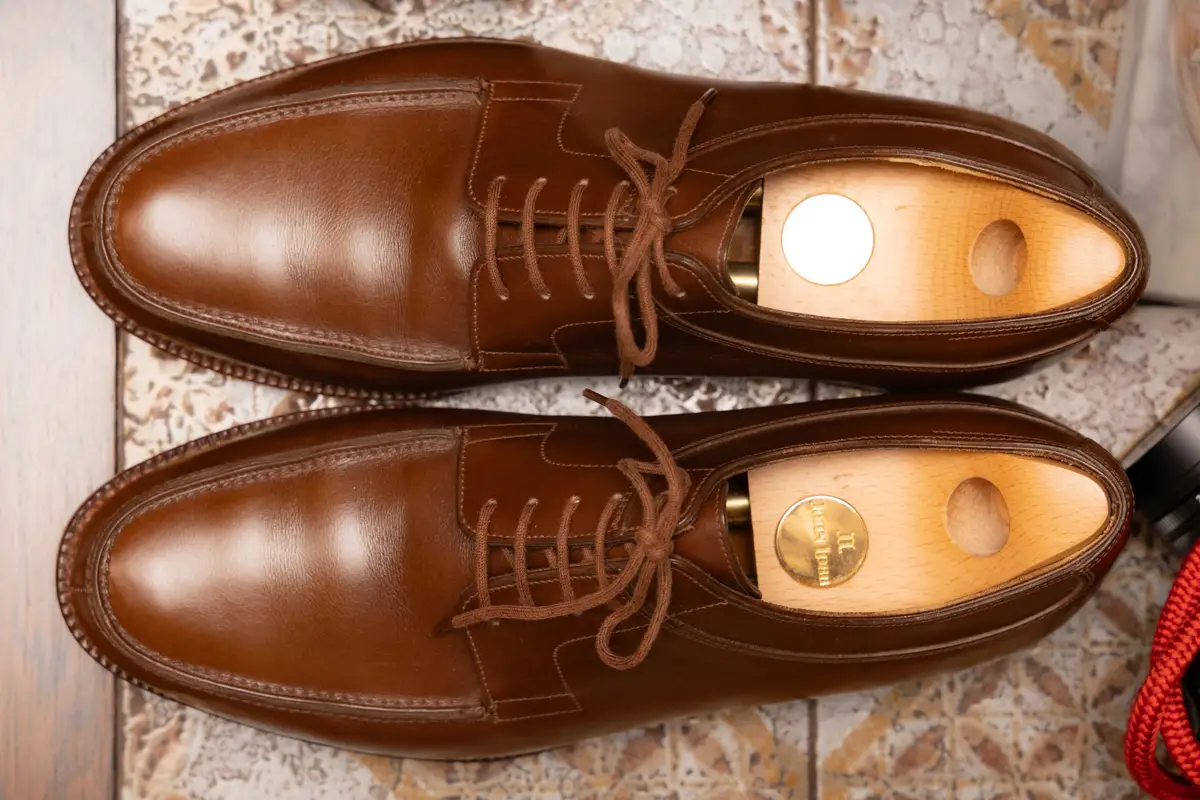
It’s a double-soled, five-eyelet, wing-tip Derby, resulting in a slightly more casual U-tip. A famous shoe with this form is the JM Weston Golf. The Golf has a rubber sole and appears slightly thicker from the side, whereas the Barros has a more streamlined form with reduced thickness.
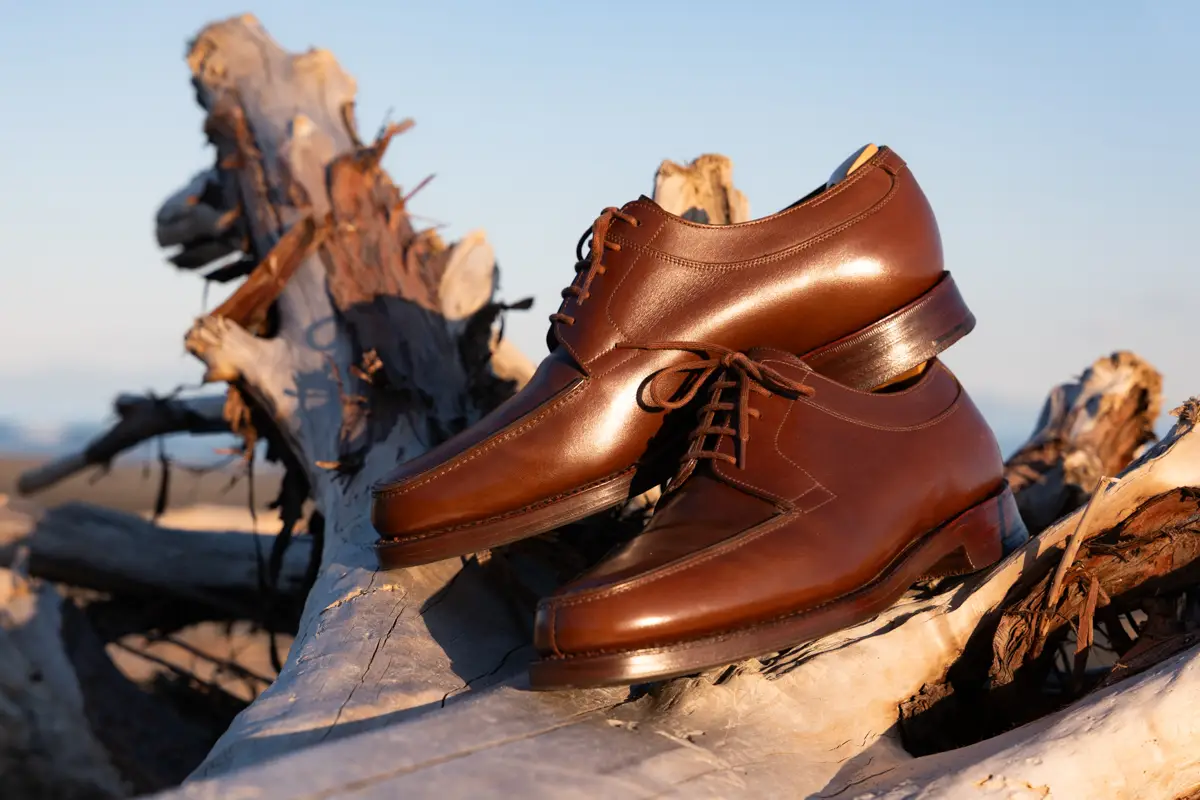
Not just the Barros, but a characteristic of John Lobb shoes is the pronounced curvature from the sole to the upper along the sides. This construction is what defines the highly praised comfort of John Lobb shoes.
Examining it closely, the meticulous stitching, the beautiful curves of the toe and heel achieved through fine craftsmanship, and the lustre from the high-quality leather all stand out. However, viewed as a single pair of shoes, it is a moderate U-tip Derby, a shoe where robust, no-nonsense elements outweigh any flashy features.
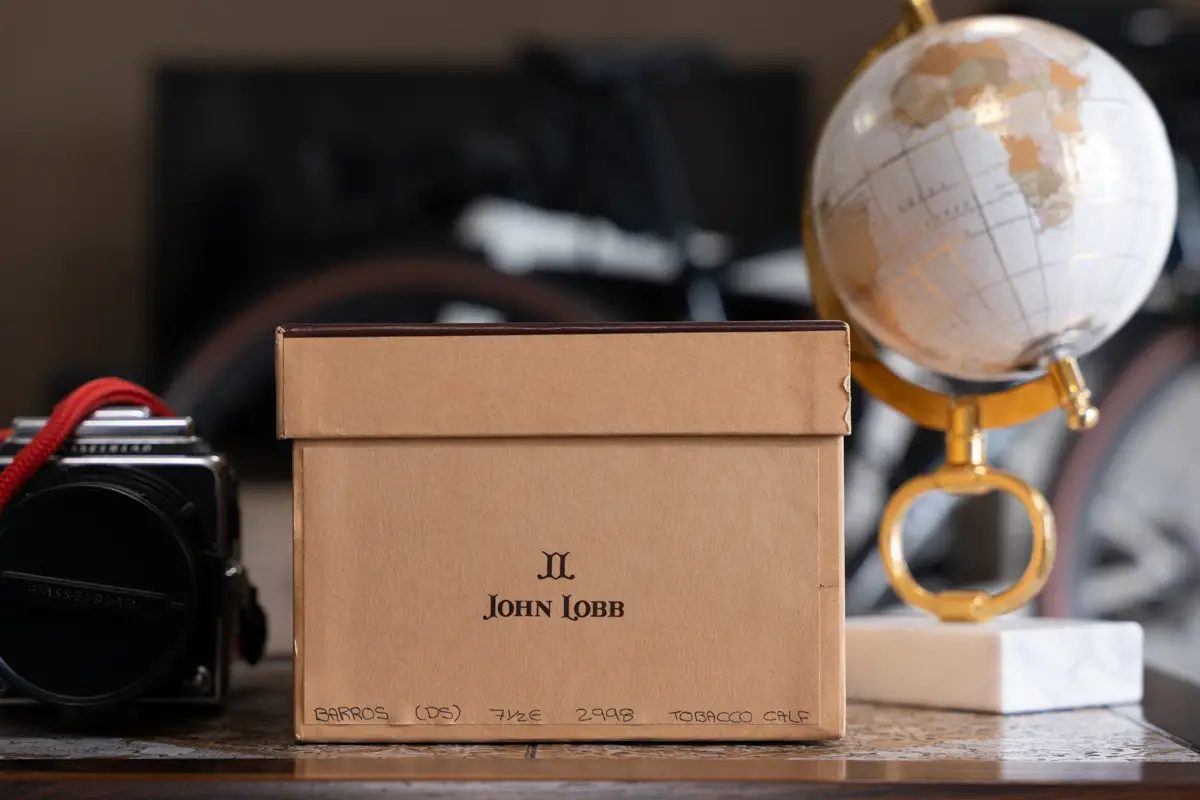
Wearing example.
This time, I’ve paired Barros with chinos and slim-fit cotton trousers. As beige-toned trousers complement them better, I haven’t paired them with denim.
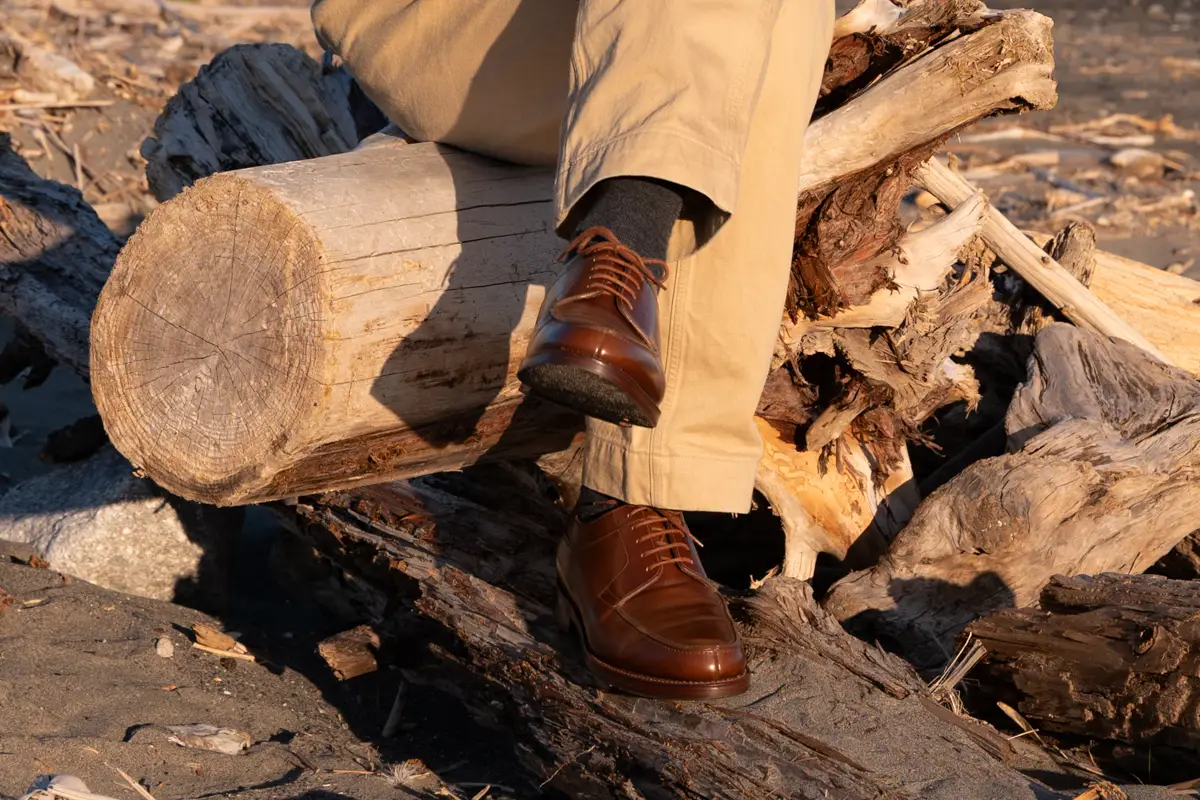
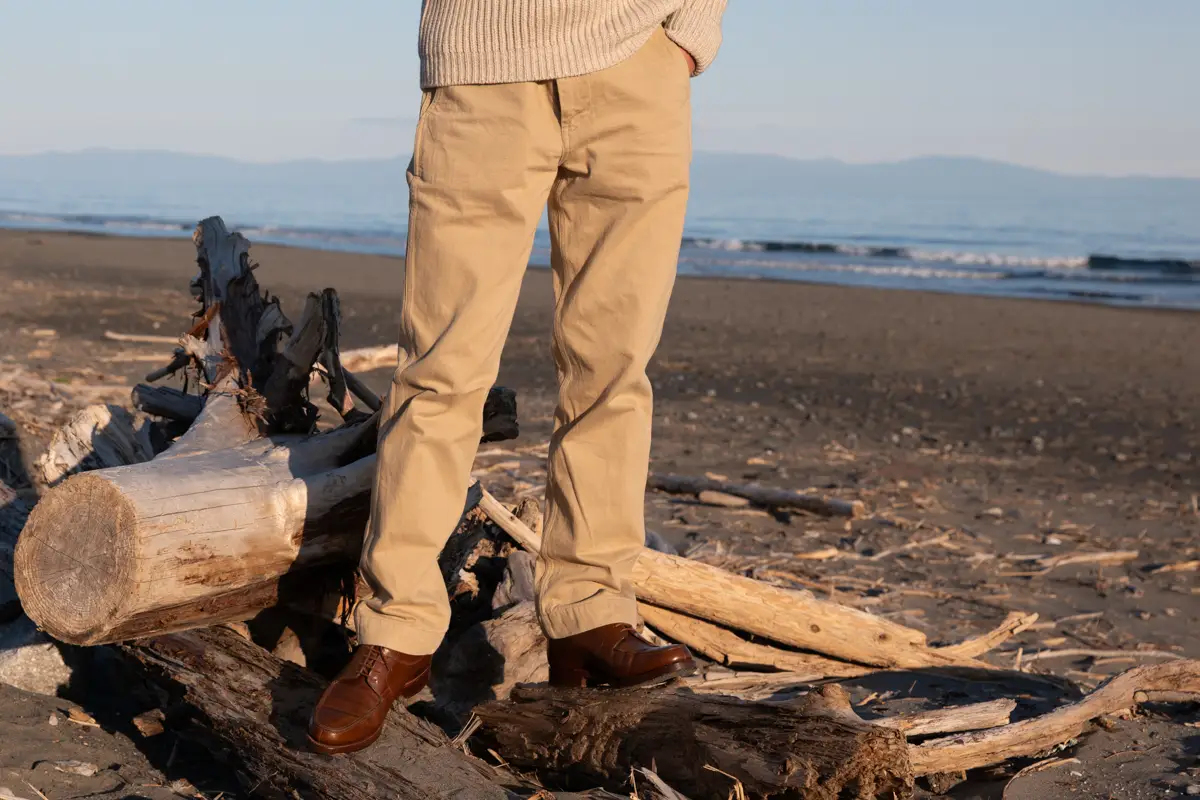
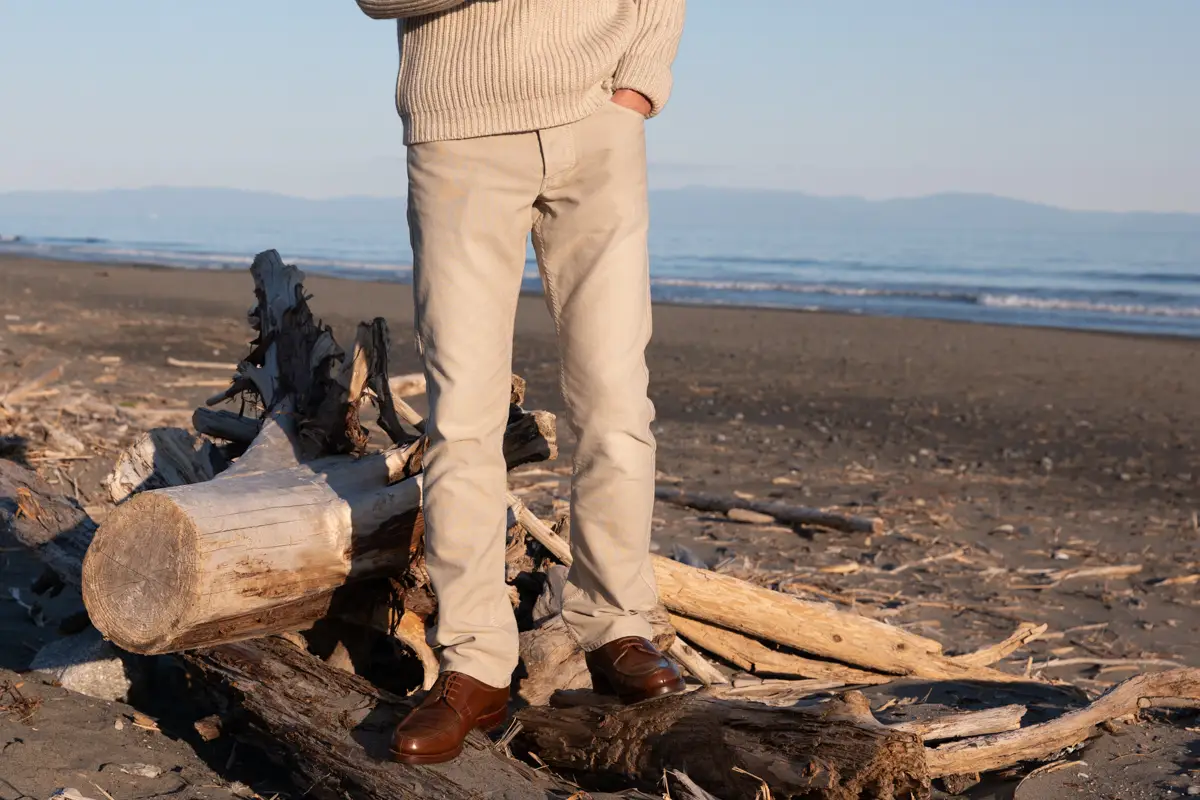
Barros
- Last 2998
- Colour: Tobacco
- Leather: Carf
- Sole: Double sole
- Size: 7 1/2 E width
Combination
Five-Pocket Trousers: Visvim
Shoes: John Lobb Barros
Chino Trousers: Boncoura
Knitwear: Boncoura
In conclusion
This winter, I began wearing my John Lobb Barros shoes again after a long interval and decided to write about them. Purchased back in 2000, these shoes are a quarter-century old. Yet, their condition remains impeccable, and their design shows no sign of datedness even now.
This enduring quality is precisely what one expects from John Lobb – a brand with a long history, stubbornly committed to crafting truly exceptional products.
Having stopped wearing suits regularly, my John Lobb shoes had been stored away in the wardrobe. Yet, when I took them out of their box after so long, they showed absolutely no signs of deterioration.
While I’ve never disliked caring for leather goods and had applied John Lobb’s genuine moisturising cream thoroughly before storing them, I believe the fundamental reason for their lack of deterioration even after prolonged disuse is the sheer quality of the leather and the superb craftsmanship.
This year, I gifted Berluti shoes to a junior colleague and a friend for their celebrations. I myself was considering purchasing leather shoes again after a long interval and had shortlisted John Lobb boots, a style I hadn’t previously owned.
Given my current style, soft suede boots suit me better than formal full-grain leather ones. I purchased the classic John Lobb Lawry boots in dark brown suede.
The service at the Marunouchi store where I bought the Lawry was superb; they even had a detailed record of the three pairs of derbies I purchased a quarter-century ago. Following that, I requested maintenance and had rubber soles fitted, considering modern practicality.
During my conversation with the Marunouchi staff, we also got quite animated discussing the former manager of the Aoyama flagship store.
As mentioned in the article, while John Lobb carries an image befitting a luxury brand, its dedication to the actual shoes and its customer service stance remain quintessentially traditional shoemaker. Naturally, they maintain a system for servicing purchased shoes to ensure they can be cherished for a lifetime.
Furthermore, considering the price of the shoes, the very reasonable cost of their maintenance services can also be seen as embodying John Lobb’s fundamental ethos.
In the past, I only wore my John Lobb shoes with slightly more formal styles like suits or blazers. However, my approach to fashion has shifted somewhat, and I now find myself wearing them more often with slightly more casual styles.
Having worn these shoes for many years, they fit my feet perfectly and are supremely comfortable. With their timeless, ageless design, they truly are the finest shoes one can wear for a lifetime. I look forward to enjoying them for many years to come.
Shop
The John Lobb shop that handled this matter is the Marunouchi branch.
The Barros purchase featured in this article was made at the Minato Mirai branch, which we previously operated but which has since closed.
I shall cover this in a separate article, but I purchased the Rawry Chelsea boots at the Marunouchi branch and requested maintenance for previously purchased shoes at that time.
The Barros shoes were returned to me quite promptly after maintenance, hence this article. I should add that the maintenance cost was also very reasonable.
As mentioned in the Berluti article, Berluti meticulously maintains records of purchases made 20 years ago. Similarly, John Lobb, despite handling purchases made 25 years ago, naturally keeps thorough records and manages customer information diligently.
Both Berluti and John Lobb are long-established houses dealing in footwear, an item used over an extremely long cycle. Naturally, they manage customer relationships over these extended periods with great care.
It sounds simple when put into words, but how many current luxury brands actually manage customer relationships to this standard? One might think it’s quite few.
While I’ve written about Berluti’s superb customer service, John Lobb’s customer care is equally outstanding. However, a key difference is that Berluti, having also entered the apparel market, possesses a more pronounced sense of true luxury. Their staff embody a heightened awareness of providing first-class service, consistently delivering an authentic, high-end experience.
John Lobb, too, is regarded as producing the world’s finest luxury footwear, often dubbed the “King of Shoes”. While its image might seem closer to Berluti’s, actually entering the shop, viewing the shoes, and trying them on reveals that interactions with staff feel less like luxury service and more like engaging with skilled shoemakers.
There is an absolute confidence and trust in their own products. Beyond that, they spare no effort in enhancing customer satisfaction by meticulously tailoring the experience to each customer’s preferences, ensuring the perfect fit for their feet, and addressing what is necessary for long-term enjoyment.
This feels like the most important aspect – a sincerity towards the customer – embodying that old-school shoemaker’s philosophy. Perhaps the reason John Lobb is so highly regarded is best understood as prioritising service tailored to customers who genuinely love and cherish their shoes.
I hadn’t worn John Lobb shoes for a while, but the three pairs I previously owned have all been maintained, with rubber soles fitted to the leather soles. I intend to wear them properly from now on, caring for them as I cherish them.
Regarding the shop, I plan to summarise my experience in an article about the Lawry I purchased.