Blog

  • John Lobb Lawry

    John Lobb Lawry

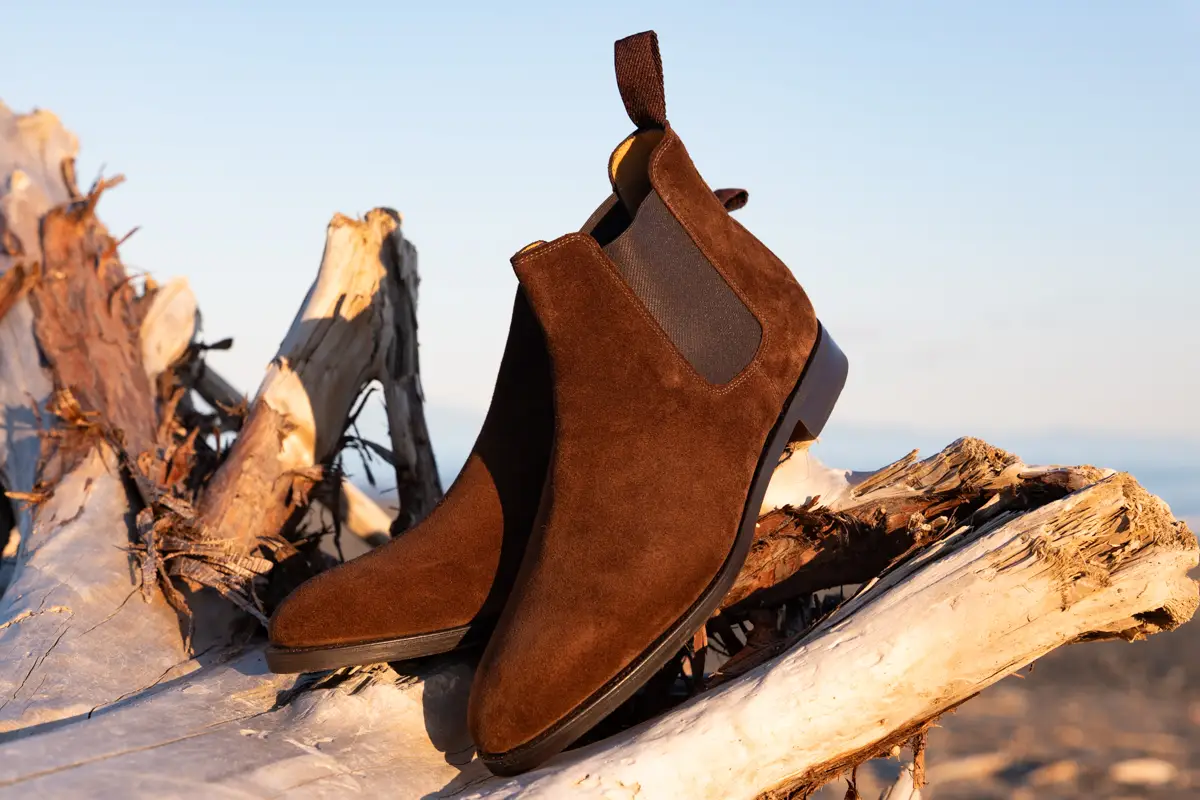
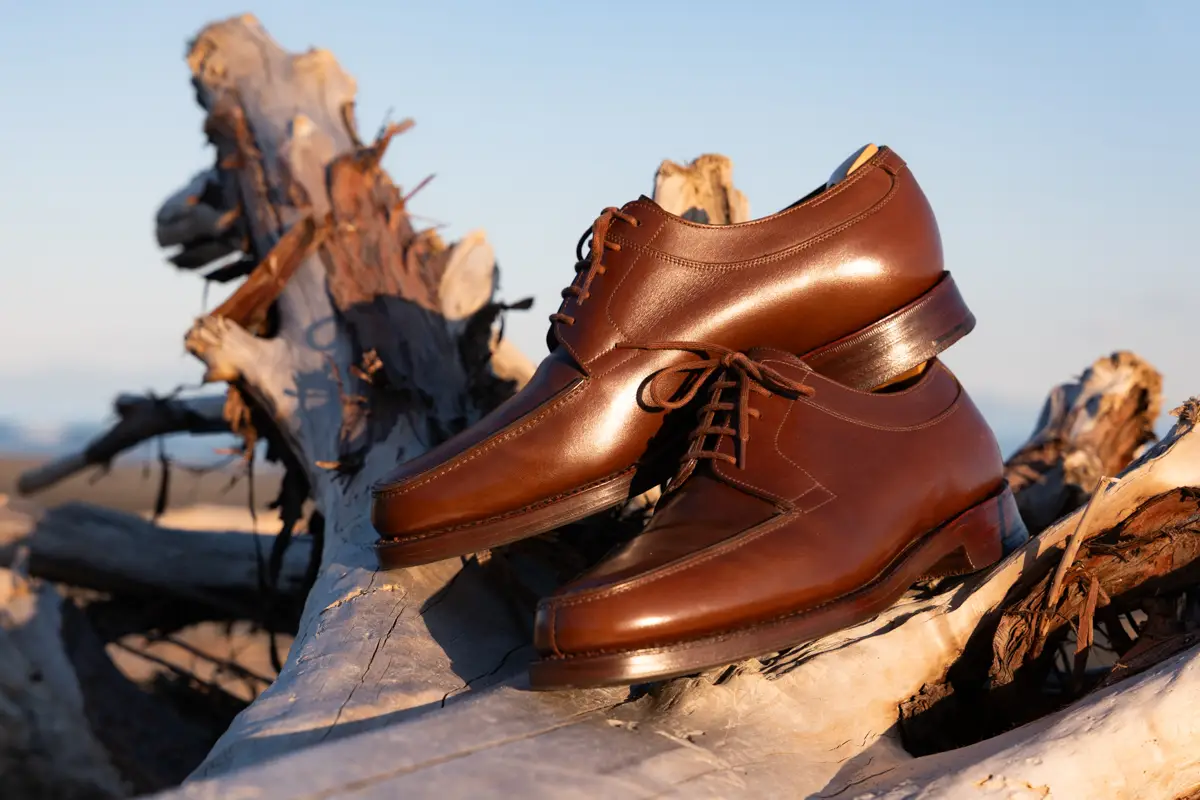
    As mentioned in my previous article on Barros, I recently purchased a pair of John Lobb shoes for the first time in 25 years. The shoes I bought are the Lawry, a boot that epitomises John Lobb. The Lawry is a Chelsea boot featuring side gore panels. Whilst the classic choice is black calf leather, I opted for dark brown suede.

    I chose the dark brown suede for its compatibility with denim and the beige-toned trousers I’ve been favouring lately.

    This marked my first purchase at a John Lobb flagship store in 25 years. While the quality of the product is, of course, excellent, the feeling of acquiring a pair of shoes truly tailored to me by a skilled craftsman practising his art within the John Lobb store – a sensation I experienced 25 years ago – remains unchanged even after this long interval. It evokes nostalgia and, simultaneously, leaves me impressed by their enduring philosophy.

    This time, I present the Lawry, John Lobb’s signature boot.

    [ John Lobb Barros’ article ]

    Barros’ article also mentions the Marunouchi branch purchased on this occasion.

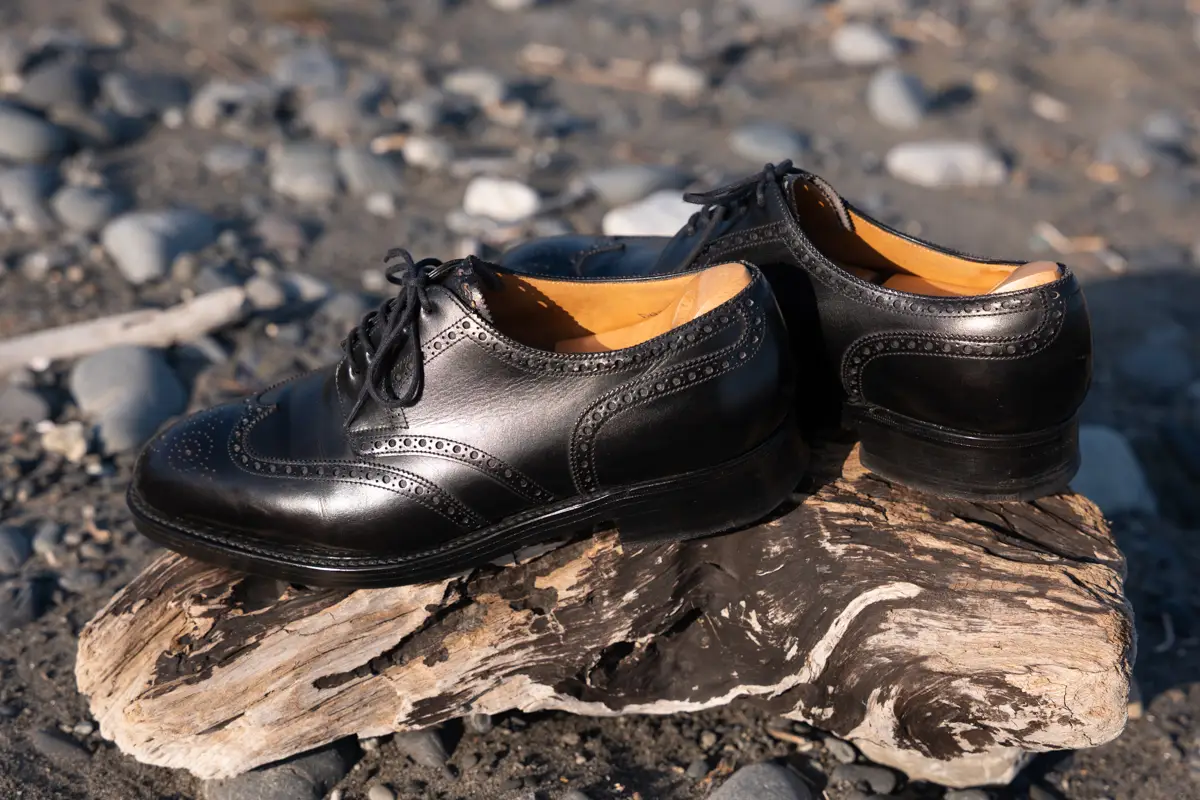
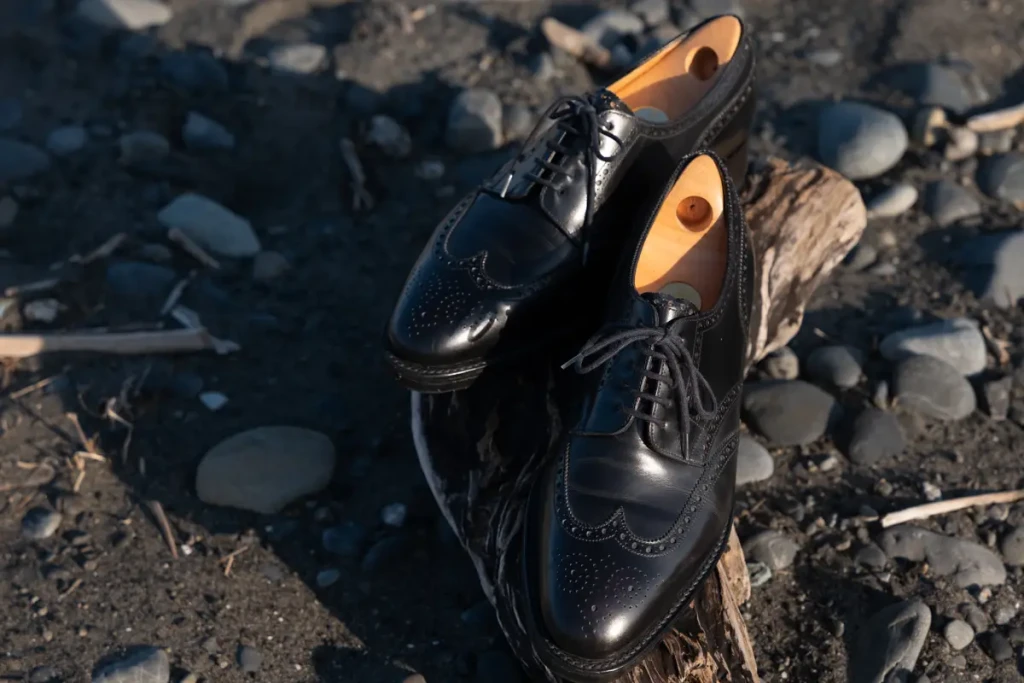
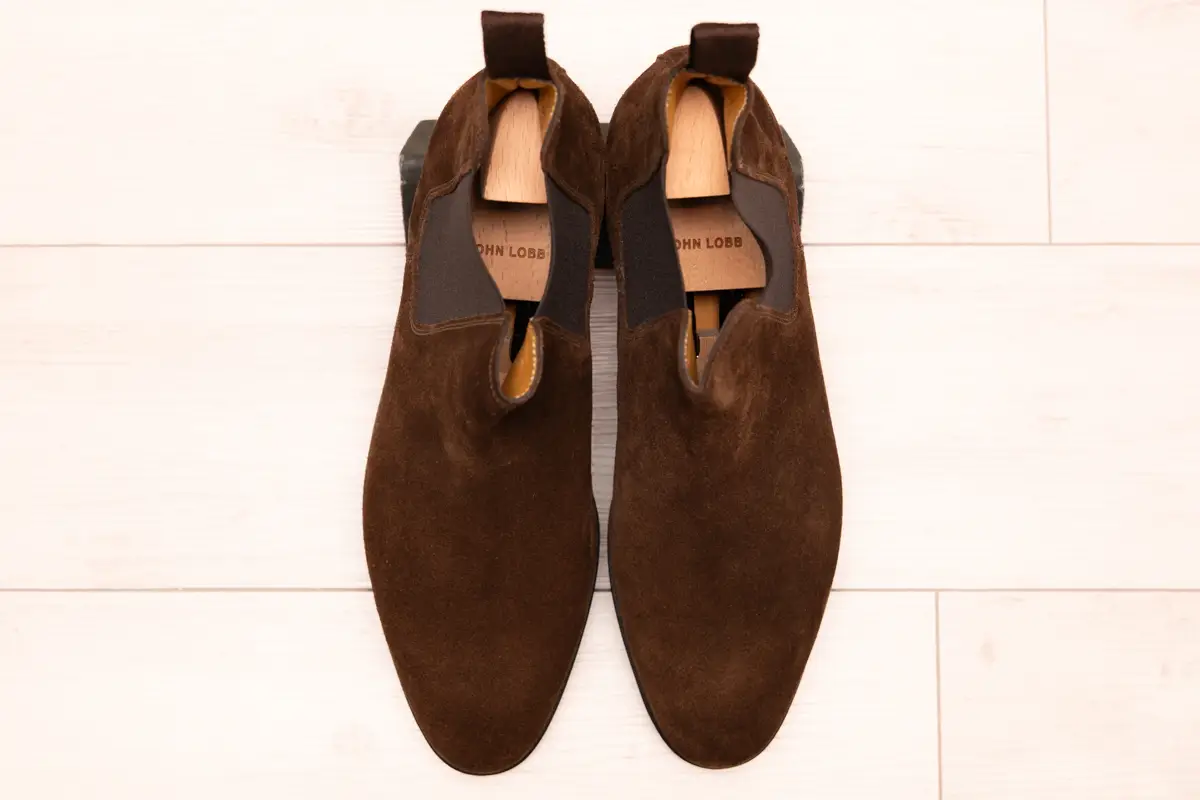
    John Lobb Lawry
    John Lobb Lawry

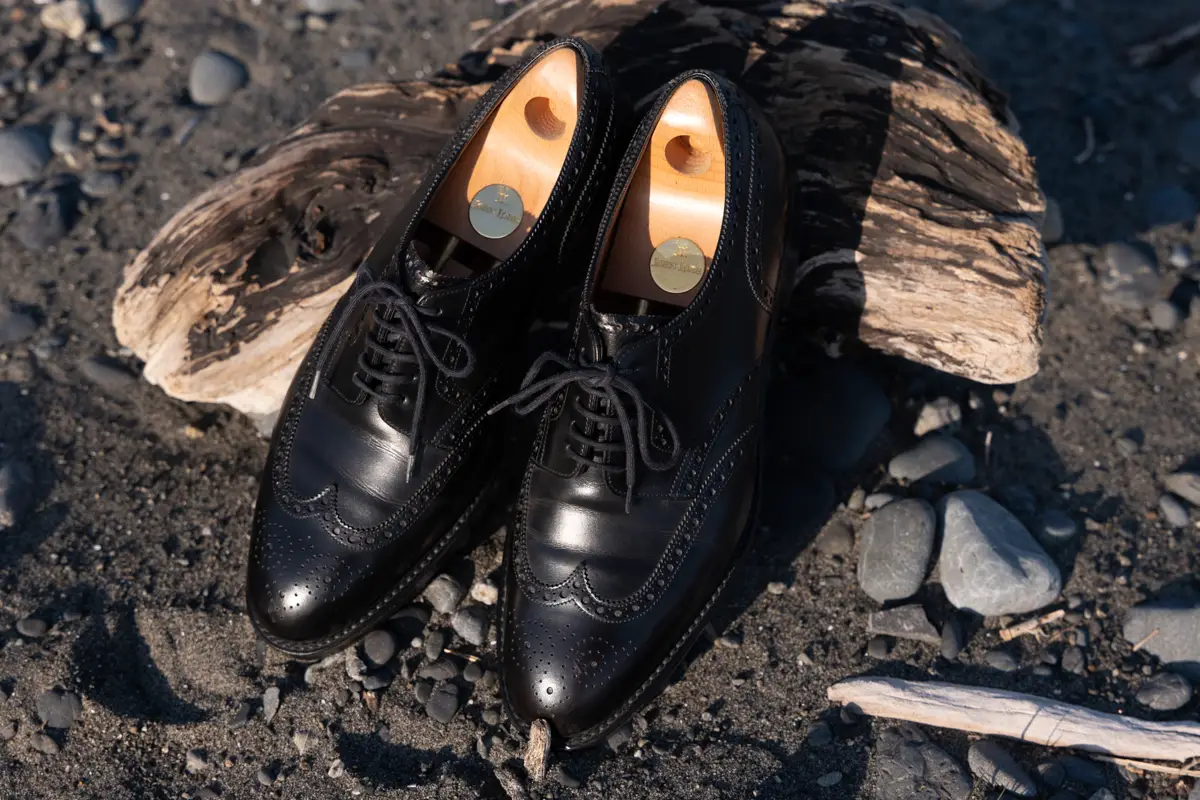
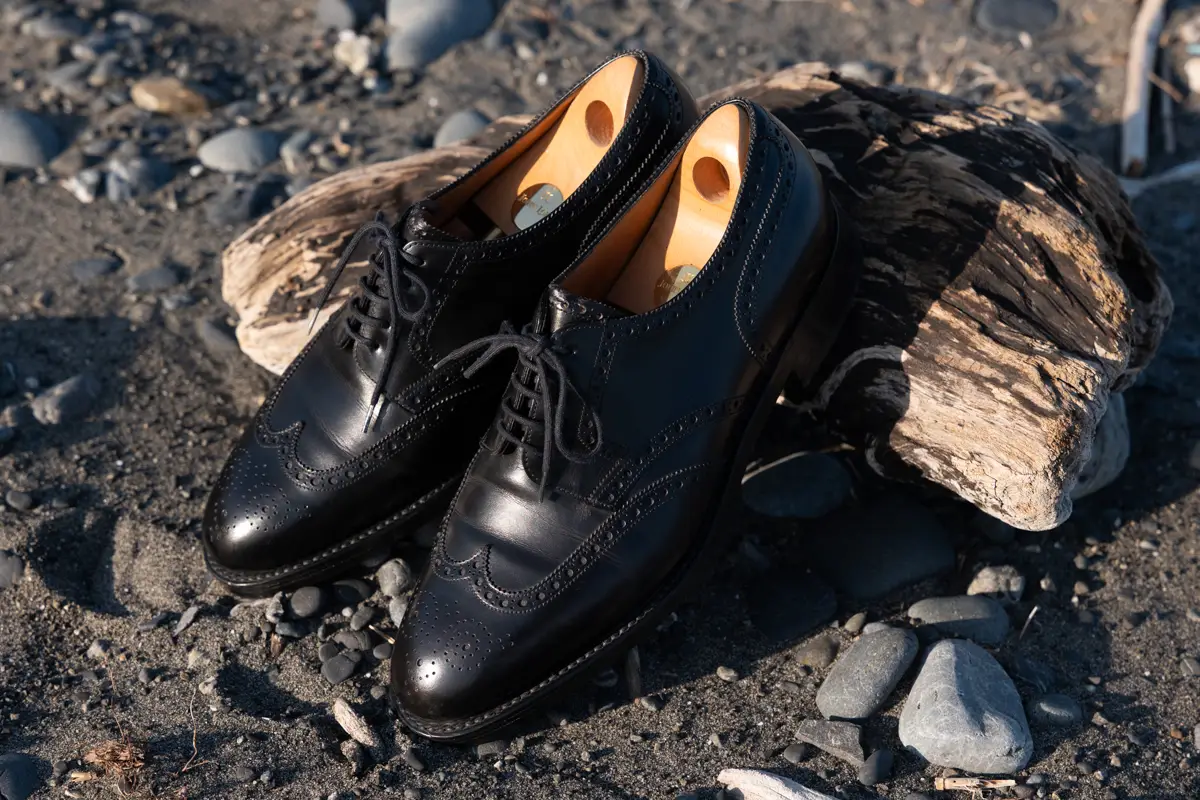
    Unlike the Barros introduced previously, the more modern, long-nosed 7000 last creates a refined silhouette that appears sharp from the instep to the toe.

    John Lobb Lawry
    The texture of John Lobb Lawry suede

    The suede is soft, so it’s difficult to appreciate in photographs, but these boots boast a beautifully refined form.

    Introduction.

    Although I owned several pairs of boots, they were all work-style boots with rounded toes. I didn’t own any Chelsea boots or side-zip boots, which follow the lineage of leather shoes. The reason was that, despite being boots, they had a formal shape suitable for suits and the like, so I didn’t feel they were necessary for my casual style.

    My approach to fashion has shifted somewhat, leading me to choose the John Lobb Chelsea boot, the Lawry, which I’m introducing here. Crafted on John Lobb’s now-standard 7000 last, these boots feature a cleaner, more refined silhouette from instep to toe compared to my older John Lobb shoes. 

    With casual wear in mind, I opted for dark brown suede rather than the classic black calf leather.

    While the suede lends a casual feel, the construction and form are quintessentially John Lobb, resulting in a refined silhouette that pairs well with suits. Compared to the Barros U-tip introduced in my previous article, the curve from the instep to the toe is slightly sharper and more refined. This creates an elegant silhouette that avoids excessive casualness, despite the suede.

    Black calf leather is also extremely refined, but personally, I find it can appear a little stiff when paired with denim or chinos, hence my choice of dark brown suede. (The boot silhouette does look more polished in glossy black calf leather.)

    Lawry

    Lawry had considered purchasing a pair ten years ago, specifically wanting black suede, but it wasn’t part of the standard range. It would have required ordering via their “By Request” made-to-order service.

    John Lobb’s “By Request” service incurs a surcharge of around 30%. They do run a “By Request Fair” in early spring where orders can be placed without this surcharge, but I was never able to make it work logistically and ended up not buying.

    Recently, I gifted a pair of Berluti shoes to a friend and junior colleague as a congratulatory present, which made me consider buying myself some leather shoes. I thought about the John Lobb Lawry I’d wanted before, and even considered the standard calf leather version. Wanting to see the shoes in person, I visited the John Lobb Marunouchi store.

    Upon arriving at the Marunouchi store, I asked to see the calf leather Lawry. As I visited late on a weekday, a private room used for bespoke fittings at the back was available, and I was shown in.

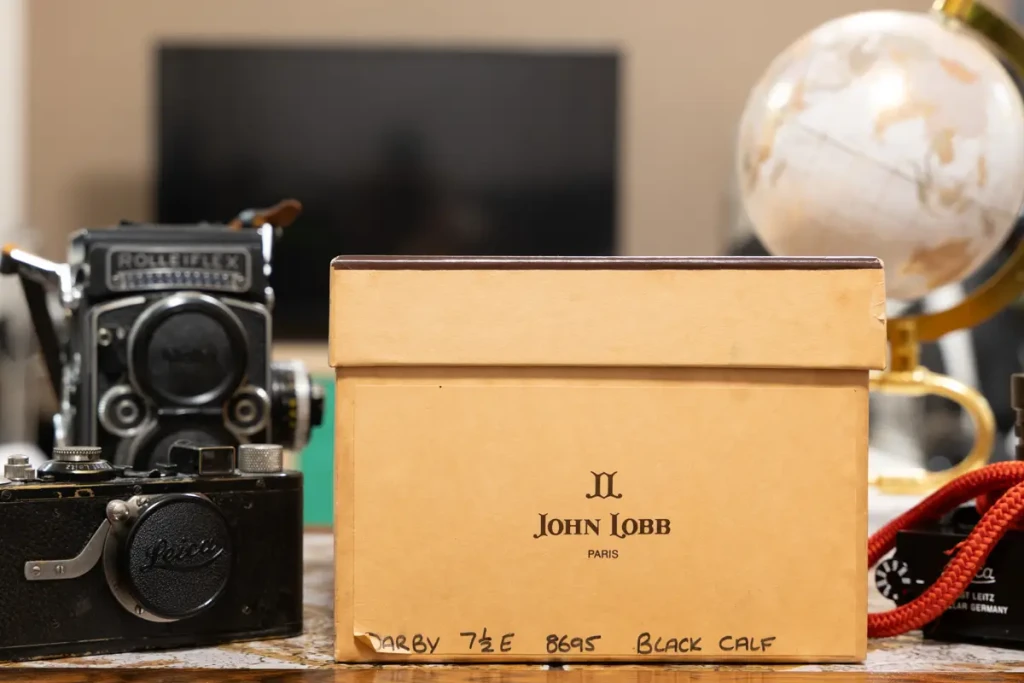
    The staff member mentioned that having a purchase history would make sizing easier. I explained that my last purchase was 25 years ago, so the record might not exist, and provided my name and phone number. The staff member checked immediately and found my details in the customer register. They said that since my previous Derby purchase was a size 7½ on the 8695 last, a size 7½ Lawry would be suitable, and brought out a black calf leather Lawry in 7½.

    I tried them on immediately; the size 7½ was absolutely perfect. The beautiful form and comfort were superb, and I was considering the black calf leather Lawry, but when I asked if they had a suede version, they mentioned a dark brown option and checked stock. The Marunouchi store didn’t have the size 7½ dark brown suede Lawry in stock, so they brought a size 8 dark brown suede pair so I could see what it looked like.

    It was slightly large, but I tried it on to get a feel for the overall look. During the fitting, I confirmed that the suede was softer and more comfortable to wear than the calf leather. Standing in front of the mirror to check the overall impression, it had a softer, more casual feel than the black calf leather, which I preferred, so I decided on the dark brown suede Lawry.

    Size 7½ is fine, so I request the dark brown suede Lawry to be ordered.

    At this point, I ask the staff if it’s possible to add rubber soles to the leather soles. They confirm that the John Lobb Marunouchi store can handle this. It feels like a different era compared to the old image, where I couldn’t imagine a John Lobb flagship store offering such a service.

    John Lobb Marunouchi Store

    During my conversation with staff at the John Lobb Marunouchi store, I asked whether this Marunouchi location had relocated twice.

    They explained that after opening initially, the store first moved to the opposite side of Nakadori Street before recently relocating to its current premises.

    I mentioned that my purchase history was quite old (25 years ago), having bought shoes at the Minatomirai branch and the Aoyama flagship store in Gaien.

    This led to talk of the store manager at that time. The staff member assisting me had also worked with that manager.

    When I described him as having the gentle character I remembered, yet being a leather enthusiast and a great lover of John Lobb shoes, the staff member nodded in agreement.

    I conveyed that had it not been for the then Aoyama flagship store manager passionately extolling the virtues of John Lobb shoes, my perception of them might have been different, and I might not own and cherish a pair today.

    This led to a discussion about how that manager was something of a missionary, increasing the number of John Lobb enthusiasts in Japan.

    At that time, John Lobb shoes were high-end, but not as expensive as they are now. Rather than being a luxury brand, they were seen as the finest shoes, meticulously crafted by shoemakers.

    After the bubble economy, they were introduced to Japanese consumers, whose tastes had been refined by the bubble, as one of the finest products available overseas.

    They also fundamentally changed the way Japanese people chose leather shoes. The widespread adoption of plain-toe Oxfords with suits in Japan was largely influenced by British shoes such as John Lobb and Edward Green.

    The staff at the Marunouchi store who assisted me this time not only possess extensive knowledge about John Lobb shoes, but also offer advice tailored to each customer’s usage patterns and occasions.

    They also provide clear explanations about the differences in lasts, a topic frequently discussed when purchasing John Lobb shoes.

    As mentioned with Berluti, John Lobb also meticulously maintained purchase records dating back 25 years. As leather shoes are items with an exceptionally long lifespan, many customers use them for a lifetime.

    Consequently, the extended timeframe for customer management is a hallmark of premier shoe retailers. Naturally, both Berluti and John Lobb thoroughly retain and manage the purchase histories of their customers.

    Because they are aware of my past purchase history, much like Lawry, when I inquired whether rubber soles could be fitted to my three pairs of leather-soled shoes, they examined the condition of the shoes.

    They explained that unless the leather soles required a full sole replacement (all-sole), they could prepare the leather soles during maintenance and apply rubber soles, meaning the cost and turnaround time would not be excessive.

    As John Lobb shoes with shoe trees inserted are quite heavy, bringing all three pairs at once would be difficult. I therefore informed them I would bring them in one pair at a time when I found the time. 

    I also recalled a past anecdote, a metaphor used by shoe enthusiasts comparing John Lobb to Berluti: “John Lobb could kill a man, but Berluti couldn’t” (meaning that sturdy John Lobb shoes, quite heavy with shoe trees inserted, could serve as a murder weapon for bludgeoning, whereas whereas Berluti, with its softer leather and lighter weight even with a shoe tree, wouldn’t make a suitable murder weapon).

    John Lobb shoes also fall within a considerably high price bracket, positioning the brand as a luxury retailer akin to Berluti.

    The distinction between the two lies in the fundamental approach to customer service: Berluti prioritises the high-end brand experience, treating shoes as an extension of this, resulting in exceptionally attentive and considerate service tailored to the customer.

    John Lobb also presents a high-end brand image in its shop design and merchandise, but its approach is fundamentally more homely.

    Its stance is less about offering luxury shoes and more about providing well-made footwear. Product explanations focus less on appearance or status and more on topics like the difference in comfort due to the last used, or the intended usage environment for the shoes available.

    Staff make suggestions based on the customer’s intended use, guiding them towards selecting shoes that suit them.

    Both brands employ staff well-versed in apparel, who will discuss your attire and preferences while assisting with shoe selection. This conversation becomes a truly enjoyable, blissful experience for those passionate about clothing and footwear.

    Compared to Berluti, John Lobb sees greater business use, making them particularly adept at discussing formal attire like suits. Rooted in British tradition (though actually French-owned), their focus is more on dressing than pure fashion, meaning conversations about suits and shirts tend to lean more conservative than those at Berluti.

    While proceeding with the Lawry fitting, arranging for items to be ordered, and making arrangements to have rubber applied to the leather soles, the conversation flowed freely—covering John Lobb shoes, stories of past shops, and the fashion worn that day.

    Conversations with staff at the Marunouchi store also evoked the same stance I sensed 25 years ago at the Aoyama store: providing customers with shoes made from truly fine leather, meticulously crafted by skilled shoemakers, tailored to fit them perfectly, and intended to be cherished for years. It proved a most pleasant experience.

    Purchase and Maintenance

    The dark brown suede size I selected was unavailable at the Marunouchi store, so it had to be ordered. It arrived at the Marunouchi store within a few days, spanning the weekend, and I took it straight to the workshop to have rubber soles fitted.

    I was informed it would be ready for collection in about a week, with home delivery also possible.

    When collecting the Lawry shoes, I mentioned that I would be bringing in the Barros shoes for maintenance, and would return another day.

    Trying on the Lawry shoes after they came back from the workshop was fine, and the rubber had been applied neatly.

    I collected the Lawry shoes and requested maintenance for the Barros shoes I brought in that day, along with rubber soles. The staff member assessed the condition and confirmed that a full sole replacement wasn’t necessary.

    They provided an estimate and approximate completion time for the maintenance and rubber sole application work. The price was very reasonable, so I agreed without hesitation.

    At this point, the staff member remarked nostalgically that the Barros shoe trees were an older type.

    John Lobb Lawry
    John Lobb Lawry – side view

    The curve from toe to heel is beautifully formed, and this curve is designed to enhance comfort rather than merely for visual appeal.

    John Lobb Lawry
    John Lobb Lawry – Front view

    The suede upper lacks the sheen of leather, making the form less apparent, yet it retains the classic Chelsea boot silhouette. It features a beautiful curved line from the instep to the toe, narrowing at the heel and arch before widening at the ball of the foot and tapering towards the toe.

    John Lobb Lawry
    John Lobb Lawry – rear view

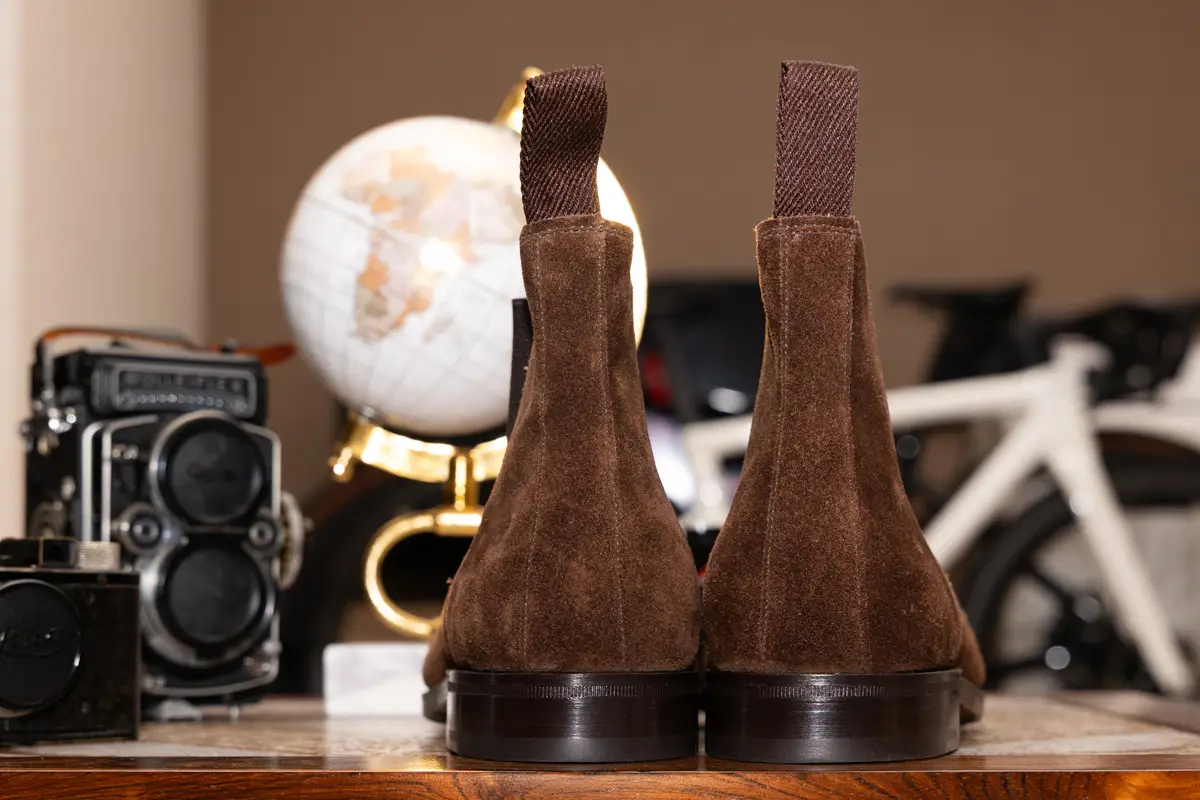
    The curve from the heel’s bulge to the ankle creates an exquisite fit when actually worn.

    John Lobb Lawry
    John Lobb Lawry – top view

    I did not take any photographs, but the shoe box has been changed to a reddish-purple colour, and the shape of the shoe tree has also been made more user-friendly.

    John Lobb Lawry
    I had rubber soles fitted to my shoes

    When purchasing, I had rubber soles fitted to the shoes. This allows me to wear them without issue even on surfaces where leather soles would be slippery.

    Wearing example.

    This time, I’ve paired Lawry with chinos and slim-fit cotton trousers. As beige-toned trousers complement it better, I haven’t combined it with denim.

    John Lobb Lawry
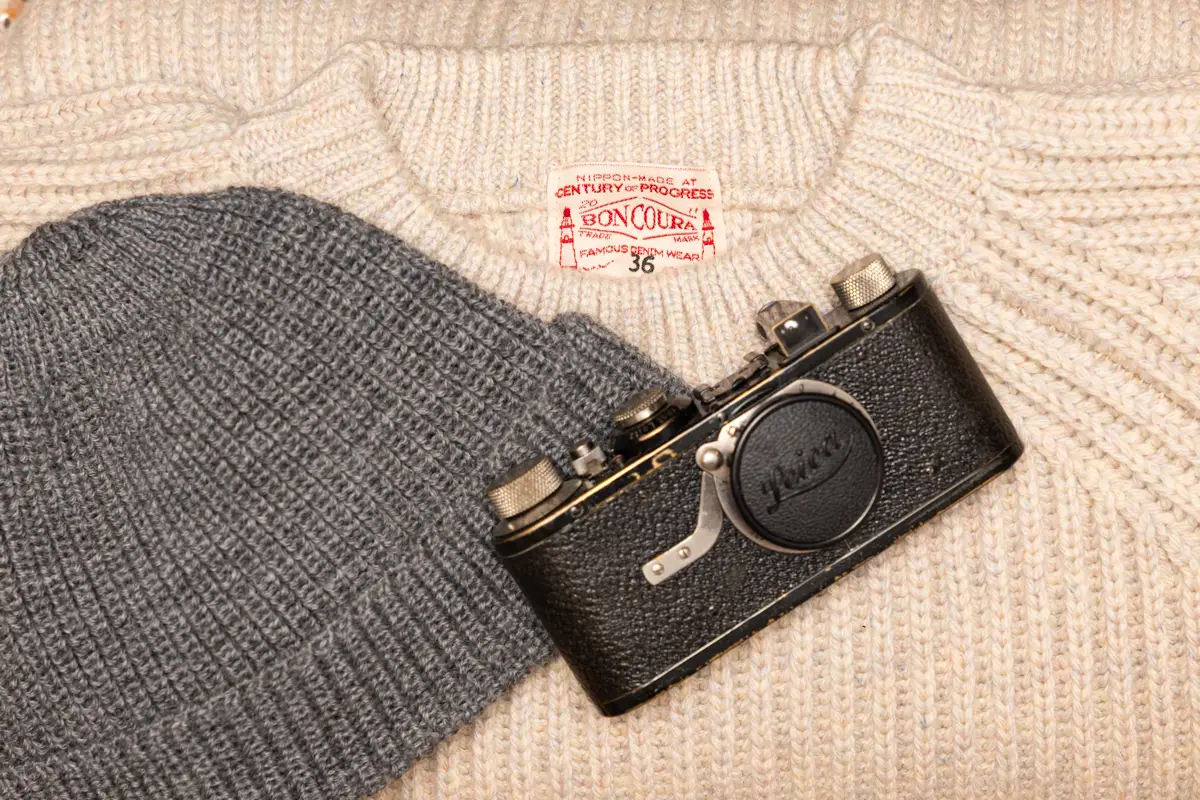
    I’m wearing them with a pair of Boncoura chinos.

    Rather than just looking at the shoes, you can really appreciate their refined form when you actually wear them.

    John Lobb Lawry
    I’m wearing them with a pair of slim-fit trousers from Visvim.

    Pairing them with trousers that are slimmer than chinos creates a well-balanced and elegant combination.

    Lawry

    • Last 7000
    • Colour: Dark Brown Suede
    • Leather: Suede
    • Sole: Single Sole
    • Size: 7 1/2 E Width

    Combination

    Five-Pocket Trousers: Visvim

    Shoes: John Lobb Barros

    Chino Trousers: Boncoura

    Knitwear: Boncoura

    In conclusion

    This time, I purchased John Lobb shoes for the first time in 25 years. Times have changed, and alongside the orthodox, timeless British shoes, the range now includes trendier styles.

    The brand seemed more high-end than before. However, upon actually visiting the shop, handling the products, trying them on, and making the purchase, I found the essence remained firmly intact: that traditional British shoemaker’s stance, like a bespoke shop, offering shoes crafted by skilled shoemakers tailored to the customer, just as I had experienced 25 years ago.

    A defining characteristic of John Lobb shoes is that the impression they make when admired without being worn differs, in a positive sense, from the impression when actually worn. This stems from the truly excellent leather selected, the meticulous craftsmanship, and the universally superb design.

    Being very orthodox British shoes, they are not flashy, yet they possess an intrinsic dignity that adds a sense of quality to the wearer’s ensemble.

    The Lawry I purchased this time is also from John Lobb’s classic line, a very orthodox Chelsea boot.

    I opted for suede, which is not the most conventional choice, but both the construction and style are quintessentially John Lobb. Even when worn casually, the quality and dignity are maintained. This is the result of a long history of consistently producing fine items without sparing effort.

    Being rather pricey, they aren’t something one buys frequently. Yet, when worn, they exude a refined elegance. Their superb comfort and robust construction, promising years of loyal service, inevitably make one yearn for the next pair.

    Being suede, they require less upkeep than leather shoes, though one misses the pleasure of polishing them to make them truly one’s own. Nevertheless, the quality of the leather and the craftsmanship ensure they are excellent shoes that will be enjoyed for many years to come.

    Shop

    This time, I purchased Lawry at the John Lobb Marunouchi store.

    As I’ve mentioned several times in the article, it is one of the world’s finest shoes and a brand representing British footwear. With Hermès capital involved, the store exudes a high level of luxury, creating an atmosphere that makes it rather difficult to pop in casually.

    However, upon entering the shop, viewing the shoes, and listening to the staff’s explanations, one encounters not merely the image of a luxury brand, but the robust, no-nonsense world of British footwear. These are shoes crafted by skilled shoemakers; they may lack flashy appearance, but they are designed to fit the wearer perfectly, offering exceptional comfort, durability, and longevity.

    The staff, too, feel less like luxury brand personnel and more like traditional shoemakers. They pay close attention to foot shape and offer advice to help customers select shoes that truly suit them.

    The true value of John Lobb shoes is one that customers come to appreciate after wearing them for a considerable period. This value lies in the shoes gradually moulding to the wearer’s feet over time, achieving a fit and comfort unmatched by other footwear.

    John Lobb shoes are exceptionally well-made; if cherished and worn carefully, they can last a lifetime. I have owned three pairs of Derby shoes for 25 years.

    They show no signs of deterioration; rather, years of wear have moulded them perfectly to my feet. While offering a distinct comfort from trainers, they remain remarkably easy to walk in for extended periods without fatigue, making them utterly indispensable.

    John Lobb shoes are fundamentally classic, yet exude understated elegance when worn. The brand provides high-quality footwear tailored to the wearer and operates a system designed for long-term enjoyment.

    It offers an experience closely aligned with British sartorial culture – akin to having shoes fitted by a British gentleman at a historic British shoemaker’s workshop for years of cherished use.

    While the threshold may feel slightly high, the Marunouchi store, which operates with a deep understanding of John Lobb’s philosophy and history, is highly recommended for those seeking shoes that truly fit their feet, possess understated elegance, and can be worn for a lifetime.

    JohnLobb Official Website

  • Alanui Icon Jacquard Cardigan

    Alanui Icon Jacquard Cardigan

    Introducing Alanui’s Couchin Sweater, crafted by highly skilled artisans using luxurious, premium cashmere.

    When I think of Couchin Sweaters, I recall the thick shawl-collar cardigans reminiscent of Canadian folk costumes that my friends wore during the 90s Americana boom. The colours were ivory and brown, with geometric patterns.

    As I mentioned in my article on Boncoura’s fisherman’s sweater, while I do like thick knits, they inevitably let the wind through, making them difficult to wear in the depths of winter.

    This meant that, despite wanting to try a Couchin sweater, it was one I never quite got round to buying.

    About five years ago, during a rare visit to Barneys with my wife, the staff member assigned to her suggested this Alanui cardigan. Its intriguing design and comfortable feel led me to purchase it – the Icon Jacquard Cardigan I’m introducing today.

    Alanui

    Alanui is a relatively new Italian brand founded by a former Vogue staff member. It focuses on environmental issues while developing garments designed to be worn for a long time without being discarded.

    The theme is clothing that feels comfortable to wear while travelling, offering designs that are both excellent and exceptionally relaxed and comfortable to wear.

    True to its theme of comfortable, long-lasting wear, the brand places considerable emphasis on materials and construction. While its mainstay is knitwear using premium cashmere, it also offers slightly oversized pieces.

    They lavishly use cashmere yarn from Carriaggi, Italy’s premier cashmere spinning mill.

    Knits are crafted using jacquard weaving with several types of yarn, resulting in cashmere sweaters with highly intricate designs and colour schemes.

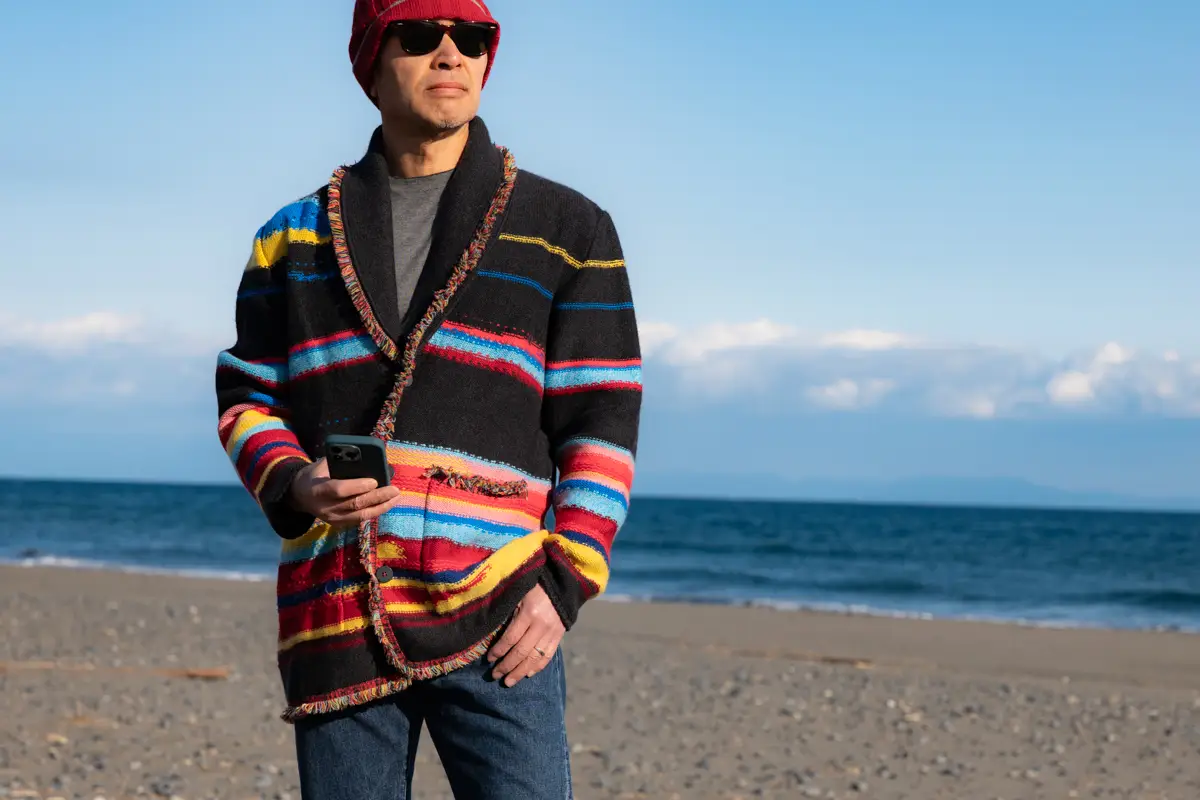
    A famous example is the Icon Jacquard Cardigan featured here – a jacquard-woven cowl neck sweater with fringe detailing.

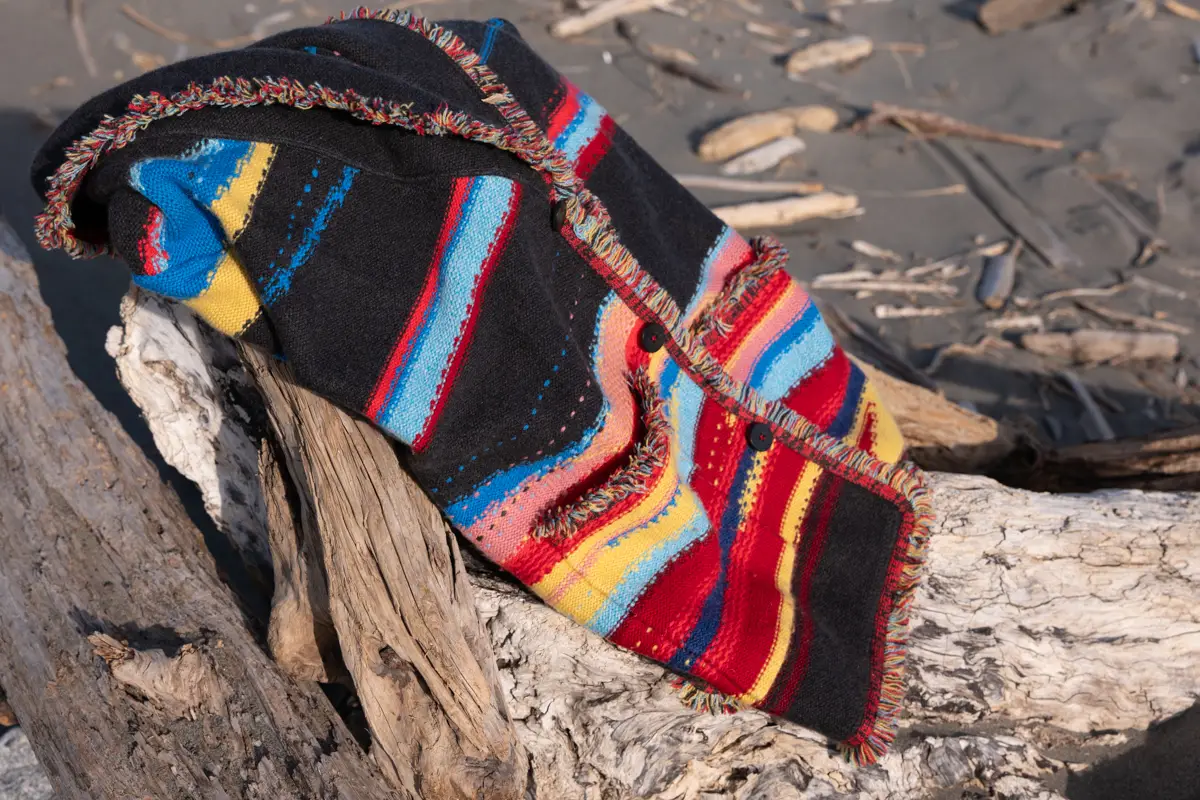
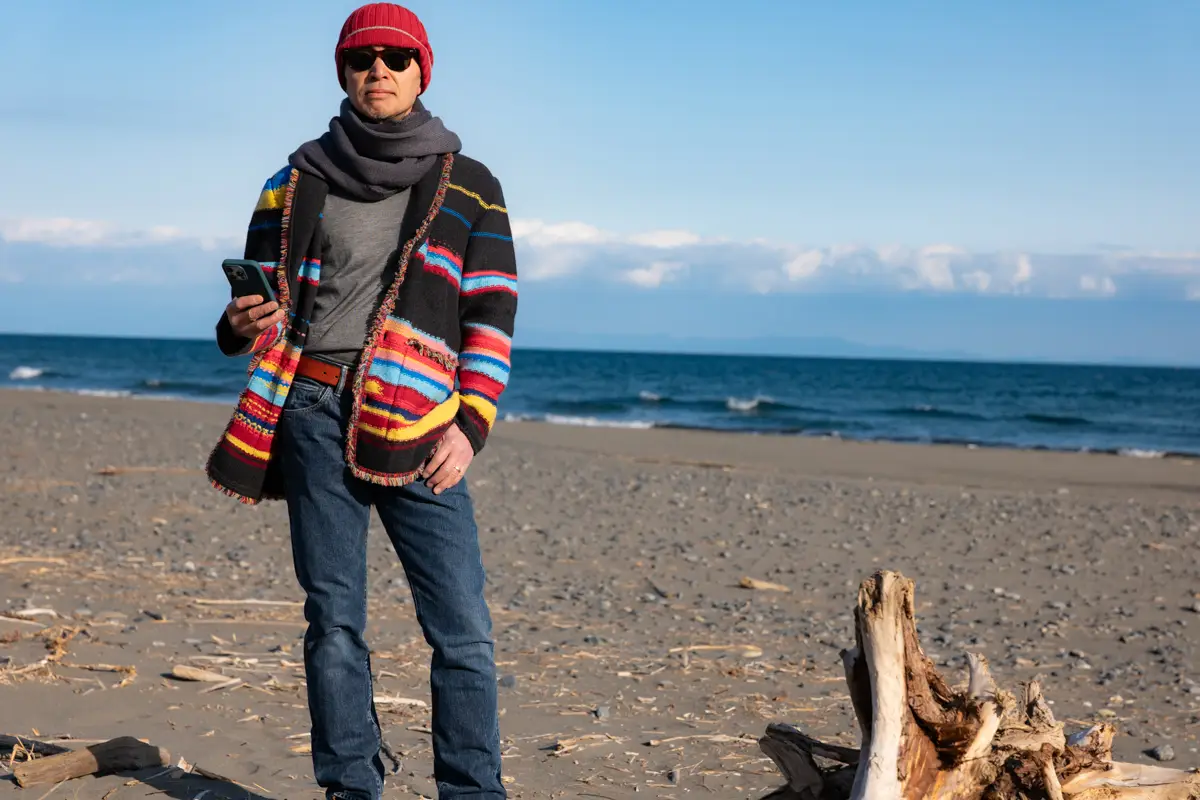
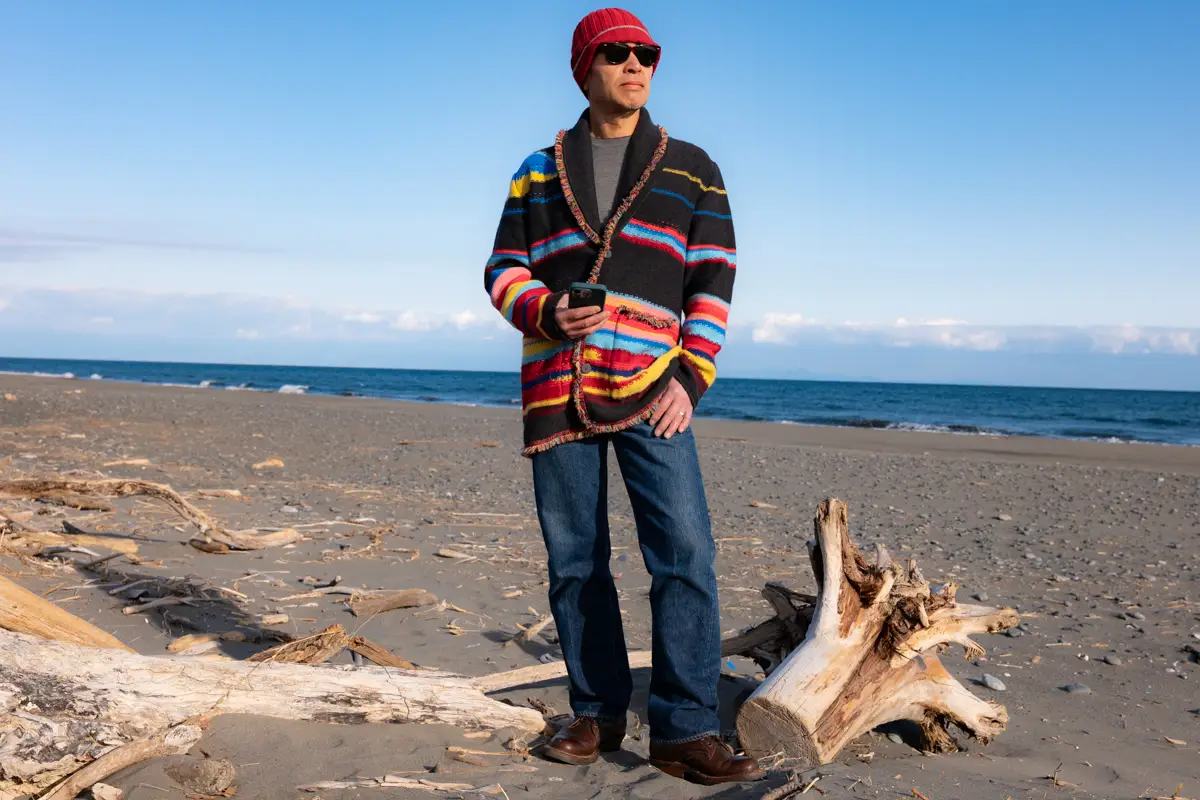
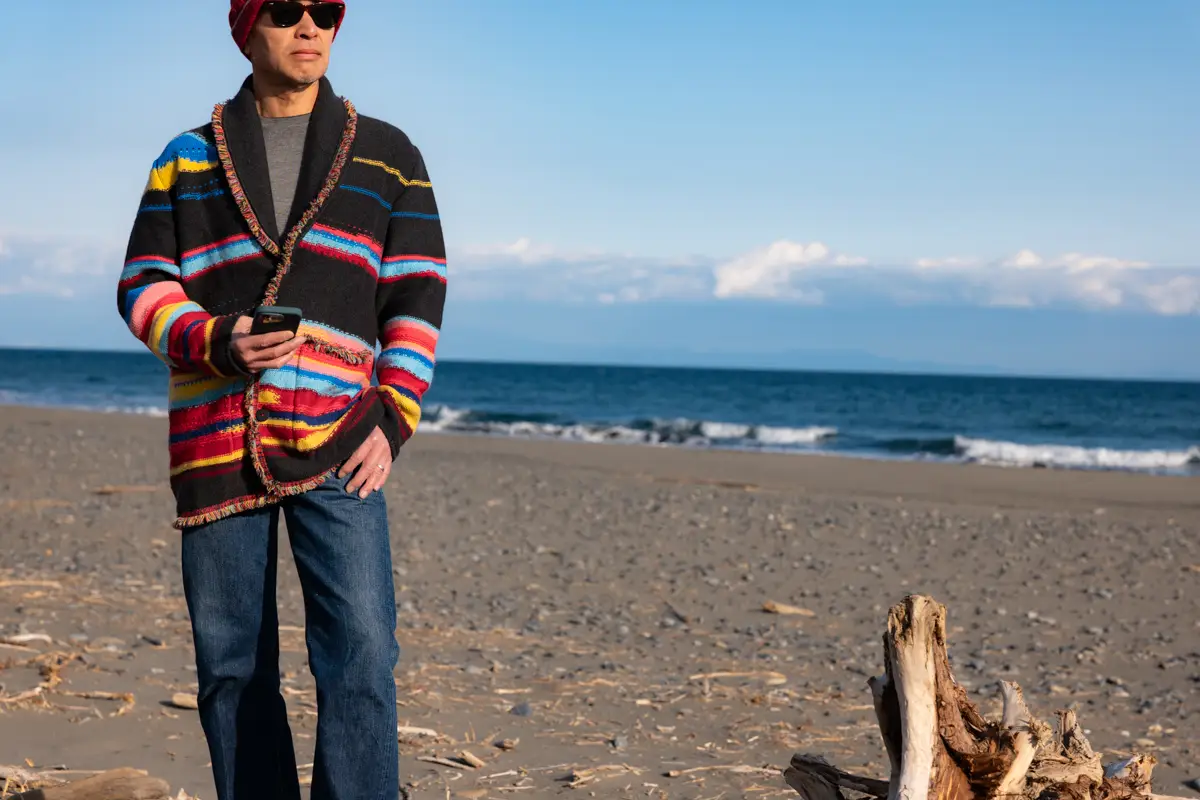
    The pattern I own is a cowichan sweater featuring a design reminiscent of a Native American rug mat, with a black base and stripes of blue, red, and yellow – a style rarely seen in recent collections.

    Alanui Icon Jacquard Cardigan
    Alanui Icon Jacquard Cardigan

    As it dates from the late 2010s, the oversized fit is not extreme, merely featuring slightly dropped shoulders.

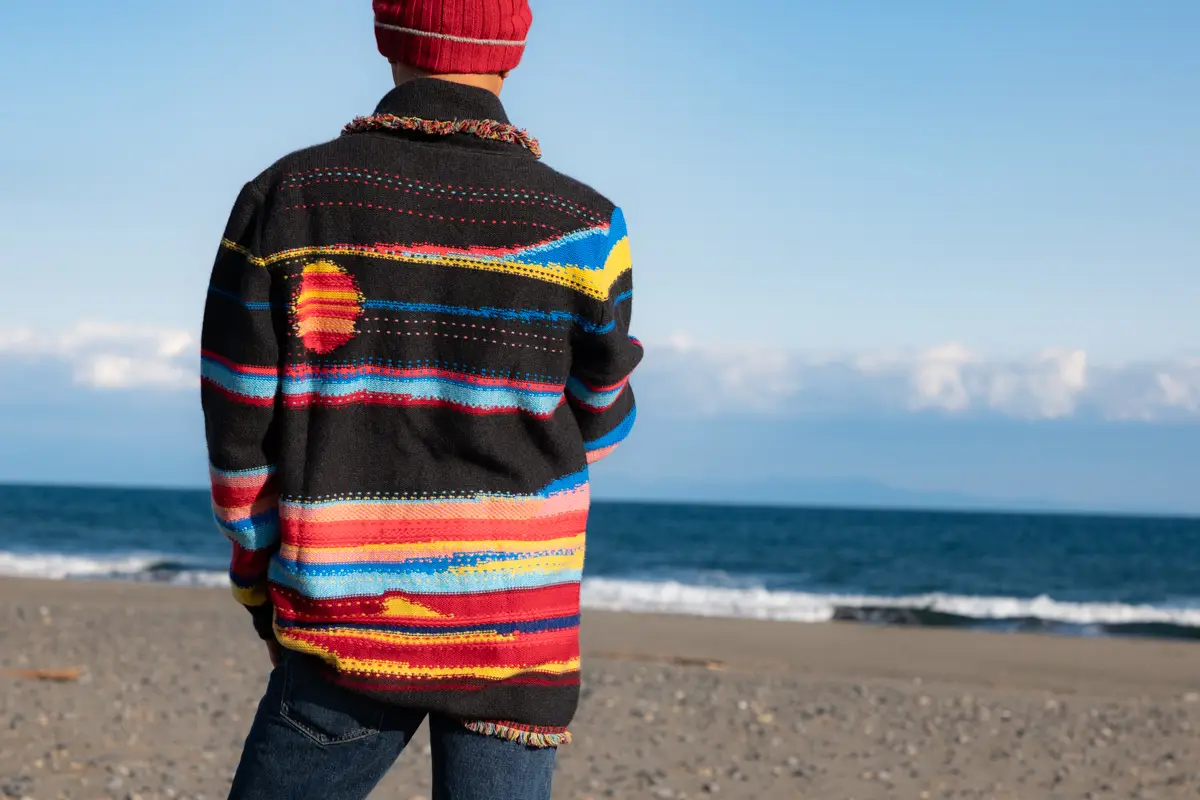
    Alanui Icon Jacquard Cardigan
    Alanui Icon Jacquard Cardigan

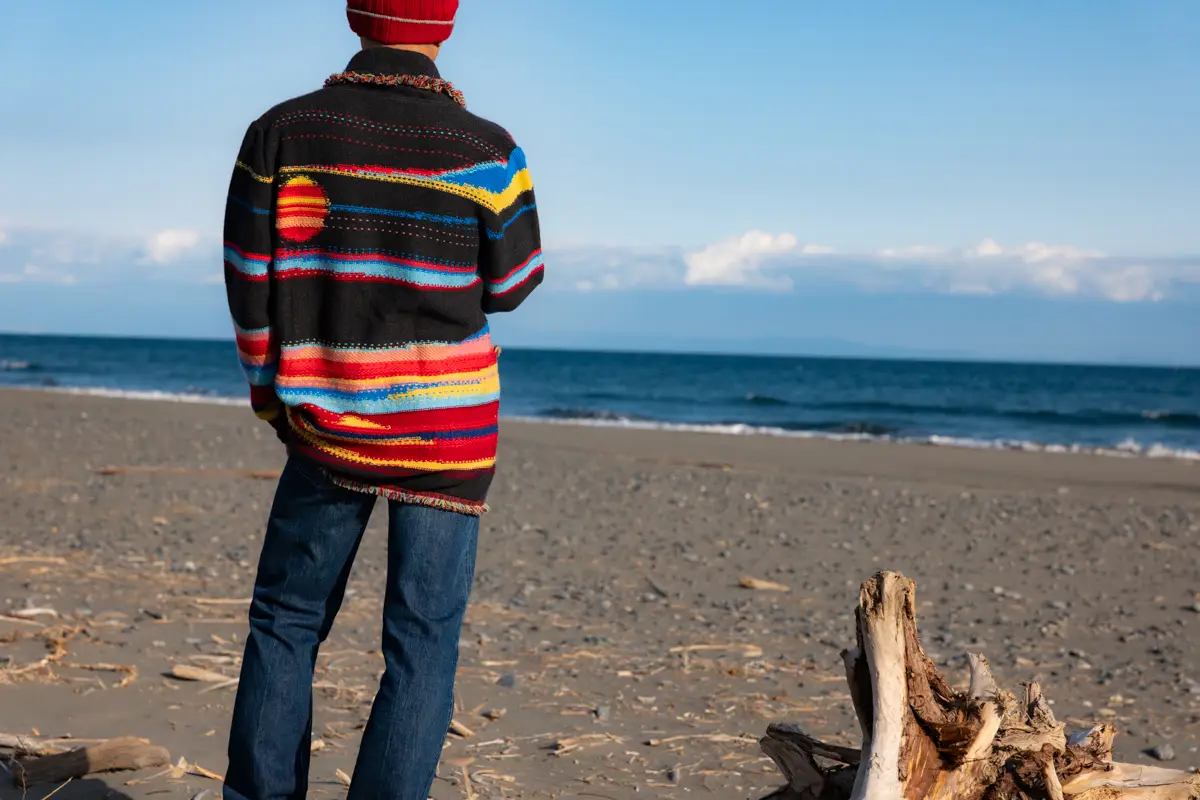
    The asymmetrical colour scheme on the back subtly showcases the craftsman’s exceptional skill.

    Alanui Icon Jacquard Cardigan
    Alanui Icon Jacquard Cardigan

    A cashmere knit with this much fringe was probably first introduced by Alanui.

    Alanui Icon Jacquard Cardigan
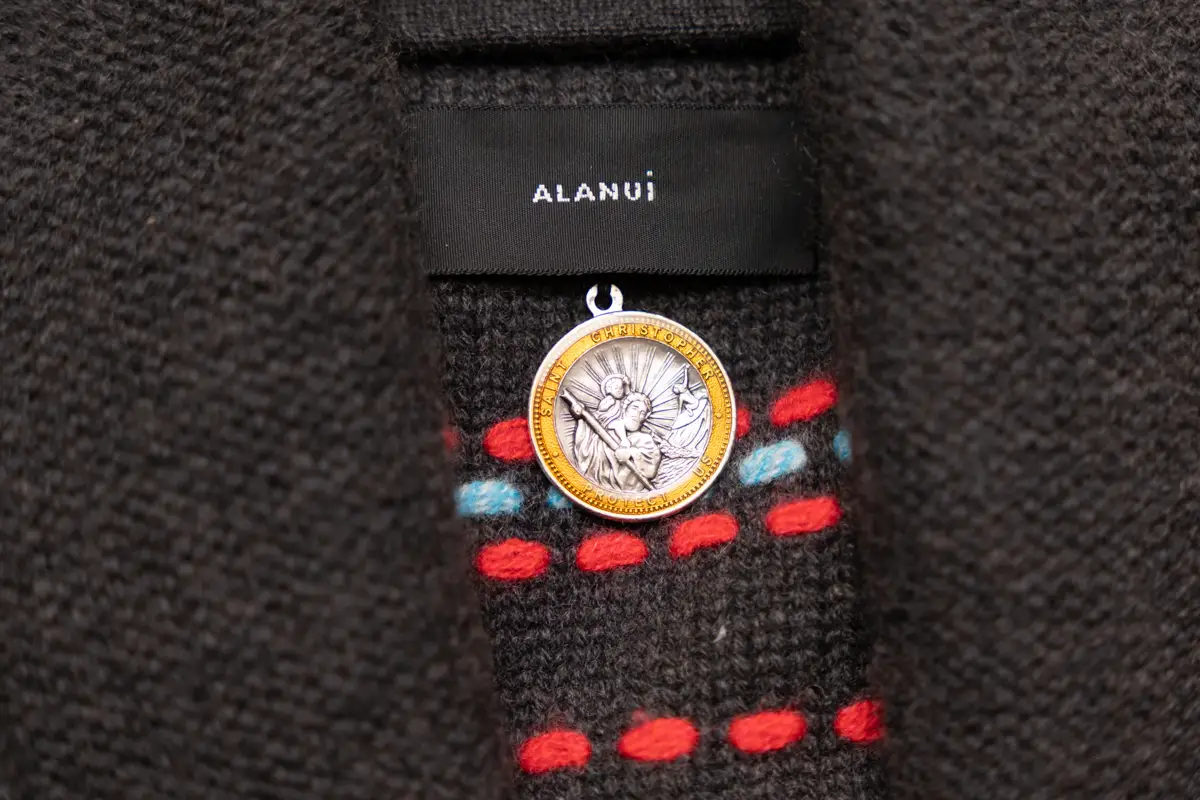
    Alanui Icon Jacquard Cardigan Logo

    Alanui features a medal on its logo.

    Alanui Icon Jacquard Cardigan
    Alanui Icon Jacquard Cardigan: Intricate knitwork

    It features a simple yet highly intricate braid.

    Alanui Icon Jacquard Cardigan
    Alanui Icon Jacquard Cardigan: Meticulously woven jacquard

    It is meticulously woven using the Jacquard technique.

    Introduction.

    Knitwear as outerwear

    Personally, during winter, I inevitably end up choosing warm outerwear due to the lower temperatures in the early morning and late at night. Being rather lazy by nature, my clothing choices tend to jump straight from summer shorts and T-shirts to winter down jackets, skipping over the lighter outerwear suitable for early winter or early summer.

    Though not mentioned in the article, what I often wear in early winter or early summer are zip-up hooded parkas or Patagonia’s R1 thin fleece. They’re easy to wash and manage, so I inevitably end up reaching for them.

    My approach to buying clothes, when considered annually, was largely limited to two purchases: cool summer items and warm winter items, and that was about it.

    However, around thirty years ago, I started buying clothes at Barneys, where my wife often shopped. A Barneys staff member taught me that purchasing clothing four times a year – spring, summer, autumn, and winter – tailored to the temperature, and combining these pieces, leads to comfortable and seasonally appropriate dressing.

    This prompted me to buy lightweight outerwear for early spring and late autumn.

    After taking care of my parents, my interest in fashion waned, so I reverted to my original approach of selecting summer and winter garments rather than the four-season approach taught at Barneys.

    In recent years, my perspective on the clothes I wear has shifted, and I now enjoy fashion in the manner described in the articles on this site.
    This preamble has become rather lengthy, but regarding knitwear, my long-held view was that it was something worn as an inner layer during winter. However, the cowichan sweater I’m introducing here is a knit designed to be worn as an outer layer.

    Due to the nature of knitwear construction, it inevitably becomes chilly when windy in winter, making it difficult to wear on windy days. Yet, on calm days, it provides warmth and comfort even in winter, making it a valuable piece.

    Icon Jacquard Cardigan

    Alanui’s Icon Jacquard Cardigan features a jacquard weave inspired by the traditional Couchin sweater, showcasing various patterns. It boasts a shawl collar, pockets with edging, and fringe detailing. Designed for relaxed travel wear, it has a slightly oversized fit.

    My Icon Jacquard Cardigan is 100% cashmere, though recent material research has led to the development of blends such as cashmere-silk-cotton tri-blends.

    While authentic cowichan sweaters tend to be quite heavy and stiff, the Icon Jacquard Cardigan, whilst resembling a cowichan, is remarkably light and soft, offering excellent comfort.

    The one I’m wearing features a Native American rug-inspired pattern, rather than the geometric pattern typical of the current Icon Jacquard Cardigan’s classic Couchin design.

    Cariaggi lanificio s.p.a. 

    Alanui’s cashmere utilises high-quality, colour-fast cashmere yarn from Italy’s Carriaggi.

    A defining characteristic of Carriaggi’s cashmere yarn is its twisted construction, which, despite being cashmere, offers greater durability compared to other cashmere yarns.

    This results in reduced pilling, a common weakness of cashmere.

    It is said that Brunello Cucinelli’s cashmere knitwear, which I greatly respect, utilises this Carriaggi cashmere yarn. While other renowned brands are also reported to use Carriaggi yarn, high-end houses like Brunello Cucinelli do not officially disclose their materials.

    Consequently, the specific use of Carriaggi cashmere yarn is not widely recognised.

    Brunello Cucinelli has deep ties with Carriaggi. It is well known that Brunello Cucinelli gained fame through its cashmere knitwear, which led to its current successful business expansion.

    It is also said that when Mr Brunello Cucinelli founded the company, he purchased cashmere yarn from Carriaggi, subsequently producing the highly regarded, premium-quality cashmere knitwear.

    Brunello Cucinelli is also listed among the shareholders of Carriaggi, while Chanel is among the shareholders of other top fashion houses.

    I own three Brunello Cucinelli cashmere knits and one cashmere-silk knit. I find they resist pilling remarkably well; even when wearing a car seatbelt, I notice little pilling on my shoulders or underarms. This is something I consistently appreciate as a hallmark of Brunello Cucinelli’s cashmere knitwear.

    Alanui’s cashmere knitwear also exhibits similar resistance to pilling. Upon investigating the reason, I discovered they utilise cashmere yarn from the Carriaggi company, which explains the high quality and is entirely convincing.

    I myself am not particularly knowledgeable about fashion, so I had no interest whatsoever in matters concerning materials or spinning.

    However, it is fascinating that there exists an excellent Italian spinning company specialising in cashmere, and that cashmere knitwear spun from their yarn is said to be more comfortable to wear, have better colour fastness, and be more durable than standard cashmere knitwear.

    When you actually wear products made from it, you can clearly feel the difference.

    When one indulges in a hobby like dressing well, one’s interest extends beyond the product itself to its origins. Understanding the reasons behind its creation and quality craftsmanship fosters a deeper affection for the item.

    I had already noticed the exceptional comfort and durability of Brunello Cucinelli knitwear and the Alanui knit featured in this article.

    Discovering that the reason lies in the cashmere yarn used makes perfect sense.

    I feel that the very essence of a brand name – that sense of reliability – naturally encompasses an unseen commitment to quality, something we don’t consciously think about in everyday life.

    I later asked a member of staff at Brunello Cucinelli, who told me that Brunello Cucinelli sources its cashmere directly from Mongolia.

    They have a good relationship with Carriage, and whilst they do not use their knitwear, they do use Carriage’s cashmere fabrics for items such as jackets. (Added on 25 March 2026)

    Combination

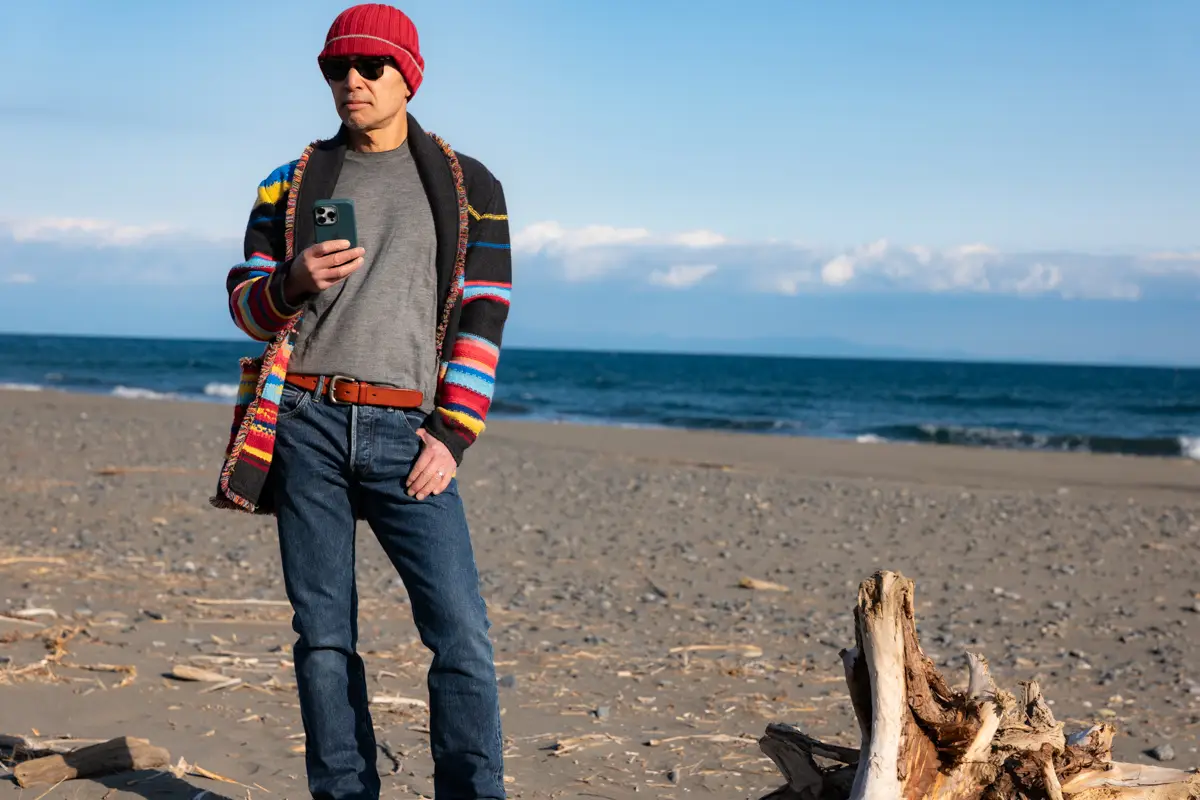
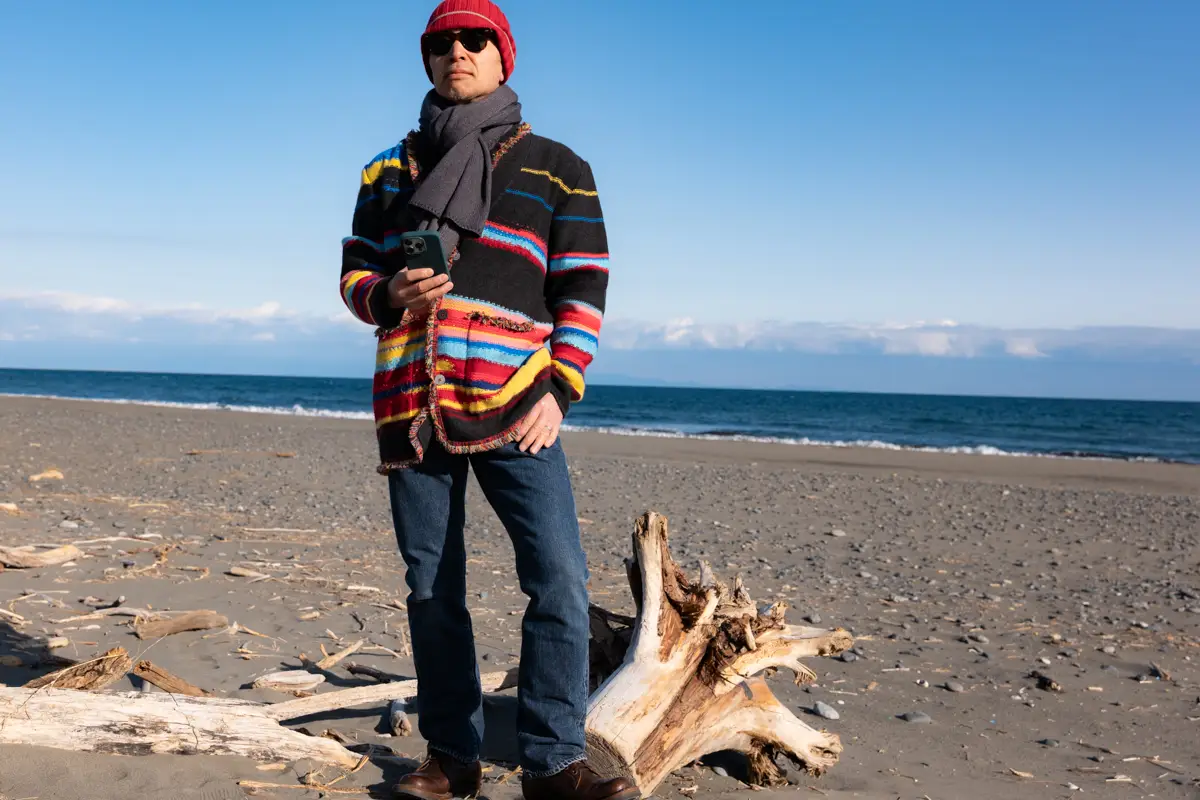
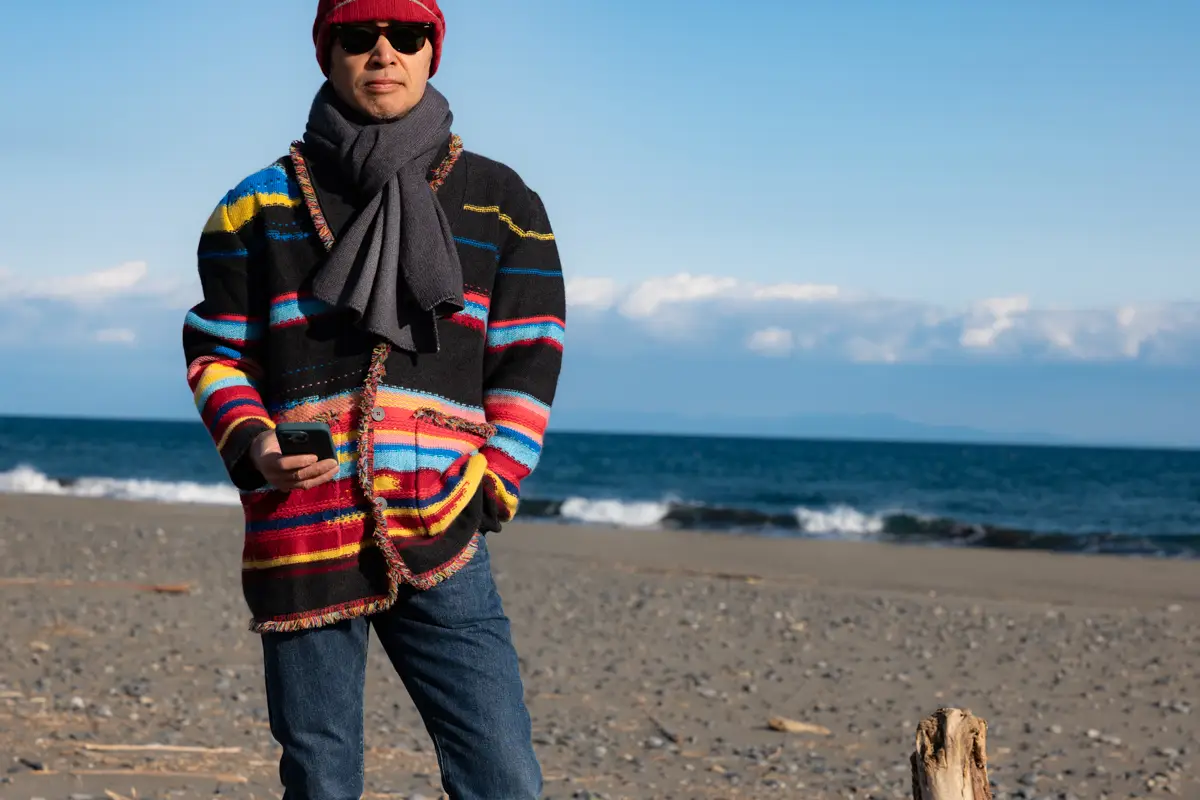
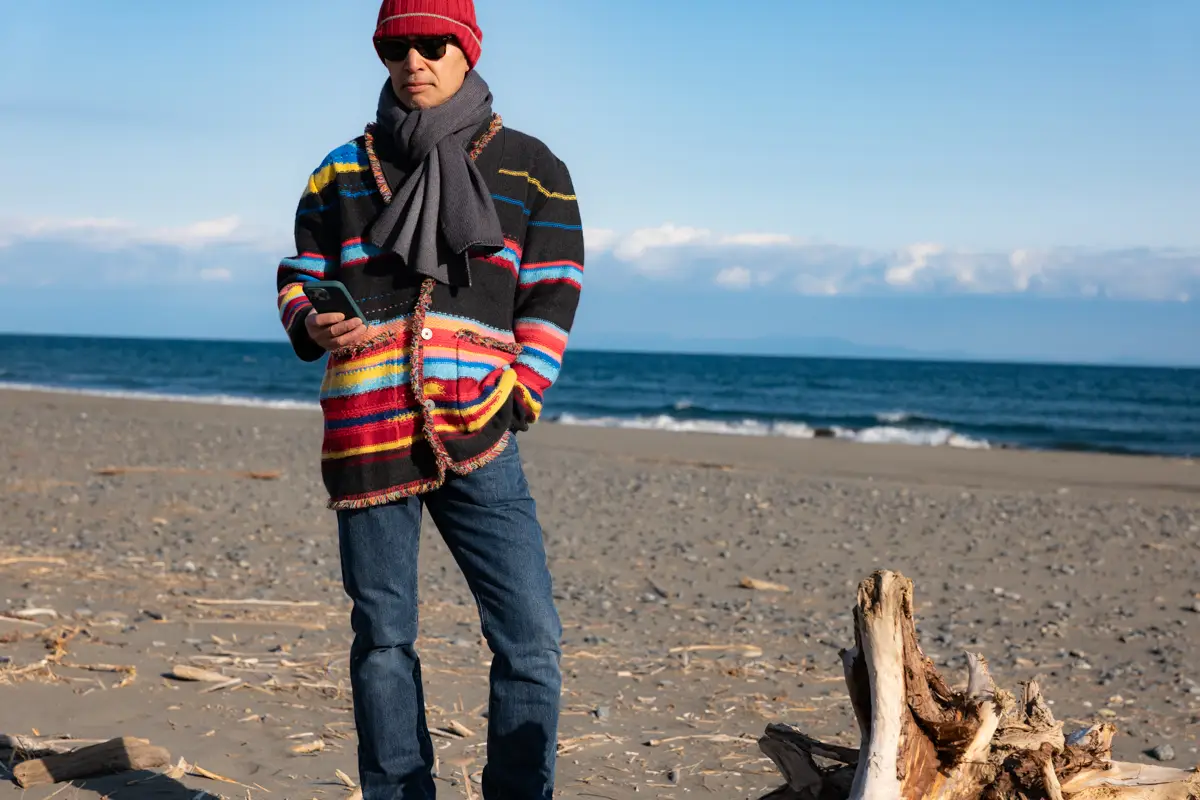
    Alanui’s Icon Jacquard Cardigan is a cowichan sweater, and as it pairs well with denim in an Americana style, I’ve combined it with jeans.

    Alanui’s suggestion is a relaxed style, so ideally it should be worn with slightly loose-fitting, faded denim that allows unrestricted movement. However, I’ve paired it with slim-fit denim from Visvim.

    For reference, I’ve also compiled a styling example with 501XX jeans. The overall silhouette pairs exceptionally well with the 501XX’s wide cut. While this combination offers a more timeless and balanced look, my current preference leans towards a slightly slimmer bottom, hence the Visvim slim-fit jeans.

    As it’s a cowl neck jumper, the neckline is open, so I often wear a scarf with it. Since the knit has a pattern, I pair it with a plain-coloured scarf. As it’s a very casual combination, I’ve chosen a cashmere knit scarf from Cruciani.

    For the inner layer, in winter I wear a thin Brunello Cucinelli cashmere-silk crew neck, and in early spring I simply pair it with a T-shirt.

    The Alanui Icon Jacquard Cardigan excels in its quality, offering a substantial cashmere knit with an open chest. This allows you to enjoy it well into early spring by simply changing the inner layer.

    Even with a classic style – a white T-shirt underneath, faded denim and trainers – you can achieve a relaxed yet sophisticated look.

    Wearing example.

    (1) Combined with Visvim’s slim-fit denim

    This season, I’ve been wearing slimmer-fit denim and trousers more often than the traditional straight-leg Levi’s or Lee jeans. For this Aranui Icon Jacquard Cardigan, I’ve paired it with Visvim’s Slim Straight, which also has a slimmer silhouette.

    As it’s still a bit chilly, I’m wearing a Brunello Cucinelli cashmere-silk crew neck underneath. Should I feel cold around the neck or chest, I’ll wrap a Cruciani cashmere knit scarf.

    On my feet, I’m wearing White’s semi-dress shoes, which pair well with denim.

    Alanui Icon Jacquard Cardigan
    Styling with Visvim Slim Fit Denim

    Simply throwing it on casually creates a relaxed look.

    Alanui Icon Jacquard Cardigan
    Paired with Visvim slim-fit denim – rear view

    The silhouette from behind is also exceptionally beautiful.

    Alanui Icon Jacquard Cardigan
    I’ll try wrapping my scarf around my neck.

    If it feels a bit chilly, wrapping a scarf around your neck and chest should do the trick.

    Alanui Icon Jacquard Cardigan
    I’ll pair it with a plain cashmere scarf.

    As the knit has a pattern, I’ve paired it with a plain-coloured scarf.

    Alanui Icon Jacquard Cardigan
    Even with a voluminous scarf, the look comes together beautifully.

    The scarf has volume, yet the overall silhouette is neatly put together.

    Alanui Icon Jacquard Cardigan
    It creates a beautiful silhouette from behind as well.

    The back view is also neatly put together.

    Alanui Icon Jacquard Cardigan
    If you don’t fasten the front buttons, wear the scarf loosely.

    If you’re going to leave it open at the front, I’ll wrap the scarf loosely.

    (2) Combined with Levi’s 501XX

    Compared to Visvim’s slim silhouette, this is a more orthodox cut, but a slightly wider straight leg like the 501XX offers a more universal and balanced silhouette.

    As it was cold on the day of the shoot, I paired it with a thin knit inner layer, but in early spring, pairing it with a white T-shirt or similar inner layer creates a more casual and relaxed style.

    Alanui Icon Jacquard Cardigan
    Paired with Levi’s 501XX

    The overall silhouette is more universally balanced with the slightly wider leg of the 501XX.

    Alanui Icon Jacquard Cardigan
    The width of the 501XX creates a relaxed silhouette.

    The slightly loose fit from the thigh down to the hem of the 501XX pairs well with knits, creating a cohesive overall silhouette.

    Alanui Icon Jacquard Cardigan
    The silhouette when paired with the 501XX is also well-balanced.

    The silhouette balance from behind is also good.

    Detail

    • Alanui Icon Jacquard Cardigan
    • Made in 2019
    • Fabric: 100% cashmere
    • Size: M

    Combination

    • Denim: Visvim
    • Denim: Levi’s 501XX (1954)
    • Cashmere silk crew neck: Brunello Cucinelli
    • Cashmere knit scarf: Cruciani
    • Knit beanie: Brunello Cucinelli
    • Boots: White’s Semi-Dress
    • Belt: Real McCoy’s

    In conclusion

    Similar to Boncoura’s fisherman sweater, I introduced Alanui’s Icon Jacquard Cardigan, a thick knit worn as outerwear. Its appearance doesn’t suggest traditional cashmere knitwear, yet when worn, it proves to be high-quality cashmere, exceptionally comfortable, and stylish even when casually thrown on.

    The patterns and motifs, while North American in design, are constructed by an Italian brand from an Italian perspective, making it a highly intriguing cardigan.

    When I first saw Alanui knitwear at Barneys, my initial impression overlapped with that of Lucien Pellat-Finet. Much like Pellat-Finet, who weaves skulls and hemp motifs into traditional luxury cashmere knitwear, Alanui’s cashmere knitwear, inspired by Native American clothing motifs, was remarkably interesting, diverging significantly from the conventional image of cashmere knitwear.

    When I previously purchased Lucien Pellat-Finet knitwear at Barneys, I was informed that the strong twist in the Scottish cashmere yarn allows for home washing. Pellat-Finet knitwear also exhibited remarkable durability, resisting pilling even when caught on car seatbelts.

    Alanui’s knit, woven from Carriaggi’s high-quality cashmere yarn, is also highly resistant to pilling. Including its design and concept, it evokes for me the image of Perlafine from the 2010s. (Alanui recommends dry cleaning.)

    Despite being knitwear, it functions superbly as outerwear, wearable from early winter through to early spring. While I wouldn’t do it myself being prone to overheating, draping it over faded cut-off denim on an early summer evening creates an outstanding look with a hint of surfer style. As the weather warms, I plan to showcase pairings with cut-off denim and T-shirts.

    Shop

    The Alanui Icon Jacquard Cardigan featured here was purchased at Barneys New York’s Yokohama store.

    Whilst I haven’t visited recently, both my wife and I frequented the store extensively in the early 2000s, purchasing various items. Both the men’s and women’s departments assigned us dedicated stylists. Having shopped there for many years, they offered tailored suggestions based on our existing wardrobe and preferences, and we learned a great deal from Barneys.

    Just recalling brings to mind Carpe Diem, Carol Christian Poell, Lucien Pellat-Finet, LA-style denim, HTC, Burberry Prorsum (the original), Jil Sander (under her own name), Helmut Lang, Dolce & Gabbana, Dior Homme, and Saint Laurent under Tom Ford, amongst many others.

    Though not clothing, I’ve used Aesop products like face creams, body creams, shampoos, and their room fragrances for over 20 years, having discovered them at Barneys.

    Items purchased at Barneys during that era, including their design, were of such high quality that they became popular among juniors and friends, and I ended up passing on most of them. Their selection truly exceeded the typical scope of a select shop.

    Fly shirts, Borrelli shirts, Kiton, Attolini, Belvest – these were all items I discovered at Barneys. My own interest in fashion waned in the 2010s, so I gradually stopped visiting, but for my wife, it remains a wonderful store she has patronised for over twenty years.

    Having frequented the shop for many years and interacted with various staff members, I witnessed several changes in ownership and direction.

    This transformed it from the initially edgy, New York flagship-style store, leading to staff departures. The image of Barneys – that of a shop with a sharp edge yet staff who genuinely understood customers and offered excellent advice – has faded. Nevertheless, it remains a splendid shop.

    Not just Barneys, but high-end clothing stores in general seem to be facing tougher business conditions compared to earlier times. I sincerely hope they persevere.

    Recently, I made a sudden purchase of a different item after a long time. The staff’s service was as splendid as ever, and the joy of visiting the shop, selecting clothes, and making a purchase remains firmly intact.

    The Ginza store has recently reopened after refurbishment, and the range of items on offer is comprehensive. The signature Barneys style, where you can complete your entire look, remains very much alive. Why not pop in with your wife on a day off?

    ※ In the late 2010s, Alanui items were available in Japan, including at Barneys. However, as of February 2026, there is no official Japanese distributor for Alanui, and the brand is no longer carried by select shops or similar retailers. To purchase Alanui items, you must do so via the brand’s official Italian website or international online retailers such as Farfetch.

    Barneys New York Official Website

    “Berneys New York” Global shipping is not supported. Come to the shop when you come to Japan.

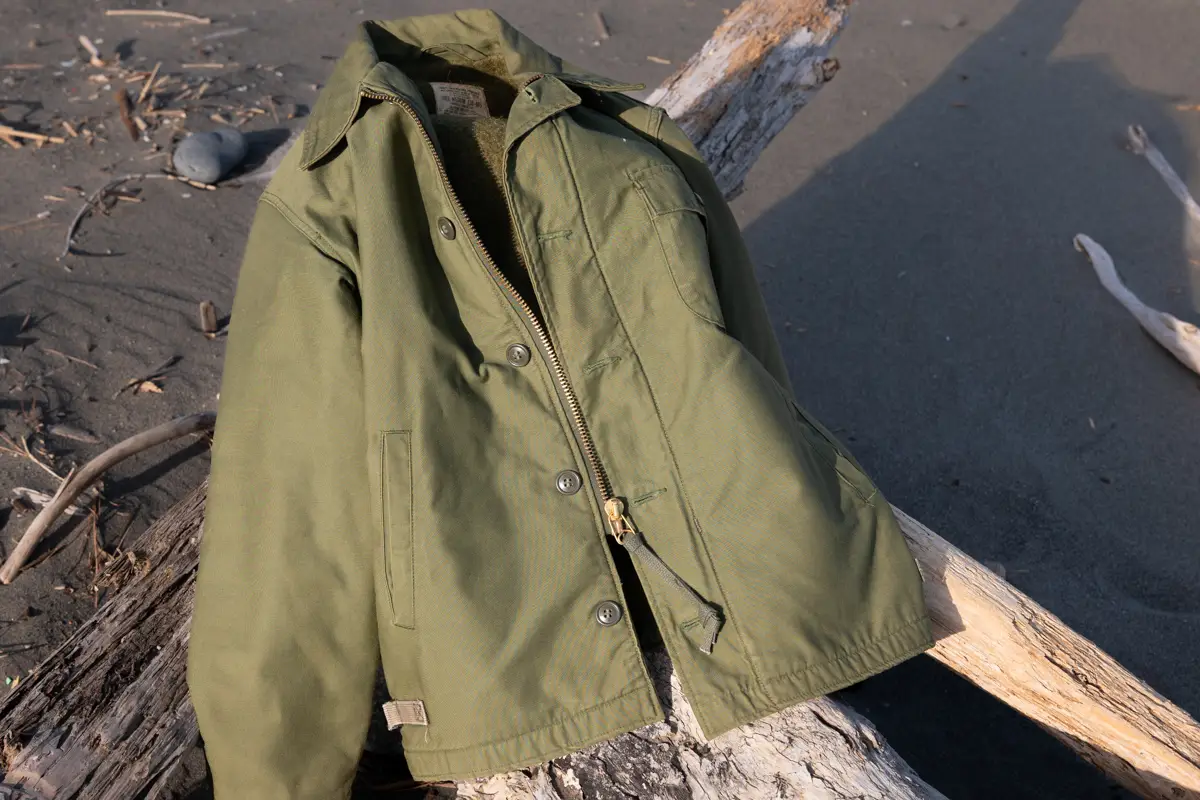
  • M65 Field Jacket 2nd.Model

    M65 Field Jacket 2nd.Model

    I like vintage clothes and I love military wear as well as denim such as Levi’s and Lee. I think the M65 field jacket introduced here is the one that people who like vintage clothes and military wear are interested in or actually get hold of at least once.

    The M65 field jacket is the royal road in the royal road of the field jacket of the military system, and the original is the military uniform of the US military supply, and the one that the US military regularly supplied to the member that comes out in second-hand clothes, the one that the regular contractor sold for the public, and the one released from various brands that made M65 a motif. The field jacket is a jacket that has many opportunities to be worn and seen by many people such as those who wear it.

    I love M65 field jackets and have three of them in different sizes and different ages.

    • 2nd model (1969 made by APPLEL CORP OF AMERICA) Aluminium zip, epaulettes etc Size Small-Short
    • 3rd model (remake of New Air Vintage, made in 1970s *tag removed so not identifiable) Brass zip, Medium-Short
    • 3rd model (made by ALPHA INDUSTRIES in 1982) Brass zip, epaulettes, etc. Size Small-Short (very tight)

    The one introduced this time becomes the second generation M65 that is most frequently used and was supplied by the US Army in the late 1960s, is called the second model, and revised the problems of the initial model (such as the change from no epaulettes to having epaulettes). (Made in 1969)

    The second model is famous for being worn by Robert De Niro in the film Taxi Driver.

    It is a real military uniform, and functionality is high, and the stoic form which arranged futility is very masculine, and it is very convenient outerwear which can make an atmosphere even if it is only put on denim and a rough jacket.

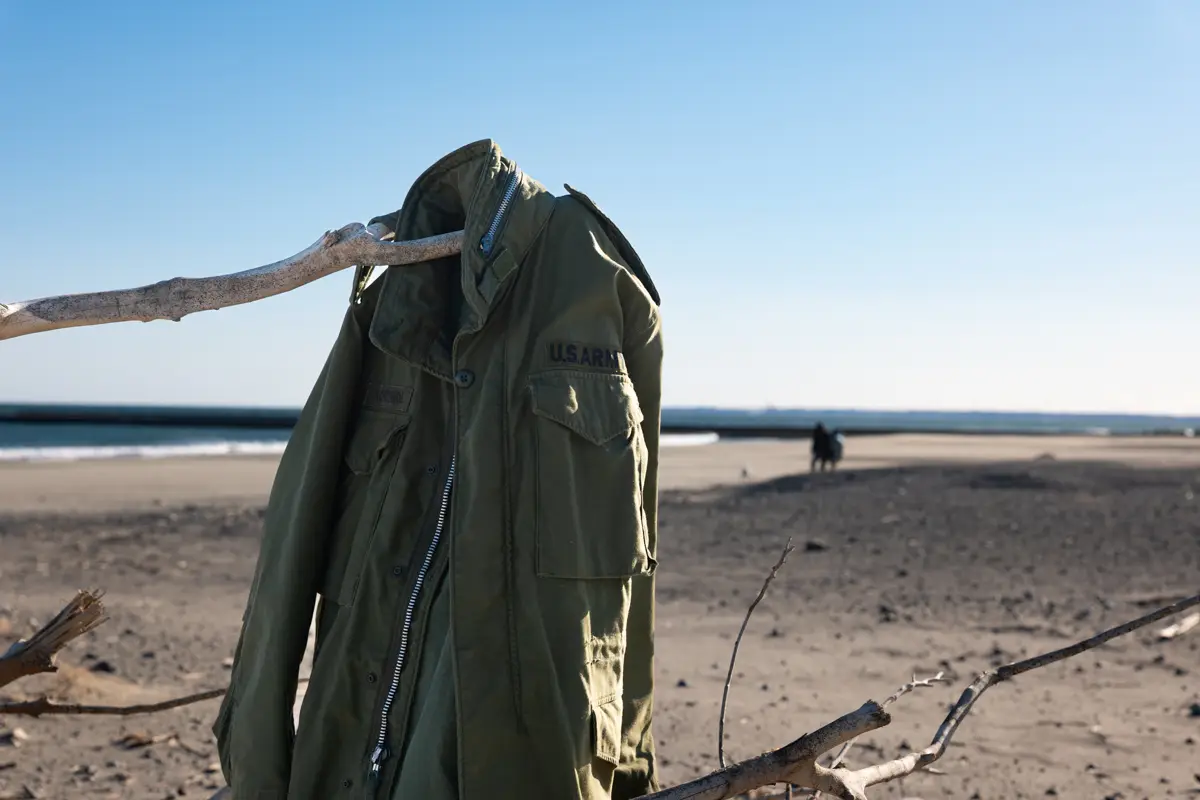
    M65 Field Jacket 2nd.Model
    M65 Field Jacket 2nd.Model

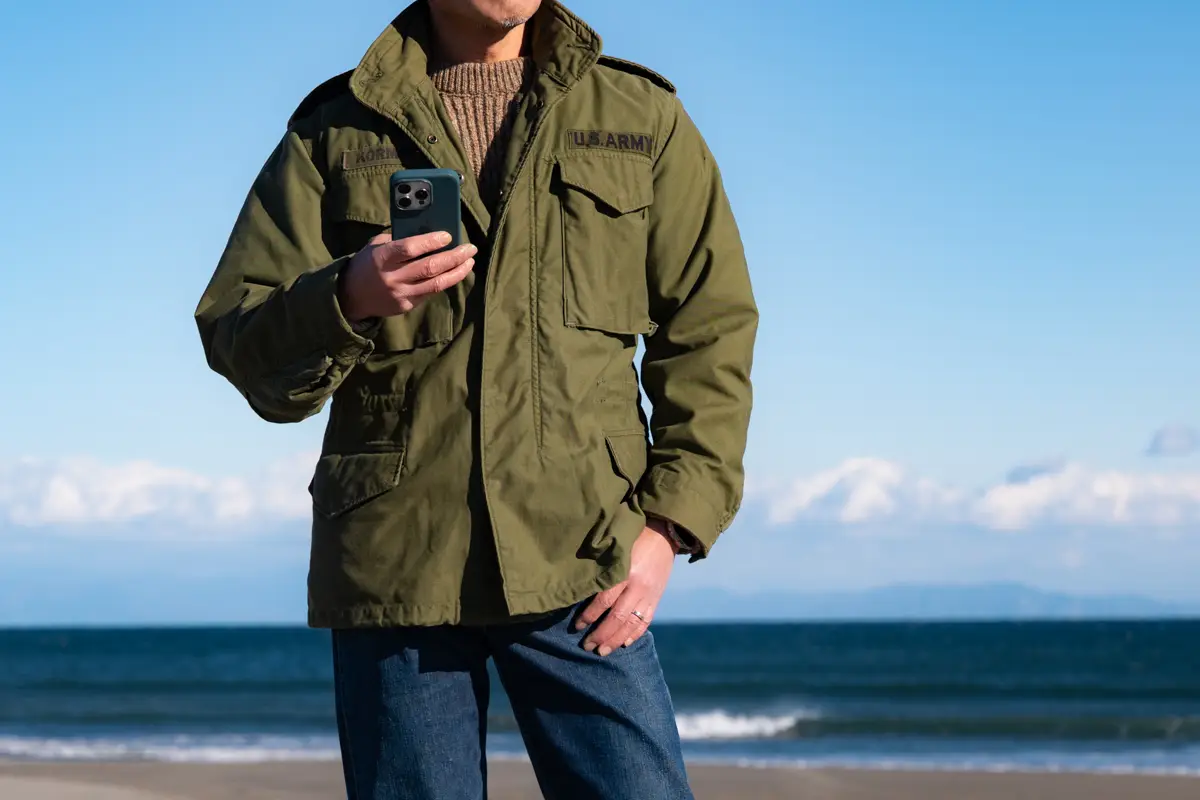
    The one I use will be the 2nd model, an older one with epaulettes and an aluminium zip.

    M65 Field Jacket 2nd.Model
    M65 Field Jacket 2nd.Model

    The functional beauty of the motifs adopted by the US military for functionality, such as the dual front closure with zip and buttons, four large flap pockets, stand collar with retractable hood and epaulettes on the shoulders, are characteristic of the M65 and have produced countless followers.

    Introduction.

    M65 Field Jacket

    The M65 field jacket is a field jacket that was regularly used by the US military from 1965 to 2008. The fabric is a thick cotton-polyester blend surface and lining with a thin liner.

    This means that it is not associated with the lightness that you might imagine from cotton-nylon outerwear. It is a genuine military garment and can be said to have a convincing mass when considering its durability and functionality.

    As for the characteristic form, it is khaki-coloured because of its military specifications, epaulettes on both shoulders, four pockets with flaps, a stand collar with the hood stowed away, the front opening and closing is a double structure of zip and button, etc., and it has excellent functions based on its use as a military uniform and was inspired by the motif of the The outerwear is enormous and its influence on various outerwear designs is immeasurable.

    Various outerwear with the M65 motif are in circulation, including authentic second-hand clothing that was regularly issued to members of the US military, as well as those made for civilian use by contractors who are official suppliers to the US military, including various brands from top maisons.

    The M65 field jacket has a hard image because it is a genuine military uniform, but in fact it is very easy to wear and is an outerwear with excellent compatibility with various trousers and innerwear, so you can enjoy a variety of outfits if you have one.

    Field Jacket.

    I often have the opportunity to wear field jackets, which are a little rougher and more enjoyable than tailored jackets, as outerwear to match my denim. In addition to the M65 field jacket in this article, I also use Brunello Cucinelli field jackets, the M43, which is the ancestor of the M65, and the M47, which was adopted by the French army and influenced by the M43.

    [ Brunello cucinelli fieldjacket’s article ]

    [ M43 hbt fieldjacket’s article ]

    [ M47 fieldjacket’s article ]

    Field jackets are basically made of a single piece of cotton or cotton-polyester and are mainly worn in spring and autumn, as they are cold in mid-winter and hot in mid-summer. The above Brunello Cucinelli, M43 and M47 are used as outerwear from spring to autumn.

    The M65 is a little thicker fabric and has a liner, so it is warmer than the M43 and M47, but it is still a single piece of cotton polyester with a liner, so you need to wear something warmer as an inner layer for mid-winter wear. Although I do not own one, there is also a thermal cotton liner made for the M65, which can be buttoned on and off.

    I wear a thick sweater such as a fisherman’s jumper as an inner layer in midwinter, and not only M65s, but also military field jackets are made with ease of movement as a priority, so there is a reasonable amount of room in the sleeves and body width, so a thick inner layer can be worn without problems.

    2nd.Model

    The M65 field jacket introduced here is the second model made in 1969.The M65 is largely divided into four generations, starting with the initial model without epaulettes, followed by the 2nd model with epaulettes and an aluminium zip, the 3rd model with a brass zip and the 4th model with a plastic YKK zip. The 4th model has been changed to a YKK plastic zip. (There are minor changes.)

    I chose the 2nd. model because I was looking for something in the right size, the size that fits me is the Small-Short and the Small-Short happened to be the 2nd. model in stock. As a result, I like the classic 2nd. form as well, but I didn’t start out looking for a 2nd. model. (I found out about the generation and the form after the purchase.)

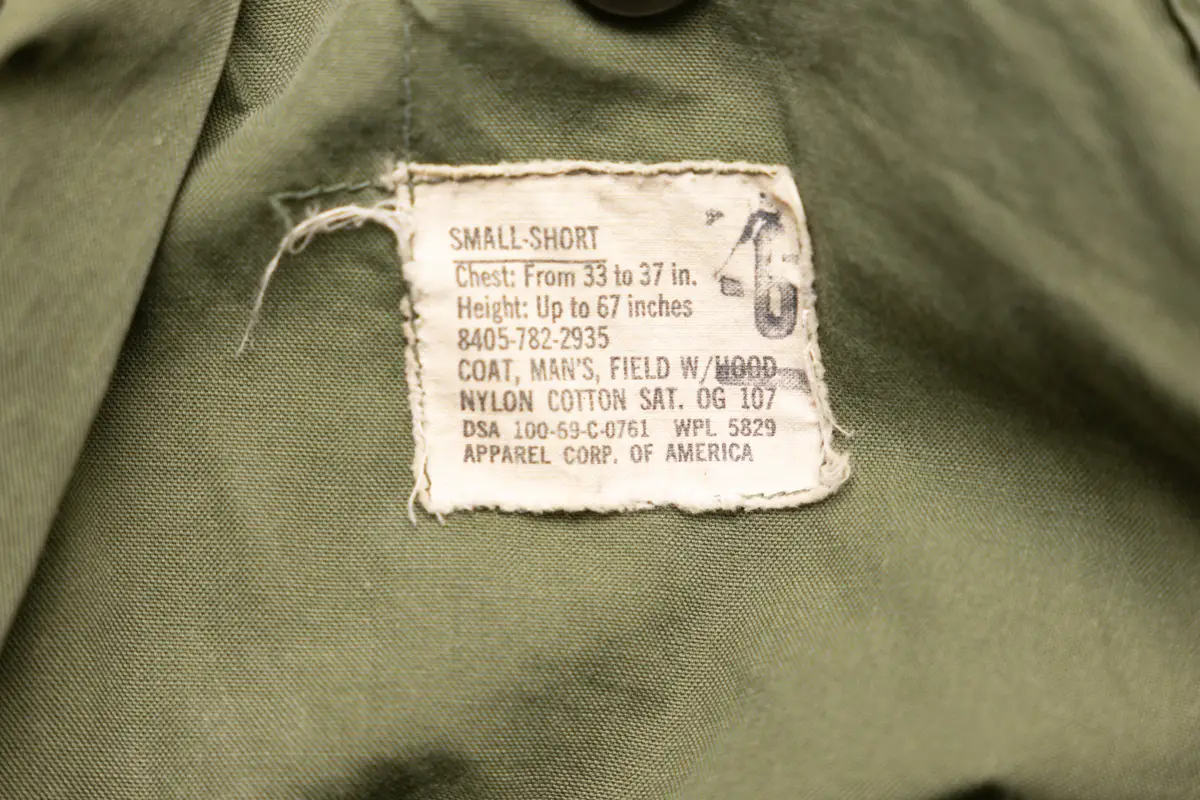
    The M65 field jacket has a tag on the inner neck, and by checking the contents of the tag, you can find out the age the US military issued the jacket, the size, etc. The DSA-100-69-C-0761 on the image of the tag below is the contractor information (delivery information) and the 69 in 100-69 indicates the year of manufacture.

    The M65 Field Jacket Second Model differs from other models in that it features:

    • Aluminium zippers
    • Epaulettes
    • Gusseted cuffs
    • Chin strap made from the same fabric as the collar

    These are its distinguishing characteristics.

    1.Product label

    M65 Field Jacket 2nd.Model
    M65 Field Jacket 2nd.Model Product label

    The tag displays the chest width size, applicable height size, management number, contractor number, and contractor name. The “69” in DSA-100-69 denotes the year of manufacture.

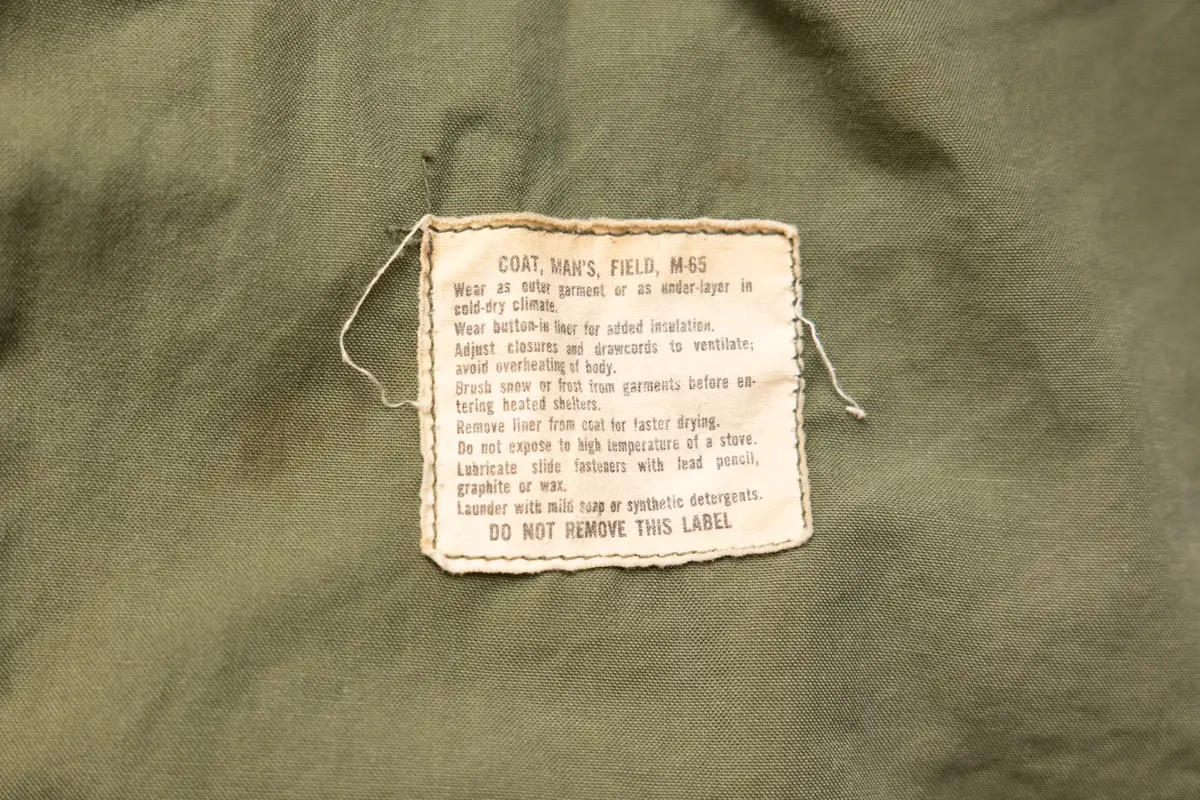
    2.Product label on the right side

    M65 Field Jacket 2nd.Model
    M65 Field Jacket 2nd.Model Product label on the right side

    The tag on the right side contains care instructions.

    3.Epaulettes

    M65 Field Jacket 2nd.Model
    M65 Field Jacket 2nd.Model Epaulettes

    These are shoulder epaulettes. They have been fitted since the 1966 second model.

    4.Aluminium zip fastener

    M65 Field Jacket 2nd.Model
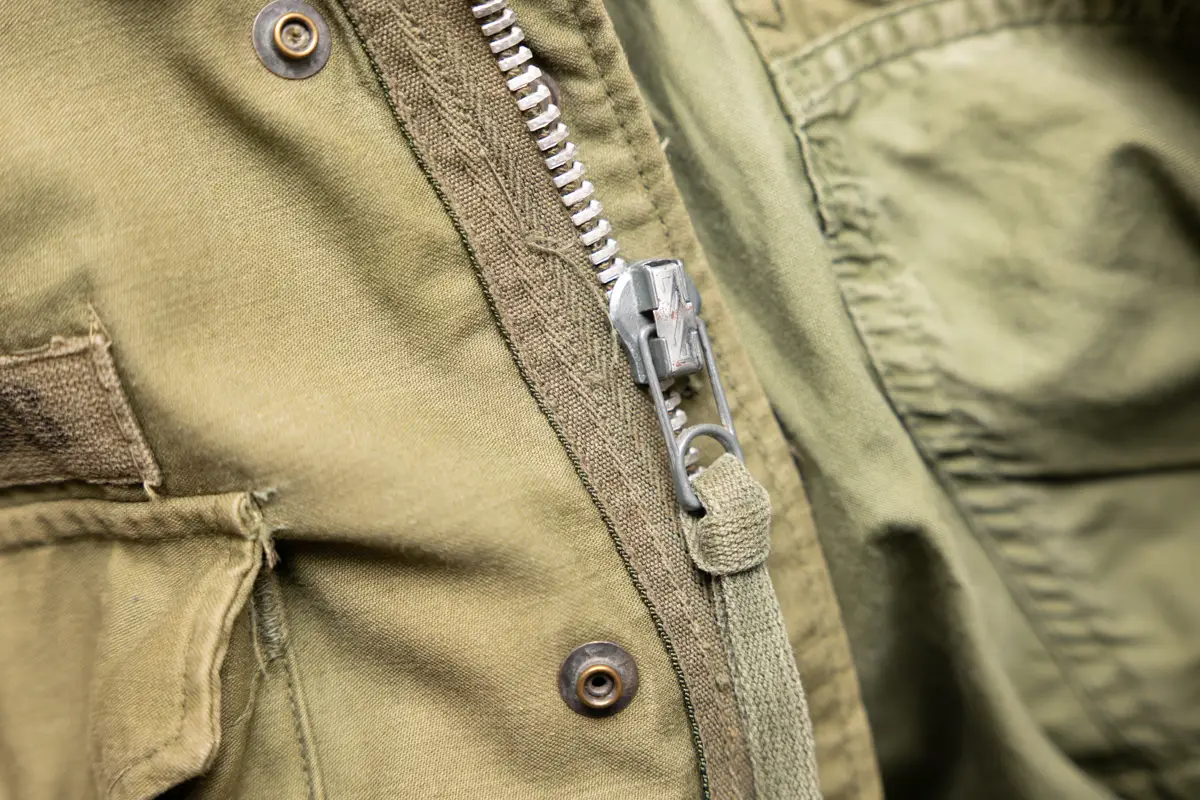
    M65 Field Jacket 2nd.Model Aluminium zip fastener

    The front opening and closing, along with the hood storage section at the collar, feature aluminium zip fastenings.

    5.neck strap

    M65 Field Jacket 2nd.Model
    M65 Field Jacket 2nd.Model neck strap

    The chin strap securing the stand collar is made from the same material. This is also a feature of the second model.

    6.Cuff adjustment

    M65 Field Jacket 2nd.Model
    M65 Field Jacket 2nd.Model Cuff adjustment

    It features an adjustable gusset at the sleeve opening. This is also a characteristic of the second model.

    Pages: 1 2

  • Hermes Hat and Rectangle.

    Hermes Hat and Rectangle.

    I frequently use accessories such as hats, scarves, and gloves, and they prove invaluable during the colder winter months. Whilst their primary purpose is warmth, incorporating slightly more refined pieces into everyday outfits allows one to enjoy a more sophisticated look.

    This time, I’ll introduce two accessories I use that elevate everyday outfits to a more refined aesthetic: a Hermès hat and a Hermès Rectangle scarf.

    When one thinks of Hermès, iconic women’s handbags like the Birkin or Kelly naturally spring to mind. However, their menswear and accessories also boast exceptional items crafted with considerable attention to detail. 

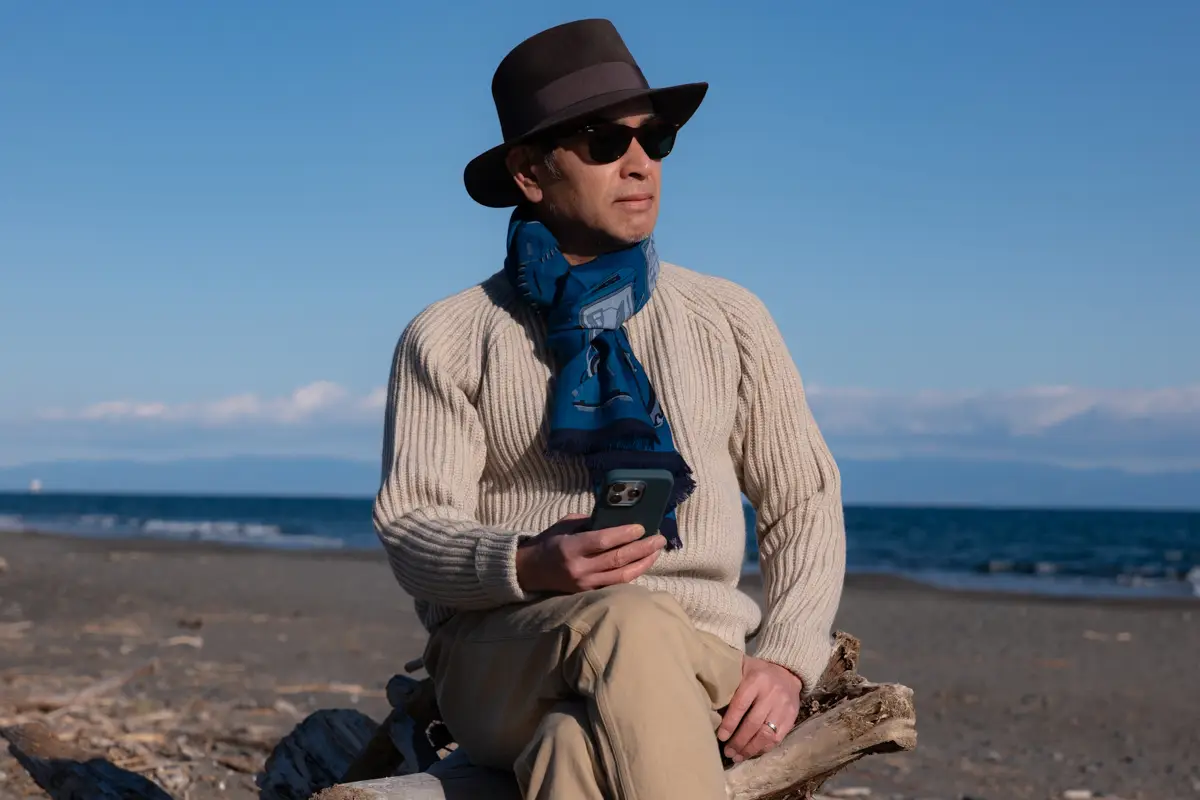
    This time, I’ve paired the Balthazar felt hat with the Rectangle cashmere-silk scarf, combining them with the Boncoura cashmere fisherman’s sweater and Brunello Cucinelli shearling biker jacket previously featured.

    The brilliance of Hermès lies not only in the quality of its materials and craftsmanship, but also in its exquisitely French colour palette.

    Whilst I generally favour conservative colour choices myself, incorporating Hermès’ French-inspired approach to playing with colour adds an extra dimension of enjoyment to styling.

    Hermes Hat and Rectangle
    Hermes Hat and Rectangle.

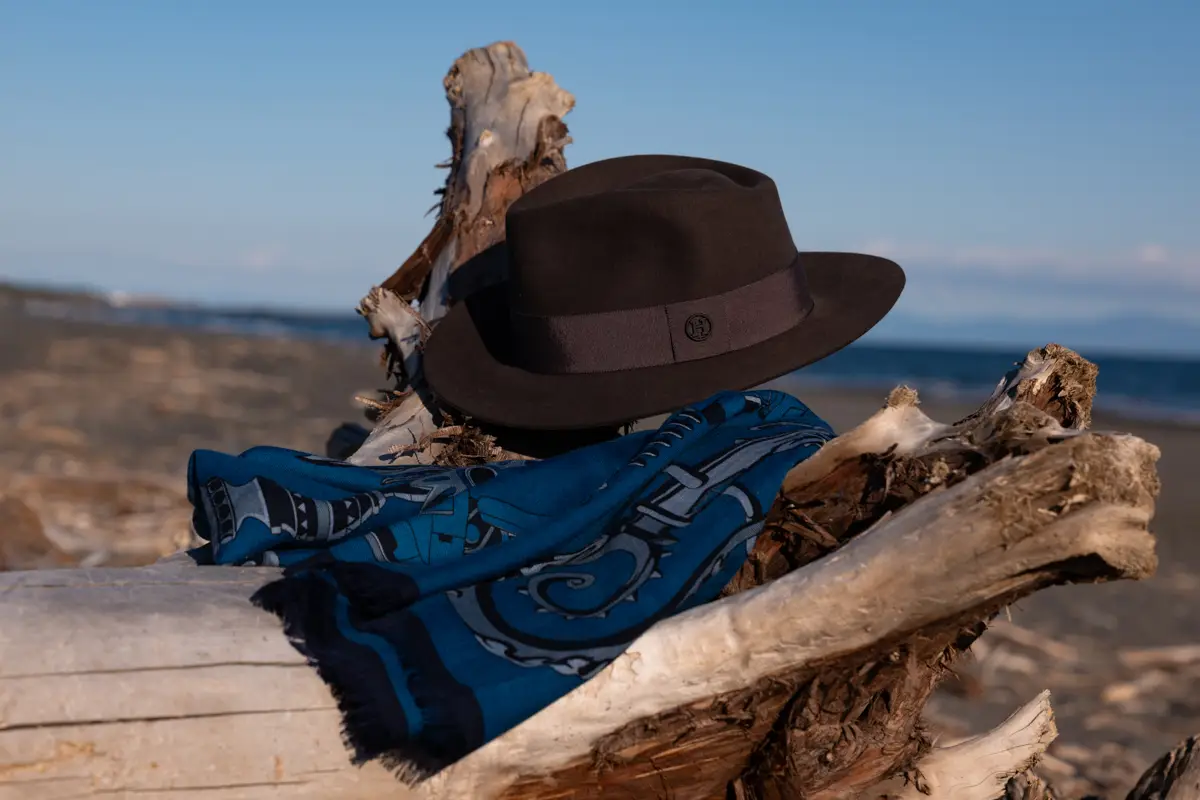
    The Rectangle, featuring a base in that exquisite blue only Hermès can achieve, combines a bold pattern with three harmonious shades of the same colour family.

    Paired with a hat in a coffee-toned, subdued dark brown, it presents an Italian-inspired marrone e azzurro (brown and blue) palette interpreted through a French lens.

    Introduction.

    Hats

    As I’ve mentioned in past articles, I have a habit of always wearing a hat. This isn’t so much about fashion as it is about being naturally lazy; even when my hair is a mess, putting on a hat tidies it up nicely, so it’s become a natural habit.

    Having worn hats for many years, I own quite a collection.

    The overwhelming majority of my winter hats are knitted, and I wear them almost exclusively during the colder months. The primary reason I use knitted hats so often is, of course, their warmth. Additionally, knitted hats have the effect of making the head appear smaller.

    The hat I’m introducing this time, the Hermès Balthazar, elevates the casual look I usually achieve with knitted hats to a more refined style.

    Stoles

    During winter, I frequently use scarves and stoles. My go-to is a lightweight cashmere stole by Brunello Cucinelli. When I want a slightly more casual look, I opt for a thicker, reversible cashmere scarf by Cruciani. I generally stick to cashmere scarves, but for pieces with beautiful patterns, I use cashmere-silk stoles as scarves.

    A defining feature of the scarves and stoles I own is that they lack fringes. Scarves, often made from soft materials like cashmere, frequently come with fringes that serve a reinforcing purpose.

    Fringes also have a decorative quality, so wearing a fringed scarf adds a stylish touch. The fringe itself can also lend a rather cute image.

    I prefer plain, understated pieces, and I’m not in the habit of wearing decorative items, so I naturally choose scarves without fringes. (It wasn’t a conscious decision; I just ended up buying what I liked, and this was the result.)

    The colours I own are mostly muted tones like navy, grey, and brown; I don’t own many bright scarves or stoles. Given my preferences, the Rectangle I’m introducing this time features a bright, glossy blue and a bold pattern – something I wouldn’t typically choose.

    Balthazar

    The Hermès felt hat, Balthazar, features classic black and the dark brown introduced here as its core colours, with seasonal colour variations each year.

    Trends in headwear fluctuate; hats may come into vogue at times. However, with recent apparel trends leaning towards casual styles, items that pair easily with casual wear – such as caps, knit caps, and bucket hats – are currently trending over hats with a more formal feel.

    I rarely wear hats myself. I once owned one purchased from Barneys, but as I seldom wore it, I passed it on to someone else and no longer had a hat.

    My Balthazar features what’s called an H-loop, a ribbon embossed with the H mark. The colour is “café”, a dark brown, the shape is a classic hat, and the material is rabbit felt (felt made using rabbit fur). It has a lovely feel and is made quite thin.
    It was never really a hat I intended to wear often.

    However, whilst browsing for a Rectangle, I became intrigued by the hat. The combination of the hat and the Rectangle, selected and brought to me by a staff member at the Hermès Ginza store, featured an exquisite colour pairing that I wouldn’t have chosen based on my usual sensibilities. I was so impressed by its refined style that I ended up purchasing it.

    Rectangle

    The Hermès Rectangle, a cashmere silk scarf, takes its name from the French word “rectangle”, meaning rectangle. True to its name, it is a rectangular cashmere silk scarf measuring 63cm in width and 180cm in length.

    Hermès is famed for its silk scarves for women, while its range for men includes cashmere mufflers, cashmere silk stoles, and smaller silk scarves like the Carré and Losange series.

    The Rectangle I’m introducing today wasn’t originally intended for my own use. I visited the Hermès Ginza store looking for a scarf that would make a good gift. However, drawn in by the beautiful pattern and lovely feel against the skin, I tried wrapping it around my neck.

    The quality of the material and the size were just right. True to Hermès stoles, the way it unfolds beautifully when tied was exquisite, and the interesting colour variations made me want it so much that I ended up buying it myself – a case of the hunter becoming the hunted.

    Hermès’s men’s winter season scarves are broadly divided into two categories: 100% cashmere scarves and cashmere-silk stoles.

    Due to the nature of the material, cashmere scarves have limitations regarding intricate patterns and colours. Conversely, the cashmere-silk stoles feature bold colour schemes and numerous unique patterns inspired by various motifs, much like women’s scarves.

    My personal preference leans towards simple colours and patterns, yet Hermès’s magical design prowess ensures that patterns and colours which might appear garish on their own function, when actually worn, not as flashy elements but as sophisticated accents.

    I’ve succumbed to this Hermès magic, purchasing rectangles in colours and patterns I would never traditionally have chosen.

    When trying on this rectangle, the hat prepared by the staff member became Balthazar’s café. The exquisite pairing of the rectangle’s vivid blue, chosen by the staff to complement Balthazar’s dark brown, was splendid. It felt more refined than the other option available – a rectangle in grey and black – so I selected the blue rectangle.

    As a standalone piece, the grey rectangle is splendid, and my conventional sensibilities would have led me to choose it. However, the combination of the dark brown hat and the vivid, deep blue rectangle is one I would rarely select based on my own taste; it embodies the Hermès aesthetic, and that is why I chose it.

    Hermes

    My perspective may be rather old-fashioned, but French luxury brands like Hermès and Louis Vuitton strike me as catering more to affluent women than to men. They feel somewhat beyond my station, and I don’t see myself purchasing or wearing their items.

    The shoulder bag, leather gloves, and cologne I own were not chosen by me, but were gifts from my wife.Given this perspective, I had never before considered purchasing anything from Hermès for myself to wear.

    The Ranch shoulder bag, gifted to me 25 years ago, is a high-quality calf leather piece with a refined brick-red colour and a sophisticated one-shoulder rucksack design.

    However, its structure made accessing contents difficult, leading me to use it less frequently. Nowadays, however, the ingenious “bag-in-bag” solution exists, resolving past usability issues, so I intend to use it more going forward.

    I have requested maintenance for the Ranch shoulder bag at the Ginza store. Though it is 25 years old, the leather was of excellent quality from the outset. While I have used it appropriately, there is no deterioration in the leather surface, stitching, or palladium plating.

    The main work will involve leather cleaning and minor scratch repairs. The cost is not excessively high, and the turnaround time is approximately two months.

    The leather gloves gifted to me 20 years ago are still in active use today, having been cherished for over two decades. The leather is exceptionally supple, and with silk lining on the inside, they are comfortable to put on and take off. They exemplify the remarkable quality of Hermès leather goods, possessing such durability that even after over 20 years of use, they remain entirely problem-free.

    Although not an apparel item, I have been using Hermès cologne, which my wife keeps stocked for me, for over 20 years. The one I use regularly is called Jardin sur le Nil. Its refreshing citrus scent makes it unisex, suitable for both men and women.

    That being said, I recently visited the Hermès Ginza store intending to buy a scarf as a gift for a friend. I was drawn to a beautiful pattern and asked to see the stoles. Trying one on to see what it was like, I ended up wanting it for myself and purchased it.When I was shown the stoles and hats, I handled Hermès men’s apparel for the first time.

    While the expected sense of luxury and class was present, it differed from my preconceptions. They offer remarkably interesting garments, quite avant-garde with clever, quirky details in the best sense.

    Quite remarkable pieces, like a coat appearing as a standard Chesterfield but with double-layered cashmere, or a khaki coat in a stand-collar Balmaquin style. The fabric is a coarse-weave serge, in a subtly bright khaki, with calf leather sleeves.

    The collection presents garments that, worn by a gentleman of a certain age, would make for a splendidly distinguished older gentleman – an aesthetic that overlaps with Loro Piana. While Loro Piana uses ultra-luxurious materials like baby cashmere and vicuña, presenting conservative colours and designs, Hermès employs equally ultra-luxurious materials but presents garments imbued with Hermès’s unique aesthetic – or perhaps Parisian elegance – and a touch of humour.

    While seemingly basic, there’s an intriguing element that makes them feel slightly off. I felt that to truly pull off these garments, one would need an identity and considerable refinement that could stand up to the Hermès label itself.

    I hadn’t previously given much thought to Hermès items, but I’ve used their gloves for twenty years without issue; they’ve moulded perfectly to my hands. I stopped using their Ranch for a time, yet after twenty-five years of use, it remains flawless. Reflecting on it, while the leather’s durability is high, the exceptionally sturdy stitching – which never frays or renders the item unusable – is a defining characteristic of Hermès products.

    I still feel I lack the identity to truly wear Hermès items, but this hat and the Rectangle bag are simply splendid. While I can’t deny it still feels somewhat beyond my station, I intend to cherish and use them properly. Hermès items are expensive, but if treated with care, they possess the durability and timeless design to last a lifetime.

    Pages: 1 2

  • John Lobb Barros : Things I have cherished for a long time.

    John Lobb Barros : Things I have cherished for a long time.

    I present my John Lobb Barros, a pair I have cherished for over a quarter of a century, more than 25 years. This was my first pair of John Lobb shoes, and I hold them in very fond regard.

    Their form differs from the refined, clean lines of modern John Lobb designs, featuring the slightly rounded U-tip of a traditional British Derby shoe. I originally purchased them to pair with a navy blazer and grey flannel trousers.

    I bought them during the era when there was a flagship store in Minato Mirai, Yokohama, and John Lobb sales were operated by Candy Co., Ltd. Candy was a company that sold very interesting things; whilst operating John Lobb, they also sold shirts from the British brand Hilditch & Key. Later, they became famous for selling Belgian chocolate, Pierre Marcolini.

    Back then, there were only two John Lobb flagship stores in the Kanto region: the Minato Mirai store and the Aoyama flagship store along Route 246 in Gaien. The Minato Mirai store where I bought my Barros closed down, leaving only the Aoyama flagship store operating as the sole flagship outlet for a while.

    Subsequently, I purchased the Darby and Chambord models consecutively at the Aoyama flagship store. The manager there was a fascinating character. Despite the store’s reputation for selling the world’s finest gentlemen’s shoes and its high-end brand atmosphere, he had the personality of an old-school shoemaker’s father figure. He himself seemed like a leather enthusiast, genuinely loving John Lobb shoes and running the shop for that reason.

    I always enjoyed chatting with that manager and would invariably pop into the shop whenever I visited Aoyama. Back then, Gaien had the flagship store of my favourite shop, and strolling around the Gaien area – Cassina > Berluti > John Lobb > then on to Omotesando – was a real pleasure.


    My purchase of Berluti shoes came some time after acquiring John Lobb, but the manager at the Aoyama flagship store was a woman with an exceptional knowledge of men’s fashion. As my style at the time differed somewhat from the typical Berluti clientele (I favoured Carpe Diem), she often struck up conversations with me, and I rather enjoyed these fashion discussions.

    Through that manager’s kindness, I was invited to events like new collection launch parties. I recall Kazuhiko Kato, a great admirer of Berluti, attending one such occasion. Though he was of a certain age, he was youthful, tall, and had an impeccable figure. I remember how incredibly stylish he looked, wearing Berluti shoes with such flair.

    [ Berluti Alessandro’s Article ]

    I have passed on my Berluti shoes to a junior colleague, but as it is such an excellent shop, I am writing an article about it.


    Incidentally, in my mind, Candy, Cassina, and Sazaby League are three companies that introduced the world’s finest products to Japan faster than anyone else.

    Candy handled John Lobb shoes and Hilditch & Key shirts. Cassina’s Mario Bellini Maralunga sofa and Frank Lloyd Wright coffee table, alongside Cassina’s own original bed, dressing table, and dining set – I actually purchased these pieces for my home and still cherish them today.

    Though I passed on the Hilditch & Key shirts to a junior colleague fond of British fashion, the John Lobb shoes and Cassina furniture remain true masterpieces I’ve cherished for over a quarter-century.

    The Maralunga has had its leather reupholstered once, yet remains in daily use in the living room. Its robustness is such that it shows no sign of wear or wobble; it truly is a sofa for life. I use an L-shaped arrangement comprising a single-seater sofa, an ottoman, and a wide two-seater sofa.

    It is on this single-seater sofa and ottoman, relaxing, that I write this blog on my MacBook Pro. (I also purchased and love the Dyson crane-like lighting fixture I use when working on my Mac, which I bought through Cassina’s introduction).

    I still have the Agnès b. striped shirt I bought when I was young (I did eventually get rid of it), as well as Ron Harman denim, T-shirts, and Frank and Irene shirts. When it comes to Sazaby League, it has become so commonplace, probably due to its operation of Starbucks Coffee, that it would be difficult to find someone who has never used it.

    John Lobb Barros
    Barros is a U-tip shoe crafted in a slightly rounded, charmingly form-fitting Derby style.
    John Lobb Barros
    At the time, my preference for leather shoes was double-soled derbies, and Barros are double-soled.

    Introduction.

    I purchased my John Lobb shoes 25 years ago and at one point rotated between three pairs. However, when I stopped wearing suits daily, opportunities to wear them diminished. Recently, due to a change in my mindset, I’ve gradually begun wearing them again.

    At the time of purchase, I didn’t fully grasp the shop assistant’s claim that they were shoes for life. Yet, 25 years on, I truly understand what they meant by “a pair for life”.

    This brand embodies a philosophy of what truly constitutes a fine product – encompassing not only robust construction but also timeless, enduring design.

    The meticulous craftsmanship and decades of accumulated expertise mean that, with wear, the shoes gradually mould to the wearer, becoming an extension of the body. One can personally experience the legendary notion that once John Lobb shoes have been broken in, they become utterly indispensable.

    At first glance, the design appears simply well-made, lacking ostentatious flair. Yet when worn, their intrinsic quality emerges naturally – true masterpieces backed by history.

    The three pairs of Derby shoes I cherish are now discontinued, making new purchases impossible. It’s also regrettable that, with the changing times, John Lobb has discontinued the double-soled Derby itself.


    In the past, I would only wear John Lobb shoes with a suit or blazer style. However, as I’ve grown older and become less constrained by such particulars, I’ve started wearing them again.

    As I shall detail in another article, I recently purchased a pair of John Lobb Lawry boots for the first time in 25 years. The customer service at the Marunouchi store where I bought them was precisely the kind of personal, old-school shoemaker’s workshop experience I remember.

    The service and attention were truly excellent. I also had the shoes I bought 25 years ago serviced, and they even fitted rubber soles to the leather ones – something I would never have considered back then.

    In my youth, I held rather fundamentalist views and would never have considered rubber soles. However, leather soles have a significant drawback: they become extremely slippery on surfaces like marble floors, causing me to nearly fall on numerous occasions. Addressing such shortcomings is part of the shoemaker ethos that continues to be upheld by John Lobb today.


    Two John Lobb

    There are two John Lobb entities frequently mentioned in discussions: John Lobb London and the Hermès-owned John Lobb Paris. However, the vast majority of John Lobb shoes encountered in Japan are produced by the Hermès-owned John Lobb Paris. My own John Lobb shoes are also Parisian products.

    To put it simply, John Lobb London is a traditional bespoke (full custom) shoemaker, whilst John Lobb Paris operates more like a luxury shoe manufacturer, selling ready-made shoes and offering bespoke services akin to London upon request.

    Purchasing John Lobb London shoes requires travelling to London to place an order, making it rather inaccessible for the general public. In the past, they would visit Japan annually in June, holding an ordering event at the Hotel Okura.

    Some twenty years ago, I considered placing an order at this Hotel Okura event, but as opportunities to wear suits diminished, I ultimately did not proceed.

    The dream associated with John Lobb London’s bespoke service lies in the preservation of one’s own last, much like the storied lasts of its renowned patrons (including the British Royal Family and Churchill). Such a dreamlike experience is exceedingly rare.

    From what I recall, the minimum order at the Hotel Okura event was two pairs. You could choose from several Derby and Oxford styles, select the leather, and specify the shape of the toe, heel, and sole. I believe the price was around £4,000 per pair.

    Derby and Oxford

    When I first purchased John Lobb shoes, British footwear conjured images of wing-tip derbies, with full brogue detailing and eyelet work epitomising the British style.

    The double soles were quintessentially British in construction, robust and sturdy – the sort of no-nonsense, rugged footwear suited to walking on country soil, embodying the country gentleman aesthetic. Such shoes were precisely to my taste. (This preference remains unchanged to this day.)

    Regarding John Lobb’s Oxfords, iconic straight-tip styles like the City and Philip come to mind. For a time, John Lobb was practically synonymous with the Philip 2 due to its extensive media exposure, so even if you didn’t know the name, you’ve likely seen them.

    My perception of Oxford shoes was that they were slightly more formal than Derbies, intended for ceremonial or formal occasions. If Derbies were the shoes worn in the English countryside, then Oxfords were the shoes worn in cities like London – that might make it easier to understand.

    I used to frequently browse the John Lobb London website back then. The image that stuck in my mind was one of bespoke excellence, catering to many historical figures, representing the pinnacle of gentlemen’s footwear.

    Viewing the actual photographs of the shoes they produced, however, revealed surprisingly simple, almost primitive designs – in a way, rather clumsy in their styling. Yet, it is precisely that clumsy Derby form that embodies the image of British shoes I adore.

    The Barros I’m introducing this time isn’t a full brogue wing tip Derby, but it is a U-tip wing tip Derby sharing that same robust, no-nonsense image common to full brogues. The double sole is precisely why I chose Barros.

    From my youth, I have favoured a slightly more relaxed style over sharply tailored suits, preferring blazers and such. Naturally, my taste in footwear leans towards derbies over Oxfords.

    The practicality and robust simplicity of John Lobb’s derbies at the time, embodying the British country gentleman aesthetic, aligned perfectly with my own preferences. This motivated me to purchase three pairs of double-soled derbies within a short period.

    This time I’m introducing the Barros, but I hope to feature the Darby and Chambord double-soled derbies in a separate article. For introducing these two pairs, I’m considering taking photographs wearing suits I hardly ever wear anymore.

    Barros

    My Barros was purchased in 2000, so the last used at that time was 2998. Whilst I do like shoes, I’m not a specs maniac, so this is based on general knowledge: 2998 is a last exclusive to Barros, manufactured at the John Lobb factory.

    It’s a double-soled, five-eyelet, wing-tip Derby, resulting in a slightly more casual U-tip. A famous shoe with this form is the JM Weston Golf. The Golf has a rubber sole and appears slightly thicker from the side, whereas the Barros has a more streamlined form with reduced thickness.

    Not just the Barros, but a characteristic of John Lobb shoes is the pronounced curvature from the sole to the upper along the sides. This construction is what defines the highly praised comfort of John Lobb shoes.

    Examining it closely, the meticulous stitching, the beautiful curves of the toe and heel achieved through fine craftsmanship, and the lustre from the high-quality leather all stand out. However, viewed as a single pair of shoes, it is a moderate U-tip Derby, a shoe where robust, no-nonsense elements outweigh any flashy features.

    John Lobb Barros
    The curve from toe to heel is beautifully formed, and this curve is designed to enhance comfort rather than merely for visual appeal.
    John Lobb Barros
    This traditional, slightly rounded U-tip Derby shoe is a superb design whose very moderation ensures it remains timeless and never grows tiresome.
    John Lobb Barros
    Compared to contemporary shoe designs, it features a slightly rounded form with a less pointed toe.
    John Lobb Barros
    I had them serviced this time and had rubber soles fitted. This means I can wear them without issue even on slippery surfaces where leather soles would be problematic.
    John Lobb Barros
    The shoe boxes of that era featured natural-coloured paper, with the shoe’s name (sole), size, last, colour, and leather quality handwritten in ballpoint pen.

    Wearing example.

    This time, I’ve paired Barros with chinos and slim-fit cotton trousers. As beige-toned trousers complement them better, I haven’t paired them with denim.

    John Lobb Barros
    Its understated design makes it an excellent match for chinos.
    John Lobb Barros
    When viewed on their own, the slightly rounded form of the shoes looks well-balanced when worn with trousers.
    John Lobb Barros
    Pairing them with trousers that are slimmer than chinos creates a well-balanced and elegant combination.


    Barros

    • Last 2998
    • Colour: Tobacco
    • Leather: Carf
    • Sole: Double sole
    • Size: 7 1/2 E width

    Combination

    Five-Pocket Trousers: Visvim

    Shoes: John Lobb Barros

    Chino Trousers: Boncoura

    Knitwear: Boncoura

    In conclusion

    This winter, I began wearing my John Lobb Barros shoes again after a long interval and decided to write about them. Purchased back in 2000, these shoes are a quarter-century old. Yet, their condition remains impeccable, and their design shows no sign of datedness even now.

    This enduring quality is precisely what one expects from John Lobb – a brand with a long history, stubbornly committed to crafting truly exceptional products.

    Having stopped wearing suits regularly, my John Lobb shoes had been stored away in the wardrobe. Yet, when I took them out of their box after so long, they showed absolutely no signs of deterioration.

    While I’ve never disliked caring for leather goods and had applied John Lobb’s genuine moisturising cream thoroughly before storing them, I believe the fundamental reason for their lack of deterioration even after prolonged disuse is the sheer quality of the leather and the superb craftsmanship.

    This year, I gifted Berluti shoes to a junior colleague and a friend for their celebrations. I myself was considering purchasing leather shoes again after a long interval and had shortlisted John Lobb boots, a style I hadn’t previously owned.

    Given my current style, soft suede boots suit me better than formal full-grain leather ones. I purchased the classic John Lobb Lawry boots in dark brown suede.

    The service at the Marunouchi store where I bought the Lawry was superb; they even had a detailed record of the three pairs of derbies I purchased a quarter-century ago. Following that, I requested maintenance and had rubber soles fitted, considering modern practicality.

    During my conversation with the Marunouchi staff, we also got quite animated discussing the former manager of the Aoyama flagship store.

    As mentioned in the article, while John Lobb carries an image befitting a luxury brand, its dedication to the actual shoes and its customer service stance remain quintessentially traditional shoemaker. Naturally, they maintain a system for servicing purchased shoes to ensure they can be cherished for a lifetime.

    Furthermore, considering the price of the shoes, the very reasonable cost of their maintenance services can also be seen as embodying John Lobb’s fundamental ethos.

    In the past, I only wore my John Lobb shoes with slightly more formal styles like suits or blazers. However, my approach to fashion has shifted somewhat, and I now find myself wearing them more often with slightly more casual styles.

    Having worn these shoes for many years, they fit my feet perfectly and are supremely comfortable. With their timeless, ageless design, they truly are the finest shoes one can wear for a lifetime. I look forward to enjoying them for many years to come.


    Shop

    The John Lobb shop that handled this matter is the Marunouchi branch.

    The Barros purchase featured in this article was made at the Minato Mirai branch, which we previously operated but which has since closed.

    I shall cover this in a separate article, but I purchased the Rawry Chelsea boots at the Marunouchi branch and requested maintenance for previously purchased shoes at that time.

    The Barros shoes were returned to me quite promptly after maintenance, hence this article. I should add that the maintenance cost was also very reasonable.

    As mentioned in the Berluti article, Berluti meticulously maintains records of purchases made 20 years ago. Similarly, John Lobb, despite handling purchases made 25 years ago, naturally keeps thorough records and manages customer information diligently.

    Both Berluti and John Lobb are long-established houses dealing in footwear, an item used over an extremely long cycle. Naturally, they manage customer relationships over these extended periods with great care.

    It sounds simple when put into words, but how many current luxury brands actually manage customer relationships to this standard? One might think it’s quite few.

    While I’ve written about Berluti’s superb customer service, John Lobb’s customer care is equally outstanding. However, a key difference is that Berluti, having also entered the apparel market, possesses a more pronounced sense of true luxury. Their staff embody a heightened awareness of providing first-class service, consistently delivering an authentic, high-end experience.

    John Lobb, too, is regarded as producing the world’s finest luxury footwear, often dubbed the “King of Shoes”. While its image might seem closer to Berluti’s, actually entering the shop, viewing the shoes, and trying them on reveals that interactions with staff feel less like luxury service and more like engaging with skilled shoemakers.

    There is an absolute confidence and trust in their own products. Beyond that, they spare no effort in enhancing customer satisfaction by meticulously tailoring the experience to each customer’s preferences, ensuring the perfect fit for their feet, and addressing what is necessary for long-term enjoyment.

    This feels like the most important aspect – a sincerity towards the customer – embodying that old-school shoemaker’s philosophy. Perhaps the reason John Lobb is so highly regarded is best understood as prioritising service tailored to customers who genuinely love and cherish their shoes.

    I hadn’t worn John Lobb shoes for a while, but the three pairs I previously owned have all been maintained, with rubber soles fitted to the leather soles. I intend to wear them properly from now on, caring for them as I cherish them.

    Regarding the shop, I plan to summarise my experience in an article about the Lawry I purchased.

    JohnLobb Official Website

  • Boncoura Fisherman Sweater

    Boncoura Fisherman Sweater

    I love old-fashioned, low-gauge, thick, rough knits, and I love fisherman jumpers and command jumpers. This time I would like to introduce a fisherman’s jumper made by Boncoura, of which I myself am a big fan.

    Boncoura uses vintage clothing and military motifs as a motif, and with their unique interpretation and attention to detail, they make items with attention to detail, from the selection of fabrics and yarns to the smallest parts. The 66 series of denim, which was introduced in the article, is so thorough and particular that it is no more than this, and it has become excellent denim that can correspond also to modern fashion on the basis of overcoming the weak point of the original model with deep respect to Levi’s which was a motif, and the original model.

    The fisherman’s jumpers made by Boncoura are naturally also made with considerable care. The knitting with a close grain, which is a feature of the fisherman’s sweater, makes it a considerably warm jumper even in midwinter because it has a considerable mass and is made of Shetland wool close to the original wool.

    However, the wool of Shetland wool close to the raw wool is hard (often used in tweeds for jackets and coats) and when worn as a knit, the wool feels prickly if the wearer has sensitive skin. The wool contains oil, so it feels a little greasy to the touch. Because of its hard hair, it also has a slightly dry feel compared to merino or cashmere.

    Boncoura offers a wide range of Fisherman’s Sweaters in merino wool and cashmere, so that even those who don’t like Shetland wool can enjoy them, Cashmere is also available.

    Characteristics of each material


    • Shetland wool This is the original fisherman’s jumper, so it has a pasty feel and a hard, prickly feel, but the texture is classic and the style in which it is worn is very wild and cool.
    • Merino Wool This is an excellent way to ease the quirks of Shetland and enjoy a fisherman’s sweater with the feel of other knits. The texture of the merino makes it look more elegant than Shetland wool.
    • Cashmere The comfort is superb and the cashmere has the best texture. The cashmere is luxuriously used from mass and isextremely warm and comfortable.

    Boncoura’s fisherman jumpers are available in the three types described above.

    I love two of them: the brown Shetland wool type, known as Café Au Lait, and the white Fisherman’s Sweater with luxurious cashmere, which is introduced here.

    The actual knitting is thicker, more massive and very tightly knitted than it looks in the pictures, and the amount of cashmere used is about the same as three regular middle-gauge cashmere knits, making it a very luxurious fisherman’s jumper.

    The silhouette of a fisherman’s sweater

    Boncoura’s great sense of how to digest original items into contemporary fashion is outstanding in their clothes making. One of the characteristics of Boncoura’s fisherman jumpers is the raglan sleeves.

    The conventional fisherman’s jumper is made thicker and warmer by knitting the fabric with a tight knit, but due to the structure of the knitting, it is difficult to create a curved line, and it is sometimes difficult to create a sleek silhouette when wearing it.

    This feature (which is both the charm and the character of a rough-wearing fisherman’s jumper). The sleeves are made with raglan sleeves and the line around the chest from the shoulder is made into a clear silhouette so that the sweater can be worn in a modern way. This is also Boncoura’s unique attention to detail, and this ingenuity is also common to the silhouette of the denim that is developed to crease beautifully.

    Boncoura Fisherman Sweater
    This rough fisherman’s jumper is made from luxurious, high-quality cashmere and knitted thickly and densely, so it is warm enough to be worn on its own even in the middle of winter.
    Boncoura Fisherman Sweater
    Classic Shetland fisherman’s sweater in luxurious cashmere.

    Introduction.

    I’ve always adored classic, timeless pieces, and the fisherman’s sweater my parents wore during my childhood is one of my absolute favourite items. The fisherman’s sweater has its roots in the knitwear worn by British fishermen as cold-weather gear, featuring a tightly knitted, thick construction.

    While the fisherman’s sweater is a motif I greatly admire, one drawback is its overall volume. From a modern fashion perspective, this bulk can create an image of looking rather puffy. Furthermore, the voluminous styling limits the outerwear that can be layered over it, somewhat restricting the occasions when it can be worn.

    As I’ve grown older, my approach to dressing has changed considerably. Whereas before, there was an unwritten rule that outerwear was essential in the depths of winter, my perspective has shifted to thinking that even in midwinter, if it isn’t cold, outerwear isn’t strictly necessary. 

    This change in how I approach dressing has led me to embrace the fisherman’s sweater, which I previously avoided due to its limited wearability. It is the fisherman’s sweater from Boncoura, featured here, that has given me this new perspective. Even during the harshest winter days, daytime temperatures in the metropolitan area are warm enough to go without outerwear, making it invaluable for weekend strolls.

    Incidentally, the reduced opportunity to wear down jackets also stems from this shift in clothing philosophy. In metropolitan winters, wearing a down jacket can become rather warm and feel somewhat over-specification. (I’m actually considering wearing down jackets again recently.)


    Characteristics of Boncoura’s Clothing Production

    As mentioned in other articles, I adore the clothing developed by Boncoura and have several beloved items. The excellence of Boncoura’s garments stems from a profound respect for vintage pieces, resulting in meticulous attention to detail throughout their construction.

    Naturally, Boncoura’s superb craftsmanship is matched by an exceptional approach to ageing. With long-term wear, their pieces develop a natural, well-preserved vintage-like patina.

    Each Boncoura item features a generous sizing philosophy, offering a range that allows anyone to create a wonderful style that showcases Boncoura’s dedication. This broadens the scope for styling possibilities.

    Boncoura size range

    My tolerance towards sizing is evident in my collection of 66 denim. I favour Boncoura’s 66 denim range, owning five pairs: 30-inch and 32-inch indigo, a 32-inch cut-off summer denim, a 32-inch pre-dyed black denim, and a 30-inch white denim.

    [ Boncoura66’s Article ]

    Though the colours differ, the reason I end up buying five pairs from one series lies in their sizing. I deliberately purchase two pairs in 30-inch and three in 32-inch – choosing the larger 32-inch size rather than a perfect fit has its rationale.

    Boncoura’s sizing philosophy means the “just size” fits the body much like traditional denim, while the larger size is designed not to appear as oversized as conventional denim would.

    As mentioned in Article 66, Boncoura denim features meticulously calculated crease placement. These creases form beautifully, resulting in exceptionally stylish fading as the jeans are worn in. This synergy means that well-defined creases create a sleek, flattering silhouette. To fully appreciate this attractive fading, we recommend selecting a true-to-size pair and wearing them to establish crisp creases.

    Opting for one size up will still create creases, though not as pronounced as with a true-to-size fit. These creases still form beautifully, meaning even a larger size can make your legs appear slimmer. Personally, I own a 30-inch pair of indigo-dyed 66s to enjoy the fading process, and a 32-inch pair for more everyday wear, where I prefer a more moderate fade.

    For cut-off denim worn in summer, I choose 32 inches as a slightly looser fit is more comfortable. With black denim, I prefer 32 inches to achieve an overall even fade rather than focusing on whiskers or honeycombing. For white denim, where fading isn’t a concern, I select the exact size 30 inches because a clean crease pattern creates a more flattering silhouette.

    One of Boncoura’s hallmarks is how altering the size of the same item allows you to enjoy different silhouettes and styling. If you wish to savour the slightly distinctive colour tones and styling achieved through careful ageing, choose your exact size. For a more relaxed look, simply go up one size.

    The size range is also well-considered to accommodate various body types. This means that even as you age and your figure changes, you can select a size that fits your body, allowing you to enjoy the relaxed yet refined style Boncoura proposes. Even if, like me, you deliberately choose a size up, the styling remains intact, enabling you to enjoy a relaxed look – a unique commitment characteristic of Boncoura.

    The fisherman sweater featured here also employs a sizing approach similar to denim. The silhouette varies depending on the size chosen, allowing you to select based on your preferred shape.

    Given the weight and volume inherent to fisherman sweaters, they are constructed quite generously, with particularly ample width and armholes. For the Shetland version, I selected my usual size, 38, whilst for the cashmere, I opted for a slightly tighter fit with size 36.

    Boncoura Fisherman Sweater
    This time I didn’t manage to take many photos, but I also wear the classic Shetland wool fisherman’s sweater regularly. This one is a size 38, so I wear it slightly loose. You can see it’s a bit wider and has more room than the size 36 cashmere fisherman’s sweater in the photo below.
    Boncoura Fisherman Sweater
    Selecting size 36 will provide a slightly tighter fit than size 38 of the Shetland wool fisherman’s sweater above.

    One reason I didn’t take many photos of the Shetland fisherman’s sweater this time is that it still hasn’t been worn in enough and retains some stiffness. Although it’s been over five years since I bought it, I haven’t worn it that much. This year, I’ve been wearing it more frequently, and it’s currently in the process of being worn in and aged, which is why I held off on introducing it.

    I plan to write an article once I’ve worn it in a bit more and it’s broken in properly.

    Generally, the finest fisherman’s sweater is the cashmere variety, offering superb comfort including texture, though it commands a high price. However, I believe the Shetland fisherman’s sweater – primitive, closer to the original style dating back centuries, with a stiffness and feel against the skin that is by no means pleasant – can become the ultimate piece. This is achieved through the time-consuming process of wearing it in, allowing it to mould to the wearer.

    This is only possible because it’s a fisherman’s sweater, built robustly to withstand years of use. It embodies the same rugged, no-nonsense philosophy of British craftsmanship found in shoes like John Lobb, where items are made to be cherished.

    This experience truly brings home that the value of clothing cannot be judged by price alone. The fact that Boncoura routinely produces and sells such items is another reason I cherish the brand.

    Styling the Fisherman’s Sweater

    This year, I’m aiming to master wearing items that skilfully incorporate beige and brown, alongside my usual denim-centric approach. The cashmere fisherman’s sweater featured here, whilst white, leans closer to beige than what you’d call off-white. Its relaxed, perfectly balanced colour makes it incredibly versatile and a real workhorse in my wardrobe.
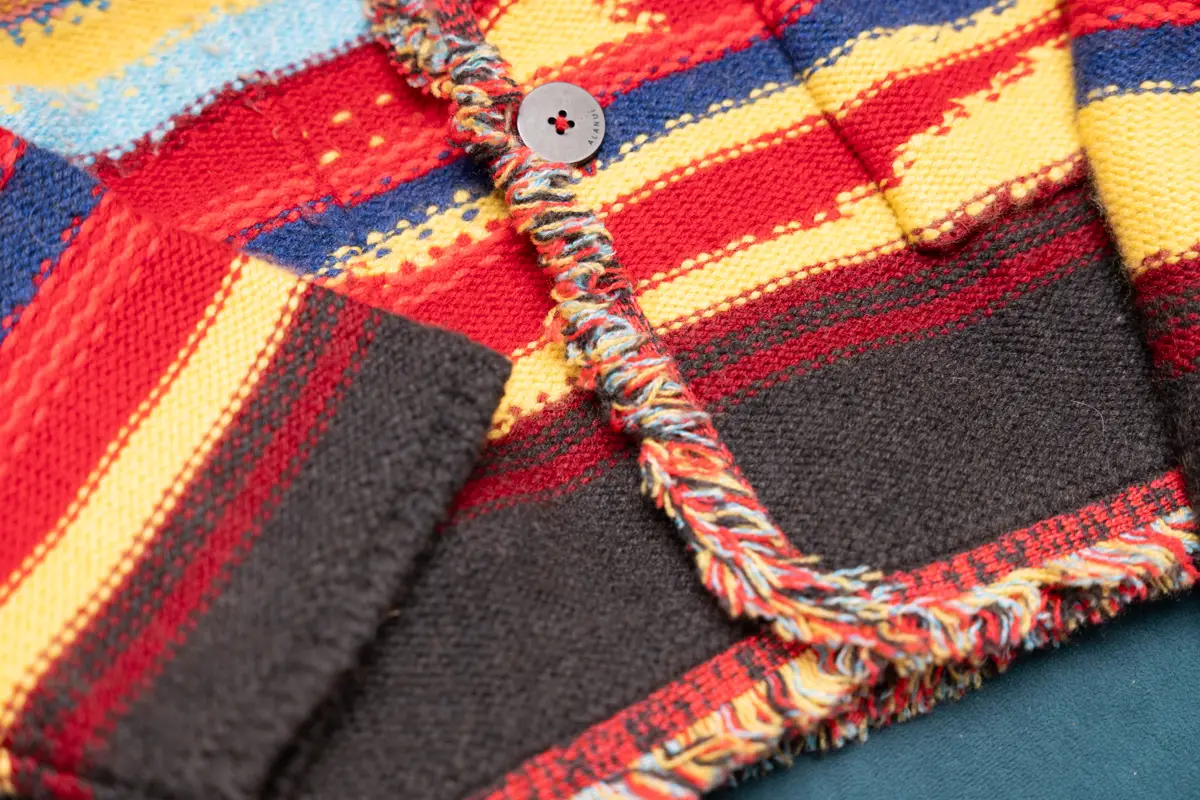
    It’s difficult to convey in photos, but Boncoura’s fisherman sweater features a dense knit and is quite thick for a knitwear piece. This means I can comfortably wear just my underwear and the fisherman sweater when temperatures are around 10°C. In such conditions, I enjoy pairing it with beige trousers or Boncoura’s khaki chino trousers.

    Once I start wearing beige trousers or chinos, my John Lobb shoes, which I wouldn’t pair with denim, come into their own. I own three pairs of John Lobb leather derbies and one pair of suede boots. One derby is the tobacco-coloured Barros, and the suede boot is the dark brown Rawry. The other two pairs of derbies are black, so I wear them with suits or slightly more formal creased trousers.

    This time, I’ve paired the bottoms with John Lobb’s Barros and Rawry. Balance-wise, the Barros is just right, but the Rawry’s smart shape, combined with the suede toning down the shoe’s presence, also has an undeniable charm.

    The key to styling a fisherman’s sweater lies in wearing it comfortably at temperatures where it suffices on its own. In colder conditions requiring an outer layer, you must consider the sweater’s thickness and bulk, which makes styling slightly more challenging.

    Personally, when it’s too cold for just the fisherman’s sweater and I need to layer another outer garment, I often opt for an M65. This is largely because the M65’s armholes are wide enough that the fisherman’s sweater’s thick sleeves don’t restrict movement. I’d like to share some styles pairing the M65 with it when the opportunity arises.

    Below are a few photos showing how it can be worn. I’m afraid I’m no model, so they may not be particularly helpful, but I trust you’ll get a sense of the style.


    Wearing example.

    Boncoura Fisherman Sweater
    Coordinating the entire outfit in beige tones creates an exceptionally refined look. I’ve paired slim-fit cotton trousers made from Visvim’s German corduroy – a fabric seeing frequent use this year – with John Lobb’s Barros shoes. Though I’m not wearing an overcoat, this ensemble is perfectly adequate down to around 10 degrees Celsius; it’s warm enough that I work up a light sweat when moving around.
    Boncoura Fisherman Sweater
    I’m pairing them with Boncourra chinos. The colour and texture of Boncourra’s chinos are exquisite, making this combination the most wearable, if understated. The brown Jhon Lobb Barros shoes, matched to the trousers, provide just the right accent.
    Boncoura Fisherman Sweater
    Boncoura’s chino trousers are sold ready-made without hem alterations, yet the length is just right. Even when crossing your legs, only a hint of sock shows through, never revealing any skin.
    Boncoura Fisherman Sweater
    I’m pairing items from Boncoura’s upper and lower, and this creates the most cohesive style. The chino trousers are 32 inches, one size larger than my standard 30 inches, but they aren’t overly wide and create a clean silhouette.
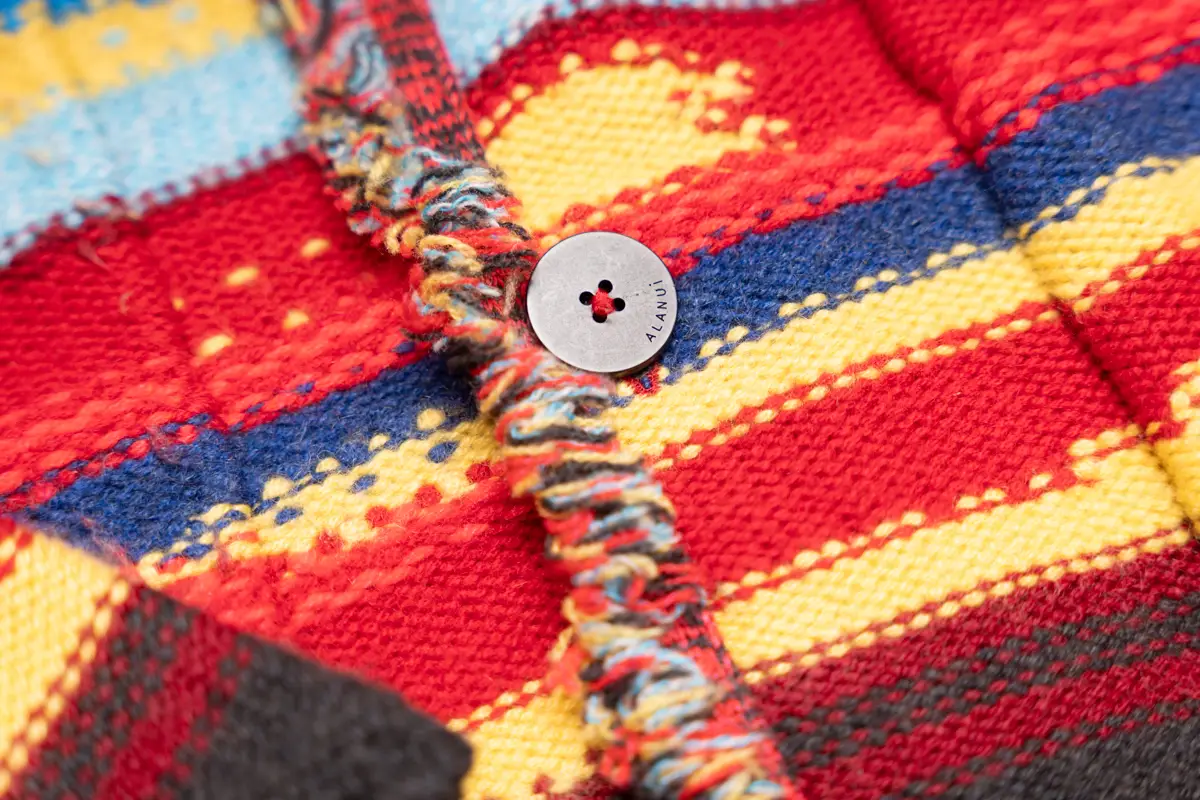
    Boncoura Fisherman Sweater
    I’ll try swapping the bottoms for John Lobb’s classic Chelsea boot, the Rawry in dark brown suede. The suede’s matte texture tones down the statement made by the footwear, lending a more refined feel.
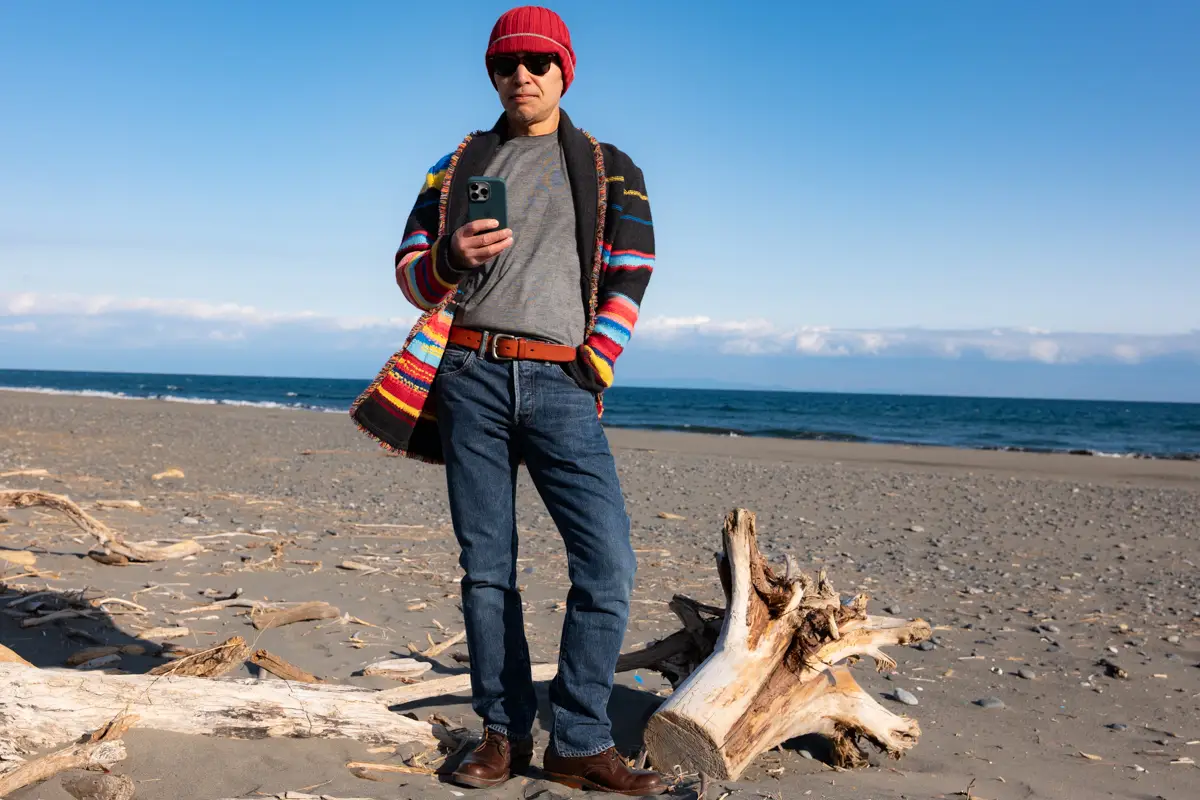

    Boncoura Fisherman Sweater
    The length of these chino trousers is just right, ensuring no skin shows even when crossing your legs. The beige, khaki, and matte dark brown colour palette exudes a sophisticated, grown-up feel. This aesthetic is a style I haven’t embraced before, but one I’d like to gradually incorporate going forward.
    Boncoura Fisherman Sweater
    My usual size is 38, but as the Fisherman has a generous fit, I opted for a 36 and wear it slightly snug.

    Details.

    • Cashmere Fisherman Sweater: 100% Cashmere
    • Shetland Fisherman Sweater: 100% Shetland Wool
    • Single Raglan Sleeve

    Both sweaters are luxuriously knitted with a dense stitch using generous amounts of wool.

    Combinations.

    • Cashmere fisherman sweater : Boncoura
    • Shetland fisherman sweater : Boncoura
    • Chino trousers : Boncoura
    • 5-pocket cotton trousers : Visvim
    • Hat (grey) : LEUCHTFEUE
    • Sunglasses black : 999.9
    • Sunglasses (Brown): Ray-Ban Wayfarer 90’s (BAUSCH+LAMB)
    • Belt: Hender Scheme
    • Shoes (Dark Brown Chelsea Suede Boots): John Lobb Rawry
    • Shoes (Brown U-Tip): John Lobb Barros

    Conclusion.

    Though a much-loved item, I rarely found occasion to wear my fisherman’s sweater. However, a shift in my own approach to clothing has led to increased opportunities to wear it. While there are various reasons for this, I believe the most significant factor is a certain pragmatism: simply enjoying the garment at the temperature it suits best. (One might also call it choosing clothing appropriate to the temperature.)

    Personally, I also seek a certain versatility in how I dress. This versatility means choosing garments suitable for a midwinter morning, daytime, or late night. However, attempting to select clothing that copes with environments where the temperature can vary by 5 degrees, or sometimes over 10 degrees, inevitably leads to dressing for the lowest temperature – the early morning chill.

    Choosing clothes based on the lowest temperature means warm outerwear becomes fundamental. This approach to dressing is a staple of the autumn-winter season and is certainly not wrong.

    However, this approach leaves little room for voluminous pieces like fisherman sweaters, which aren’t typically designed with outerwear in mind.

    I purchased Boncoura’s fisherman sweater for its design and texture, but because my winter wardrobe philosophy centred on the versatility mentioned above, I didn’t wear it much after buying it.

    This year, as a reaction to previously neglecting clothing due to environmental changes, I’ve developed a mindset to enjoy dressing a little more. Having taken some time away has shifted my perspective on clothing.

    I now enjoy clothes with a different awareness – considering where and with whom I’ll meet when choosing outfits, and not solely basing selections on minimum or maximum temperatures, provided the clothing suits the environment.

    This shift in mindset has meant my fisherman’s sweater, which had seen little wear, is now getting plenty of use.

    At the core of Boncoura’s approach to clothing is a strong emphasis not just on the quality when new, but on nurturing the garment over time after purchase. This is evident not only in their denim but also in the fisherman’s sweater featured here. Personally, I take good care of items I’ve bought over the years, and I still regularly wear quite a few pieces purchased over 20 years ago.

    The items Boncoura produces are splendid to wear now, but I also believe they will develop incredibly attractive ageing after about twenty years.

    I hadn’t worn my fisherman’s sweater much for about five years after buying it, but due to a shift in my mindset, I’ve suddenly started wearing it more often. It’s inherently very robust and has been cherished by people for centuries (historically speaking, it has a longer history than denim). I expect there will be cycles where I wear it frequently and others where I take a break, but I believe it will provide enjoyment over an exceptionally long period.


    Shop

    The Boncoura Fisherman Sweater introduced this time are purchased at Post78.
    Post78 is a shop that handles many high-quality, long-lasting items that the owner, who loves clothes, is particular about, and I often shop here. I also enjoy discussing fashion with the owner, who loves clothes, when I shop there.

    Post78

    “Post78” Global shipping is not supported. Come to the shop when you come to Japan.

  • Brunello Cucinelli Mountain boots

    Brunello Cucinelli Mountain boots

    At first glance, they appear rugged and substantial, yet when worn, they reveal a clean, refined silhouette. Crafted from Brunello Cucinelli’s signature high-quality, supple calf leather and featuring a TPU sole, these mountain boots offer exceptional lightness and comfort.

    Brunello Cucinelli’s styling proposals include unexpected combinations that diverge from the norm. This aligns with one of Brunello Cucinelli’s core concepts: styling inspired by the perspective of resort wear.

    Conventional fashion thinking wouldn’t suggest pairing mountain boots with suits or jackets. Part of Brunello Cucinelli’s appeal lies in proposing such unexpected styling, like wearing mountain boots with a suit.

    As I do not own a Brunello Cucinelli suit, I cannot personally pair mountain boots with one. Fortunately, I do own jackets for both spring/summer and autumn/winter, albeit casual ones. When wearing my beloved corduroy jacket for autumn/winter, I often have the opportunity to try Brunello Cucinelli’s suggested combination: pairing a tailored jacket with mountain boots. While seemingly an unexpected pairing, this style achieves a relaxed yet playful sophistication.

    While discussing Brunello Cucinelli’s unique, unexpected combinations featuring mountain boots, the boots introduced here are also exceptional as standalone footwear. They embody Brunello Cucinelli’s signature relaxed sophistication, representing superb mountain boots that no other brand could replicate.

    [ Brunello Cucinelli Suede penny lofer’s Article ]

    These boots are exceptionally soft and comfortable to wear. I sense the same high standard of craftsmanship, quality materials, and shoemaking philosophy common to all Brunello Cucinelli footwear. I have experienced a similar sensation with their suede loafers in the past.

    Brunello Cucinelli Mountain boots
    Crafted with meticulous care from premium calf leather to create mountain boots.
    Brunello Cucinelli Mountain boots
    The colour is café (dark brown) and the laces are also leather laces in the same shade, so there is absolutely none of the bulky, rugged look inherent in the form of a mountain boot, nor any sense of clutter around the laces.

    Introduction.

    I myself had never owned or used proper mountain boots in the past, but about 20 years ago, I saw some wonderful mountain boots by the Italian brand Giacometti at Barneys, and I had it in the back of my mind that I wanted to get some somewhere.

    At the time, I was regularly wearing a Moncler down jacket (from the mountain wear era, in a moderately smoky pastel green), and I vaguely thought it would be wonderful to pair my favourite bootcut jeans with those beautiful Giacomo mountain boots. However, Barneys stopped stocking them, and in the end, I was unable to purchase them. (At the time, I was fond of two pairs of boots: lace-ups and zip-up boots from Carpe.)

    Mountain boots are designed for climbing, so they are heavier duty than regular shoes. They have a slightly unusual shape, and the thick soles and lacing structure mean they add quite a bit of volume to your feet when worn. They balance well with puffy, voluminous items like the mountain down jackets of yesteryear, creating a sporty style.

    After that, I went through a period where I distanced myself from fashion, and I completely forgot about mountain boots. However, when I went to look at Brunello Cucinelli’s corduroy jackets, the mountain boots I’m introducing today caught my eye.

    While their styling is refined and attractive, I was astonished by their soft comfort and lightness when worn – completely different from other mountain boots. Although my purpose was to buy the corduroy jacket and matching trousers, I was utterly won over by the excellence of these unrelated mountain boots and purchased them alongside the jacket and trousers.


    A playful sensibility reminiscent of Brunello Cucinelli

    On my first visit to the Brunello Cucinelli Ginza store, I purchased a corduroy jacket and corduroy trousers, which were close to the blazer set I had intended to buy. From a conventional perspective, if selecting shoes to match, the standard approach would be to choose either the Derby shoes offered by Brunello Cucinelli or, for a slightly more relaxed look, loafers. However, as I already owned John Lobb Derbies and U-tip shoes, I hadn’t given it much thought. Whilst having shoes shown to me, the item that caught my eye was the mountain boots featured here. 

    When I asked to try on the mountain boots, the Brunello Cucinelli staff suggested that pairing them with a blazer is a delightful combination, one of the playful elements of the Brunello Cucinelli style. The white corduroy trousers also pair with mountain boots as part of the brand’s concept. They suggested that pairing them with a blazer takes the typical blazer outfit concept a step further, creating a look that truly embodies the Brunello Cucinelli aesthetic. 

    At that moment, I honestly thought, ‘A blazer and trousers with mountain boots?’ I’d previously been shown how mountain boots look great with denim or chinos, so the staff’s unexpected reaction surprised me.

    Staff say’s Furthermore, our staff advised that whilst we would typically recommend a Derby or loafer for easy styling versatility, the mountain boot option represents a choice that, if I may use an analogy, skips one or two steps beyond the entry-level Brunello Cucinelli selection. It is generally recommended as a playful choice for those who already confidently wear various items from the Brunello Cucinelli range.
    The reasoning behind this recommendation is that the mountain boots, chosen as an accent piece to complement the corduroy blazer and corduroy trousers combination you selected, look exceptionally well put together. Furthermore, considering that you typically favour denim and might wear them as bottoms with non-Brunello Cucinelli items, mountain boots are more casual and versatile than derbies or loafers, offering greater wearability and more opportunities to wear them.
    Indeed, pairing the corduroy jacket you’ve decided to purchase with the off-white corduroy trousers and mountain boots works well.
    As often discussed when introducing Brunello Cucinelli, I’d normally think, “Well, they’re both Brunello Cucinelli, but one’s more casual, bordering on formal, like a blazer, while the other’s a mountain boot for hiking – they’re items with different philosophies and purposes. How will that work?” But contrary to my expected mismatch, it looks more natural and refined than I’d imagined.

    Derbies and loafers are considered formal footwear when regarded as proper leather shoes, though they are more casual than boots. As they are leather shoes often worn as part of a suit or jacket ensemble, they create a harmonious and stable combination. Brunello Cucinelli’s derbies and loafers, whether in suede or calf leather, feature unique colour palettes and textures. When paired with jackets or suits, they offer a suitably relaxed, effortless feel. This combination is refined, something other brands struggle to achieve; seeking a similar aesthetic proves highly challenging.

    Typically, one would follow Brunello Cucinelli’s established approach of pairing their derbies or loafers to embrace the understated sophistication and elegance the brand proposes. Yet, the suggestion to deliberately step outside this, introducing an element of playfulness by choosing mountain boots, is surprising. Trying this combination oneself reveals a worldview that makes perfect sense.

    The fact that the corduroy jacket and corduroy trousers were winter items also prompted the choice of boots rather than loafers. Subsequently, when ordering a jacket for spring/summer MTM, the style paired with Brunello Cucinelli’s slim-fit denim also saw the purchase of Brunello Cucinelli’s soft suede loafers.

    Brunello Cucinelli Mountain boots
    These mountain boots are solidly constructed with thick soles, yet possess a surprising softness and lightness that belies their substantial appearance.
    Brunello Cucinelli Mountain boots
    They are meticulously crafted, with leather that is suitably supple, and the lacing system provides excellent adjustability for a perfect fit. A further characteristic is that they are comfortable to wear and do not cause fatigue.

    Brunello Cucinelli’s superb comfort

    The comfort of Brunello Cucinelli garments, stemming from their fine materials and superb tailoring, can be summed up simply as clothes that feel good to wear. This phrase is frequently discussed in fashion media.

    The suede loafers I’ve written about previously boast an exquisite combination of the suede’s softness and the sole’s suppleness. It might sound a bit exaggerated, but they offer a level of comfort rivalling that of New Balance trainers. My own reason for being such a huge fan of New Balance lies in their exceptional comfort and the sheer pleasure they bring when worn or walked in. Brunello Cucinelli’s leather shoes, crafted from an entirely different philosophy, possess a comfort level rivalling New Balance trainers, characterised by being incredibly pleasant to wear. 

    This sensation of comfort is largely due to a stress-free element; even after prolonged wear, there is minimal foot stress and fatigue. Speaking of stress-free footwear, John Lobb shoes, crafted from a completely different philosophy, also offer this quality. The leather is moderately firm, and the shoes are weighty. However, after years of wear, as the sole moulds and the leather subtly adapts to the shape of your foot, they become an extension of your foot itself. The comfort achieved when they truly mould to your foot is distinct, though the nature of that comfort differs. I plan to cover this aspect in more detail in an article dedicated to John Lobb shoes.

    The mountain boots featured here, much like the suede loafers, offer a soft feel. They are considerably lighter than they appear and possess a moderate sole flex, making them exceptionally comfortable to wear. Within that softness, there’s a satisfying sensation from the sole’s structure, allowing stress-free driving. Conventionally, one might imagine the thick soles of mountain boots unsuitable for driving, yet Brunello Cucinelli’s mountain boots feel almost like trainers, allowing stress-free driving. 

    As an aside, driving shoes remain ideal for driving; when I drove a manual transmission car, I favoured Italian Pilotti driving shoes. They were available at Le Garage in the Axis Building in Roppongi, so I bought about three pairs and rotated them for regular use. The reason I chose Pilotti driving shoes was that their soles are reasonably firm and sturdy. Compared to other driving shoes, they didn’t wear down much, even with regular walking, not just driving.

    Actual combinations

    This article presents mountain boots paired with a Brunello Cucinelli jacket. These exceptionally well-crafted mountain boots can be combined with items like down jackets for a sporty yet refined look.

    I haven’t had occasion to wear a down jacket in recent years, but while writing this article on mountain boots, I’ve been considering trying on the down jacket gathering dust in my wardrobe. My Moncler, purchased in the early 2000s, doesn’t have the clean silhouette of current Moncler pieces, including the colour, but I think its mountain-wear-inspired form complements the mountain boots well. I also own other down jackets, such as Herno and Ten-C anoraks, which I plan to try.

    This year, I’m enjoying pairing it with the Dior pea coat featured in the article, a Brunello Cucinelli corduroy jacket, and shearling riders.


    Wearing example.

    To illustrate the silhouette from the bottom, I’ve compiled examples worn with different trouser lengths. Viewed on their own, the mountain boots appear quite chunky and substantial, yet when paired with trousers, they create a clean, streamlined form. This demonstrates their versatility, as they complement a wide range of trousers without fuss.

    When styled, the most refined look emerges when paired with the slim-fit corduroy trousers proposed by Brunello Cucinelli, truly showcasing the brilliance of the worldview Brunello Cucinelli presents.

    Brunello Cucinelli Mountain boots
    Even when paired with slim-fit bottoms, the shoe’s substantial volume won’t feel intrusive.
    Brunello Cucinelli Mountain boots
    The pairing with Brunello Cucinelli’s proposed corduroy trousers is outstanding. As the trouser hem length matches Brunello Cucinelli’s recommended length, the balance between the trousers’ silhouette and the boots’ detailing is exquisite, bringing out the best in both.
    Brunello Cucinelli Mountain boots
    They pair perfectly with 501XX jeans without any sense of incongruity. They add a touch of sophistication distinct from American boots like White’s.

    Detail

    • Leather round laces for fastening
    • Leather lining
    • Lightweight microporous midsole
    • TPU rubber outsole
    • Genuine leather

    Combination

    • Mountain boots: Brunello Cucinelli
    • Beige cotton trousers: Visvim
    • Corduroy trousers: Brunello Cucinelli
    • Denim: Levi’s 501XX (1954 model)

    Conclusion.

    The mountain boots featured here were an unexpected purchase during my first Brunello Cucinelli shopping trip. Though not originally on my list, their exceptional quality compelled me to buy them. Initially chosen as a standard mountain boot pairing, I was subsequently shown how to wear them with the corduroy jacket and trousers set I bought that same day – a combination I hadn’t considered. This has made them remarkably versatile and useful.

    I’ve written about the theme of versatility inherent in Brunello Cucinelli items, but truly, the best way to understand this is to try them yourself. If you’re interested or already a fan of Brunello Cucinelli, I highly recommend giving them a go.

    While Brunello Cucinelli is often evaluated as a luxury brand (a term I’m not particularly fond of either), the quality and opulence of the products can be grasped to some extent through media articles.

    The true value lies beyond that: in the breadth of styling possibilities, and in how wearing them brings out the wearer’s identity in the best possible way. The real worth is in that world where you can express yourself effortlessly, simply by putting on the Brunello Cucinelli piece before you, without overthinking what to wear. I write these articles hoping to convey that excellence, but I realise it’s quite a difficult task.


    Shop

    The introduction to Brunello Cucinelli’s shop is covered in the article on field jackets.

    [ Brunello Cucinelli field jackets’s Article]

  • How to Wear A-2 REAL McCOY’S

    How to Wear A-2 REAL McCOY’S

    Last time, I wrote about Real McCOY’S A-2 jacket. This time, I’d like to introduce some styling combinations I couldn’t cover in that article.

    The previous piece explored how men in their forties and beyond could wear the rugged A-2 in a sophisticated manner without appearing old-fashioned. This time, I wanted to present a more universal take on styling that truly captures the essence of the A-2.

    [ A-2 Real Mccoys Article ]

    I don’t consider myself particularly well-dressed; I simply put together outfits using the clothes I own. It’s a very orthodox way of dressing, based on basic Americana combinations, but I hope it serves as a useful reference.

    Previous Recap

    Last time, I wore a Brunello Cucinelli Western shirt as an inner layer, paired with Visvim’s slim straight five-pocket trousers, and draped a stole around my neck. This combination creates an overall slim silhouette with contemporary accessories, deliberately toning down the inherent military ruggedness of the A-2 jacket.

    The combinations described in this article

    This time, I’ve paired the classic silhouette Boncoura chino trousers with: 1. Brunello Cucinelli’s sweatshirt-style cashmere knit as the inner layer, and 2. A 1980s HealthKnit sweatshirt with a brushed lining.

    For footwear, I’ve chosen Brunello Cucinelli mountain boots. While pairing them with White’s boots would create a more authentic look, I opted for these as their moderate volume and colour tone complement the A2 jacket perfectly.

    1. Cashmere inner layer

    • Outerwear: A-2 flight jacket
    • Inner layer: Sweatshirt-style cashmere knit
    • Bottom: Chino trousers
    • Footwear: Mountain boots

    2. Sweat inner

    • Outer: A-2 flight jacket
    • Inner: Polyester blend crew neck sweatshirt
    • Bottom: Chino trousers
    • Shoes: Converse All Star

    Wearing a sweatshirt underneath an A-2 jacket with work trousers brings to mind Steve McQueen in The Great Escape, though unfortunately the combination I wore this time didn’t quite achieve that McQueen style.

    Still, even simply pairing it with everyday items, the A-2 remains a rugged, masculine outerwear piece with a distinctly military, disciplined edge. It possesses a great deal of character, allowing you to project a masculine, somewhat stoic yet tough aura in a very favourable way.

    How to Wear A-2 REAL McCOY’S
    Unlike the previous version, the overall silhouette is standard, yet the A-2’s uniform-like construction ensures it retains its shape even when worn casually. This makes it an intriguing piece: a classic military item, yet its shorter length lends it a certain stylishness.

    Introduction.

    This year, I’ve been experimenting with slightly slimmer bottoms, such as Dior denim and Visvim cotton trousers. By wearing bottoms that are a touch more streamlined than my usual preferred style, I’m enjoying a more refined way of dressing.

    Whilst my beloved jeans and chinos have seen less wear than usual this year, these pieces transcend mere Americana. They form the foundation of American clothing culture – a broader category – rooted in practicality and effortless wearability (ease of movement and garment care). As such, they possess a timeless appeal.

    Whilst the theme of the previous article—wearing the A-2 in a modern, slim style—is certainly appealing, I am writing this piece to introduce a slightly more universal approach. Looking at the photographs taken for the article, there is no particularly edgy or sophisticated image, yet it serves as an opportunity to reaffirm the enduring appeal of universal men’s fashion.

    In the previous article, I touched upon the difficulty of successfully pulling off the A-2, noting how its strong character can overshadow the wearer, making them appear more as someone “wearing an A-2” rather than showcasing their own individuality. This time, however, I’ve deliberately styled it to let the A-2 take centre stage. Yet, through the power of a timeless combination, the A-2 doesn’t dominate alone; it integrates seamlessly into the overall ensemble. I hope this sense of balance comes across effectively.


    1. Cashmere knit inner layer.

    When considering an inner layer for the A-2, pairing it with a 100% cotton sweatshirt is the classic approach. However, thick sweatshirts have wide armholes, and with the A-2’s relatively narrow armholes, this can make movement slightly restricted. Furthermore, compared to 100% cotton sweatshirts, cashmere knitwear is thinner yet warmer, meaning I find myself wearing cashmere knitwear more often during the depths of winter.

    I don’t wear crew-neck sweatshirts that often; I mostly wear zip-up hoodies. The one I wear most frequently is Boncoura’s zip-up hoodie. Boncoura also has roots in vintage clothing and offers a very meticulously crafted product range; I’m a huge fan myself, so I own and love several Boncoura items, not just sweatshirts.

    Boncoura offers exceptionally high-quality sweatshirts, but their robust, thick construction makes them rather impractical as inner layers for an A-2 jacket.

    For classic pieces like the A-2 or J-100, my go-to inner layers are either thermal T-shirts or cashmere knits. I’m particularly fond of the thermal T-shirts from Real McCoy’s. True to Real McCoy’s ethos of authenticity, it’s made quite thick and with a solid construction. I’d like to introduce this one too, given the chance.

    This time, I’ve paired it with my most frequently worn cashmere knit: Brunello Cucinelli’s sweatshirt-style cashmere knit. This knit has just the right amount of volume, is incredibly comfortable to wear, and pairs easily with any outerwear, making it one of my most-worn cashmere pieces.

    I also adore Brunello Cucinelli’s cashmere zip hoodie, which shares the same volume as the sweatshirt-style cashmere knit. It’s an excellent cashmere piece that lends itself to a slightly more relaxed look or works brilliantly as an inner layer under jackets or coats. Brunello Cucinelli’s knits are characterised by exceptionally high quality and durability, meaning they are notably less prone to pilling compared to other knits.

    How to Wear A-2 REAL McCOY’S
    Pairing the A-2 with a sweatshirt (or sweatshirt-style cashmere knit), chinos, and boots (mountain boots) creates a timeless way to wear the A-2. As the A-2’s length and width are fitted (though not so tight as to be uncomfortable), the volume in the lower half creates a visual synergy, resulting in an overall silhouette that appears robust and sturdy.
    How to Wear A-2 REAL McCOY’S
    Wearing a cashmere knit as an inner layer ensures a comfortable feel, warmth and ease of wear, making it a frequent choice. Even in the depths of winter, simply fastening the zip front of an A-2 jacket, adding a scarf and gloves provides ample warmth. Given the nature of cashmere, it should not be worn daily; allowing it to rest for several days after each wear will ensure it lasts longer.
    How to Wear A-2 REAL McCOY’S
    Closing the front zip on the A-2 jacket brings out its military elements. The depth of the rise and the width of the leg on the chino trousers define the overall style. Pairing them with a slightly shallower rise and slimmer trousers refines the look, though both combinations possess their own distinct appeal.
    How to Wear A-2 REAL McCOY’S
    This time, we’ve paired the A-2 inner with Brunello Cucinelli’s sweatshirt-style cashmere knit. Its volume is just right, and it’s exceptionally warm, making it an excellent piece that will prove invaluable as an inner layer beneath various outerwear when the cold of winter truly sets in.

    2. Polyester-blend sweatshirt inner layer.

    The classic choice to layer beneath an A-2 jacket is surely a light grey crew-neck sweatshirt. This time, I considered pairing it with sweatshirts I already own, but modern sweatshirts tend to have quite bulky sleeves. When worn under classic-cut outerwear like the A-2, the armholes feel constricted and restrict movement. Even the CIOTA classic 100% cotton crewneck sweatshirt – the slimmest one I own and which I thought would be the most suitable – feels slightly tight when worn as an inner layer under the A-2.

    Wondering if there might be a sweatshirt suitable as an inner layer for my A-2 or Buco J-100, I consulted the owner of Post78, a frequent contributor to this blog. True to form, the Post78 owner had deadstock of an 80s HealthKnit sweatshirt with a brushed inner.

    This sweatshirt isn’t 100% cotton but a polyester blend. With its brushed lining and 80s sizing (more accurately described as small rather than tight), it works perfectly as an inner layer even under classic silhouettes like the A-2 or Buco J-100. I was thoroughly impressed by the owner’s impeccable selection and bought it immediately. (Post78’s very reasonable prices are also a hallmark.)

    The owner of Post78 is truly remarkable, possessing an incredibly broad range of knowledge. If you casually ask for advice, there’s a surprisingly high chance they’ll have something close to what you’re looking for. His antennae are tuned across a wide spectrum – vintage, fashion, recent, meticulously crafted Made in Japan items – and he’s well versed in the cyclical nature of trends. Consequently, he can often accommodate even rather demanding requests, like wanting to wear something that circulated quite some time ago, hasn’t been seen recently, but you fancy it now.

    The Schiesser Revival T-shirt, featured in another article, came up during a conversation about Michael Tapia’s T-shirts, whom the owner also greatly admires. When I asked the owner if they had any T-shirts with the same snug fit that Michael Tapia used to make, they pointed me towards this one, noting similarities in style, size, and fabric feel. When I tried it on, it was exactly as I’d imagined, and I now wear it regularly.

    How to Wear A-2 REAL McCOY’S
    It’s difficult to tell from the photograph, but this is a polyester-blend sweatshirt rather than a knit. The colour is exquisite – the most orthodox light grey – and when worn as an inner layer beneath an A-2 jacket, it brings out the appealing, just-right cheapness inherent in mass-produced sweatshirts. This creates an impression of an American style that favours the practical and easy-to-wear.
    How to Wear A-2 REAL McCOY’S
    Having gone to the trouble of wearing a crew-neck sweatshirt as an inner layer, I’ll pair it with trainers. Trainers that aren’t packed with modern technology, but rather classic ones like Converse All Stars, go well with this.
    How to Wear A-2 REAL McCOY’S
    Rather than dressing up, it gives the impression of naturally wearing things that are simply part of one’s surroundings. I adore this style, so I favour vintage and Americana worn in a relaxed, unforced manner.
    How to Wear A-2 REAL McCOY’S
    This is an 80s sweatshirt, and its sizing differs from contemporary pieces, offering an exquisite fit to the body. This is not the result of deliberate design for a particular fit, but rather because the sizing structure back then was smaller than today’s, making it unintentional. It possesses a perfectly balanced size that is remarkably difficult to find even when searching today.
    How to Wear A-2 REAL McCOY’S
    Chino trousers, classic trainers like Converse, and a light grey sweatshirt – a style I favoured and wore to death in my youth, but one I gradually stopped wearing as I grew older. Trying it again after so long, I appreciate the timeless appeal of this look. You do see quite a few older gentlemen who favour this style out and about, and it’s a rather excellent combination that makes them look youthful in the best sense.
    How to Wear A-2 REAL McCOY’S
    This is deadstock from the 1980s. Although it’s a US size M from that era, both the chest width and overall length are smaller compared to modern sweatshirts, and the armholes are narrower. Being a polyester blend with a brushed lining, it’s soft and warm, and compared to 100% cotton sweatshirts, it can even be worn in the dead of winter.

    Chino trousers

    Chino trousers, much like jeans, are available from numerous brands and shops. Even when simply referred to as “chino trousers”, the sheer variety makes finding the right pair quite a challenge.

    In my twenties, I was fond of chino trousers and often wore Ralph Lauren ones, but as I grew older, I found fewer occasions to wear them. Around my mid-thirties, I bought a pair of Dolce & Gabbana chinos recommended to me at Barneys. They were extremely low-rise, slim-fitting, and made from a lustrous twill. I wore them a lot, but the suggested top pairing back then was a dark brown shirt or knit polo. The look was very high-fashion, which meant I gradually stopped wearing them. I ended up passing them on to a younger colleague who favoured that kind of fashion.

    Once in my forties, I acquired and wore a set of Incotex chinos and Brooks Brothers button-down shirts in different colours. This combination was particularly appealing because Brooks Brothers, following the trends of the time, had begun producing slim-fit button-downs, which I preferred. I owned four of these slim-fit button-down shirts in different colours and wore them regularly with these Incotex trousers.

    My approach to wearing chinos involves washing them immediately after purchase to remove the centre crease. I used Ralph Lauren chinos in my twenties precisely in this manner. However, Incotex chinos are designed for the so-called jacket-and-trousers style, featuring a slightly shorter length and double-turned hems, intended to be worn with the centre crease intact. Consequently, I wore them more for slightly formal occasions than purely casually.

    When I wear chinos, I favour pairs that have had the centre crease removed. As standard chinos sold in shops typically feature a centre crease, I wash them after purchase to eliminate it. At this stage, I find older, slightly heavier fabrics more suitable than those designed for formal wear.

    Boncoura’s chino trousers

    Boncoura’s chino trousers are excellent because, whilst orthodox in their sizing and fabric feel, they create an exquisite styling when worn. This characteristic is also shared by Boncoura’s signature denim.

    They are not for everyone, but whether worn by a slim, younger person or someone with a more age-appropriate build, they achieve a suitably relaxed styling. Simply wearing them creates a style that seems to distil the best aspects of a well-honed American culture.

    This applies to Boncoura’s products in general: they conduct deep research into the items that serve as their motifs, and are extremely particular about fabrics, materials, and construction. The result is not only high quality, but also an exquisite balance in terms of the feel when worn and the styling.

    This time, I’ve paired it with the A-2 flight jacket as the bottom piece, and a significant factor in achieving this polished look is choosing Boncoura’s chino trousers.

    I personally love Boncoura’s products, not just their denim and chinos, but also their sweatshirts and fisherman sweaters. I hope to feature them in future articles when the opportunity arises.


    Wearing example.

    As wearing examples with explanations are included within the article this time, there are no additional wearing examples provided.

    Combination

    • A-2 Flight Jacket : Real McCOY’S
    • Chino Trousers : Boncoura
    • Sweatshirt-Style Cashmere Knit : Brunello Cucinelli
    • Poly-Blend Crew Neck Sweatshirt : HealthKnit
    • Mountain Boots : Brunello Cucinelli
    • Trainers : CONVERSE ALLSTAR
    • Belt : Real McCOY’S
    • Knitted Hat: LEUCHTFEUE
    • Sunglasses: Ray-ban WAYFARER 90’s (BAUSCH+LAMB)
    • Watch: Rolex Day Date (1803 1969)

    Conclusion.

    This time, I’ve styled the A-2 in a more universal combination. In my previous article, I softened the A-2’s rugged vibe by pairing it with slim-fit bottoms and a scarf, creating a modern, refined look. This time, I’ve styled the A-2 in a more universal way, likely a combination many people already favour.

    Strictly speaking, the brands of the selected items may differ, but pairing the A-2 with chinos or a crew-neck sweatshirt is a standard way of wearing it, and I imagine many people were already practising this before my article.

    The superiority of this standard combination, practised by many more than my own experiment with refinement, stems from an American approach to dressing – a highly rational way of thinking about clothing. It hints at the depth of American sartorial culture.

    This approach to clothing – not overthinking it, simply picking items at hand and deciding combinations based on mood – is, in a sense, the ultimate coordination method. (It’s also fundamental to my own approach to clothing. One could say this is the origin of why I favour vintage and Americana styles.)

    Originally, it was a style that emerged naturally, without any specific originator, by taking items commonly worn in America and combining them.

    It began with combinations worn casually by service personnel issued with items like the A-2 jacket, military trousers, and sweats as training wear. Later generations, seeing this style in films and such, were naturally influenced, imitating it. This imitation then spawned further imitations, creating a cycle that ultimately led to the style becoming subtly widespread.

    This time, when considering how to style the A2 flight jacket – a US military-issued item – the ultimate conclusion reaffirmed through this article and photoshoot was that the standard American style, born from incorporating the everyday looks of issued military personnel into regular fashion, is truly the best.

    Finally, I should add that this standard, universal combination of an A-2 jacket and chinos is one answer to the question of how to wear a leather jacket without looking like an old man, which was one of the themes this time.

    While chinos, a sweatshirt and trainers is a style anyone can pull off, when someone of a certain age wears this style, it makes them look younger in a good way and gives them a polished, stylish look.

    Combining the A-2, chinos, a crew-neck sweatshirt as an inner layer, and ideally classic trainers – this standard approach using ubiquitous items – reaffirmed my belief that it represents the optimal way to avoid the “uncle-like leather jacket” look, which was the theme of my previous article and the very reason I purchased the A-2.


    Shop

    The introduction to Real McCOY’S shop is summarised in the previous article.

    [ A-2 Real McCoy’S Article ]

  • How to Wear Brunello Cucinelli Corduroy Jacket

    How to Wear Brunello Cucinelli Corduroy Jacket

    Last time, I wrote about Brunero Cuccinelli’s corduroy jacket, but as the texture of the corduroy didn’t come across well in the photographs, I’ve added more images. This time, I’ll introduce some styling combinations that I couldn’t cover in the previous article.

    As touched upon in the previous article and the one on the shearling rider’s jacket, Brunello Cuccinelli’s garments possess not only the superior quality derived from excellent tailoring and fine materials, but also a measured sense of moderation (a restrained, understated quality) and inherent elegance in their construction.

    (This philosophy is precisely what makes Brunello Cucinelli so remarkable.) Consequently, while the styling remains elegant and refined, there is a tolerance for pairing these garments with other brands or vintage pieces – clothing whose design philosophy differs entirely from Brunello Cucinelli’s approach. Not only does it permit such combinations, but the inherent quality and dignity of Brunello Cucinelli’s creations beautifully express the wearer’s identity.

    [ Brunello Cucinelli Coruroy Jaket’s Article ]

    I don’t possess any particular flair for style myself; I simply put together combinations using the clothes I own. It’s a very orthodox way of dressing, combining Brunello Cucinelli’s basic combinations with vintage pieces, but I hope it proves useful.

    Combinations

    This time, touching on the theme of Brunello Cucinelli’s tolerance for combinations of garments created under different concepts, I paired vintage Levi’s 501XX jeans from the 1950s (the last leather patch) with a corduroy shirt from the same era. As a contrasting combination, I paired them with Brunello Cucinelli bottoms and a Brunello Cucinelli knit.

    The boots are Brunello Cucinelli mountain boots. While pairing the 501XX with white boots would create a more authentic look, allowing each item’s strengths to shine, I chose the mountain boots because their moderate volume and colour felt like they would complement the corduroy jacket.

    1. Levi’s 501XX (1954), corduroy shirt (1950s)

    • Outer: Corduroy jacket
    • Inner: Corduroy shirt
    • Bottom: 501XX
    • Shoes: Mountain boots

    2. Levi’s 501XX (1954 model), knit

    • Outer: Corduroy jacket
    • Inner: Sweatshirt-style cashmere knit
    • Bottom: 501XX
    • Shoes: Mountain boots

    3. Brunello Cucinelli Corduroy Trousers, Knitwear

    • Outer: Corduroy Jacket
    • Inner: Sweatshirt-style Cashmere Knit
    • Bottom: Denim-style Corduroy Five-Pocket Trousers
    • Shoes: Mountain Boots

    This time, upon retaking photographs, I appreciate the quality and softness of the corduroy used by Brunello Cucinelli, alongside the superb tailoring of the jacket.

    However, I realised once more that the philosophy behind Brunello Cucinelli’s clothing design is what allows one to achieve a sophisticated aesthetic simply by casually selecting and combining items from one’s wardrobe, without any particular styling technique.

    This philosophy encompasses several elements, one being that owning Brunello Cucinelli garments means they will still work when paired with other clothes years later. Combining pieces from different seasons enhances both, yet they also hold their own when paired with garments of entirely different design philosophies.

    This naturally connects to the essential idea of wearing truly good things for a long time. The brand stubbornly continues making clothes that are not only robust and durable, but also remain timeless, unaffected by the passage of time that might make them feel out of step with the era and difficult to wear.

    For instance, if I were to reach 80 years old, my figure remained largely unchanged, and I continued to love and wear this corduroy jacket, its universal design and construction would still make it work perfectly.

    For instance, if after wearing it for about 20 years, the elbows show through and the fabric becomes slightly worn, one could apply a black suede patch and continue cherishing it. I imagine it would be rather splendid to be that distinguished older gentleman, and to have such a relationship with one’s clothes. Brunello Cucinelli’s garments make this entirely possible.

    This may sound a bit stiff, but my respect for Brunello Cucinelli’s garments stems not only from the company’s admirable social values and initiatives, but fundamentally from their meticulous craftsmanship. They create truly excellent pieces, investing considerable time and effort to provide the wearer with the intrinsic value inherent in the garment itself.

    How to Wear Brunello Cucinelli Corduroy Jacket
    In the previous article, the photographs did not turn out well, making it difficult to convey the excellent texture of the corduroy jacket and the styling. I hope this article will do a better job of communicating that.

    Introduction.

    Last time, I wrote an article about the Brunello Cucinelli corduroy jacket, but I felt the photos of it being worn didn’t turn out well, making it difficult to convey the jacket’s texture and excellent styling. So, I’ve retaken the photos and am writing a supplementary article. As it’s been a while since I last updated the blog, I haven’t managed to establish a good photography routine, and the photos aren’t turning out well.

    Once a routine is established, you can mentally visualise the final image during shooting, which speeds up the process. It also serves as a reminder that I hadn’t been doing the absolute basics of photography – reviewing shots repeatedly and critically assessing their quality. After a break, my instincts for focal length and exposure fade; I’ve even forgotten the subtle exposure adjustments needed for sunrise or different shooting times.

    These aspects – not just the article’s theme, but also matters concerning photography itself and how to structure articles – are part of the enjoyment of running a blog and creating posts. I reckon I’ll gradually get the hang of it.

    As a side note, all my photos are taken using a mirrorless camera and tripod, with a smartphone tethering app for selfies. Taking photos of myself allows me to see how the clothing combinations and styling I’ve put together actually look. While it’s difficult to be truly objective about my own photos, one advantage is that it makes it easier to see whether my outfits look good or not.


    Combine 1950s 501XX jeans with a 1950s corduroy shirt.

    As mentioned in my previous article, I’m pairing it with a 1950s corduroy shirt featuring large collar loops and loop buttons – much like my cherished early 1950s Levi’s 501XX (final leather patch era).

    While I’d ideally pair the 501XX and jacket with American-style White’s boots, this time I’ve opted for Brunello Cucinelli mountain boots.

    When wearing the shirt as an inner layer, I pair it with a homburg or flat cap.

    One reason I adore Levi’s 501s is their wide belt loops. While the current trend for narrow belts means thick belts are less common these days, I personally prefer a thicker belt with my 501s.

    How to Wear Brunello Cucinelli Corduroy Jacket
    Brunero Cuccinelli’s corduroy jacket is paired with 1950s 501XX jeans and a similarly vintage corduroy shirt. Compared to the five-pocket corduroy trousers by Brunero Cuccinelli featured below, the bottoms are slightly fuller, yet the styling remains cohesive.
    How to Wear Brunello Cucinelli Corduroy Jacket
    Brunero Cuccinelli’s double-faced jacket, known as the One-and-a-Half-Breast, is tailored so that the front does not gape excessively. Consequently, even when worn casually with the front buttons undone, the styling remains impeccable.
    How to Wear Brunello Cucinelli Corduroy Jacket
    The jacket’s silhouette is so flattering that fastening the front buttons creates a more balanced overall look.
    How to Wear Brunello Cucinelli Corduroy Jacket
    This jacket is soft and easy to wear, yet its construction is meticulously detailed. The line from shoulder to chest, the taper from underarm to waist, and the perfectly measured length create a clean silhouette that sits well even when worn with slim-fit bottoms like denim or tailored trousers.

    2. Wear a cashmere knit as an inner layer.

    This creates a simple style where you simply wear a cashmere knit underneath a corduroy jacket. Worn this way, rather than putting on the jacket, it can be worn in the same manner as other outerwear (peacoats, leather items, etc.), allowing you to wear it without fuss.

    It perfectly suits the style I often mention in my articles – not overthinking what to wear, simply picking up whatever clothes you like that are to hand and putting them on. This approach means you end up wearing it more often. I feel that the true essence of Brunello Cucinelli lies precisely in this: even when worn in such a casual manner, it never loses its elegance or refinement.

    Originally, I was fond of vintage clothing, so pairing denim with a tailored jacket wasn’t something I’d done much before. However, purchasing a Brunello Cucinelli jacket awakened me to the appeal of combining denim with a jacket.

    (During the period when I shopped at Barneys: late 90s to mid-2000s) I bought several jackets recommended by staff, but compared to other outerwear, I wore them less frequently. Looking back, I realise that was a waste, but at the time, my values simply couldn’t accept the formality and refined atmosphere of tailored jackets. While they were more stylish than other outerwear, the more polished look they demanded didn’t suit my natural, relaxed style preferences back then.

    Barneys around the year 2000 was exceptionally forward-thinking, introducing me to fashion values previously unseen in Japan. My current approach of mixing garments from various styles stems largely from what I learnt at Barneys during that era.

    I’ve since passed on most of the items I bought back then to younger colleagues. Pieces like the Carpe Diem jacket featured in the article are prime examples of what Barneys taught me at the time.

    How to Wear Brunello Cucinelli Corduroy Jacket
    Instead of a shirt, pair it with a crew-neck sweatshirt-style cashmere knit as an inner layer. This softens the jacket’s formal feel, lending a more casual vibe.
    How to Wear Brunello Cucinelli Corduroy Jacket
    I’m wearing a V-neck T-shirt underneath the knit jumper. The combination of underwear, knit jumper and jacket keeps me sufficiently warm; with a scarf and gloves, I can stay cosy even in the depths of winter.
    How to Wear Brunello Cucinelli Corduroy Jacket
    Opting for a knitwear base layer instead of a shirt softens the jacket’s formal feel, creating a distinctly relaxed look. Even when buttoned up, the jacket retains its casual, laid-back vibe. By varying the colour of the knit base layer, you can introduce different looks, enjoying a sophisticated yet supremely relaxed style.
    How to Wear Brunello Cucinelli Corduroy Jacket
    Although it’s quite a relaxed style, not just with Brunello Cucinelli, double-breasted jackets look more polished when buttoned up.

    3. Brunello Cucinelli Five-Pocket Corduroy Trousers

    Pair the beige corduroy trousers in a five-pocket style (jeans silhouette) from Brunello Cucinelli as the base layer. With the jacket, inner layer, trousers, and shoes all being Brunello Cucinelli, and the material uniformly corduroy, the styling and colour palette become refined, clearly conveying the worldview Brunello Cucinelli proposes.

    As you may perceive from the photograph, Brunello Cucinelli’s corduroy is crafted exceptionally softly. Rather than the texture of denim, it offers the feel of trousers made from high-count yarn (Super 150 or higher). This lends not only a clean, refined styling and elegance but also a wonderfully comfortable, soft wear. One senses that repeat customers who adore Brunello Cucinelli return not only for the superb styling but also for this very comfort.

    How to Wear Brunello Cucinelli Corduroy Jacket
    This ensemble features no particularly distinctive elements in its colour coordination or styling, yet the refined, soft texture inherent to Brunello Cucinelli lends it an air of sophisticated relaxation. This combination is an easy-to-wear coordination even for those older than myself, possessing a timeless appeal that allows it to be cherished and worn well into later years.
    How to Wear Brunello Cucinelli Corduroy Jacket
    Typically, one would pair these with pleated trousers of a slightly fuller cut. However, by opting for slim, supple corduroy trousers with a denim-like silhouette, the overall look achieves a clean, streamlined finish. This versatility in offering items tailored to the wearer’s preferences, physique, and required environment is, I feel, quintessentially Brunello Cucinelli.
    How to Wear Brunello Cucinelli Corduroy Jacket
    The silhouette of these corduroy trousers is crafted with the slim-fit lines of jeans, yet the cohesive softness of the fabric lends a cleaner, more streamlined appearance than when paired with 501XX jeans. While mountain boots are not typically worn with this style, the very tolerance that allows them to be paired without clashing lies at the heart of Brunello Cucinelli’s approach to garment construction.
    How to Wear Brunello Cucinelli Corduroy Jacket
    The previous corduroy trousers were off-white, whereas these five-pocket corduroy trousers are a warm beige, lending a softer, more relaxed feel. Paired with Brunello Cucinelli bottoms, the jacket’s exquisite tailoring is further accentuated.

    Burunello Cucinelli Corduroy Trousers

    The official name for the trousers paired with the bottoms this time is as follows.

    Italian Fit Garment-Dyed Cotton Corduroy Five-Pocket Trousers

    These five-pocket trousers feature a modern, distinctive look with a sporty edge, crafted from garment-dyed cotton in a fine-wale corduroy. The subtle stripe texture perfectly complements seasonal colours. The Italian Fit hugs the body closely while offering a slightly softer silhouette than a standard fit.

    • Colour: Ecru
    • Fastens with metallic buttons
    • Front watch pocket
    • Back patch pocket
    • Simple hem
    • Italian Fit: Regular construction around the hips and waist for a clean, harmonious fit.
    • 100% Cotton

    Quoted from the Burunello Cucinelli official website (Japanese)

    Brunello Cucinelli’s trousers feature an Italian fit for their slimmest line. (Their denim range offers an even slimmer line called Slim Fit. I own a pair myself and have featured them in a previous article.)

    The off-white corduroy trousers worn as part of a suit set, featured in my previous article, are the standard fit – the typical slimness for slightly more formal trousers designed to be paired with suits or jackets.

    As my style is fundamentally denim-based, I often pair corduroy jackets with denim. However, when I wish to wear a white-toned colour on the bottom half, these corduroy five-pocket trousers prove invaluable.


    Wearing example.

    As wearing examples with explanations are included within the article this time, there are no additional wearing examples provided.

    Combination

    • Corduroy jacket: Brunello Cucinelli
    • Denim: Levi’s 501XX 1954 edition
    • Sweatshirt-style cashmere knit: Brunello Cucinelli
    • Mountain boots: Brunello Cucinelli
    • Belt (501): Henry Quir
    • Casquette: Real McCOY’S
    • Knitted cap: LEUCHTFEUE
    • Sunglasses: Ray-ban WAYFARER 90’s (BAUSCH+LAMB)
    • Watch: Rolex Day Date (1803 1969)

    Conclusion.

    This time, I paired a Brunello Cucinelli corduroy jacket with vintage 501 jeans and Brunello Cucinelli bottoms. Comparing the photos taken, pairing the top and bottom with Brunello Cucinelli still creates a cleaner, more refined look.

    Personally, I favour a style where I casually mix and match things I like, hence pairing it with Levi’s. However, this shoot made it abundantly clear that Brunello Cucinelli’s charm is best expressed through the style Brunello Cucinelli itself proposes.

    There’s a part of me that resists overly polished fashion. I’d developed this fixed notion that wearing a full Brunello Cucinelli ensemble, while stylish, just wouldn’t suit me. Looking at these photos now, that’s completely unfounded. Brunello Cucinelli inherently possesses this refined yet effortless balance – never overdone.

    This transcends my own preconceptions, revealing that Brunello Cucinelli possesses a deeper philosophy – clothing that exists within a broader lifestyle, rather than being merely garments. Brunello Cucinelli’s garments inherently possess an understated quality. Consequently, however you style them, they never feel overly fashionable. (Admittedly, some combinations might not suit, but I believe the likelihood of this is considerably lower compared to other brands).

    The style Barneys proposed around the year 2000 – that sharp yet effortlessly polished mixture – formed the foundation of my approach to clothing. Yet, over twenty years on, the global apparel industry’s thinking and standards have evolved considerably beyond that era. Perhaps what I hadn’t perceived back then is the addition of universal, timeless elements within a single brand’s worldview. (I share a similar sentiment regarding Dior in another article)

    This serves as a valuable prompt for me to consider whether my approach to clothing might be becoming outdated and antiquated. I sense that boldly discarding my preconceptions and fixed ideas could bring about change, and it is something I intend to practise gradually.


    Shop

    The introduction to Brunello Cucinelli’s shop is summarised in the article on field jackets.

    [Brunello Cucinelli Field jackets Article ]

  • Brunello Cucinelli Shearing Biker Jacket

    Brunello Cucinelli Shearing Biker Jacket

    In our generation, it was called mouton, and more recently it’s known as shearling – a leather item where the sheepskin’s wool is sheared down to form the inner lining, with the leather surface facing outwards, resulting in a light, soft, and warm piece. This shearling, reimagined with Brunello Cucinelli’s sensibility into a double-faced biker jacket style, is the shearling biker jacket we’re introducing here.

    Double-faced rider jackets typically evoke rather rugged items like Schott, Lewis Leathers, or Buco’s J-24. More recently, pieces like those designed by Hedi Slimane for YSL have introduced a fashion-forward element. With their biker or rock-inspired aesthetic, these are inherently tough, masculine pieces that look best on younger rock bands. Wearing them as one ages becomes considerably more challenging.

    Speaking of rock, you may have seen Slash of Guns N’ Roses wearing a double-faced rider jacket as part of his stage attire. Though past sixty, he wears it incredibly stylishly as a rock star. (Slash seems to favour Lewis Leathers and Schott pieces.)

    The Brunello Cucinelli shearling biker jacket, while shaped like a rider’s jacket, is designed to be worn over a suit or as a jacket substitute. This gives it a different impression from the hard, double-faced cowhide or horsehide rider’s jackets. It allows those of a certain age to wear it elegantly and subtly, projecting a masculine rather than merely rugged vibe. Due to the nature of shearling, it is exceptionally lightweight, soft, and comfortable to wear, making it an excellent piece that can be worn with ease even by those of a certain age.

    Brunello Cucinelli Shearing Biker Jacket
    The details are those of a double-faced rider’s jacket, yet crafted from shearling with a fleece-lined collar of sheepskin, eschewing the rugged, hard-wearing feel typical of standard rider’s jackets. Brunello Cucinelli’s special ageing treatment lends it a vintage, well-worn character, contributing to its soft appearance and giving it a distinctly worn-in look.
    Brunello Cucinelli Shearing Biker Jacket
    The internal logo is crafted on the surface leather. The wool lining is meticulously trimmed and curled, contributing to its comfortable feel.

    Introduction.

    In the article on the A-2 jacket, I mentioned that wearing the original A-2 requires a bit of finesse once you reach a certain age. However, the Brunello Cucinelli shearling biker jacket I’m introducing this time is an exceptional piece. Its high quality and effortlessly worn-in look mean it flatters anyone, however they choose to wear it.

    Viewed on its own, it might appear rather distinctive and challenging to style. However, it pairs beautifully with creased trousers, including denim and chinos, creating a cohesive look. Even in the depths of winter, it provides light warmth – a thin knit layer underneath is sufficient – avoiding bulkiness. This makes it a superb, versatile winter outerwear piece, delivering a stylish and refined finish.


    Order Event

    About three years ago, when I visited Brunello Cucinelli’s Ginza store, I was invited to consider a cashmere poncho for my wife, as it was due to be released the following season and was rather lovely. As this poncho was not available for general sale and could only be ordered at special order events, I was strongly encouraged to attend. Having never been to such an event before, I agreed to visit. Brunello Cucinelli holds order events twice a year; the one I attended was for the FW (Autumn/Winter) collection.

    The invitation came at the end of January, with the order event scheduled for mid-March. The venue was the press room at Brunello Cucinelli’s head office in Kioicho. We were offered refreshments while the items for the following FW season were displayed in an orderly fashion. The schedule was well-managed; including us, three couples were leisurely viewing the displayed garments. A characteristic of Brunello Cucinelli is its older clientele, and the other couples present were also from a generation slightly above ours.

    The main purpose of our visit to the order event was to select winter items for my wife. Accompanying us from the Ginza store was Mr. Brunello Cucinelli, often featured in the media, known as Mr. Hikino, who helped us choose her garments. My wife’s eye was drawn to a medium grey cashmere peacoat featuring blue, one of the season’s standout pieces. At this point, Mr. Hikino brought her a cashmere poncho in the same shade to pair with the peacoat.

    As the collar opened slightly, he also brought a cashmere scarf. Here, Mr. Hikino truly excelled, selecting a voluminous, chunky brown alpaca scarf to pair with it. The subtle Marrone Azzurro combination, with the contrasting textures of the poncho and the chunky, oversized scarf, was an exquisite pairing. It created a relaxed styling yet felt exceptionally high-quality. My wife was captivated by the ingenuity of the combination and decided immediately on the ensemble Mr. Hikino had selected.

    The Man Who Popularised Brunello Cucinelli in Japan: His Refined Styling

    My wife had made up her mind about what she wanted, and Mr Hikino kindly browsed around for something for me too, bringing me the shearling biker jacket featured in this article. Given that Brunello Cucinelli is renowned for its cashmere, and I had expected him to recommend an item lavishly crafted from the world’s finest cashmere, this was an unexpected choice.

    My preconception was that Brunello Cucinelli equates to cashmere, so I was considering a cashmere coat. I had intended to order the recently discontinued Rudangot—a reversible coat crafted using cashmere on both sides (a very luxurious coat in the Balmaquin style)—but I understand this Rudangot has been discontinued. It was an exceptionally fine coat, but reasons included excessive cost and the fact that, being reversible, it couldn’t use cupro or similar fabrics for the lining, meaning the wear experience differed from a standard coat for some individuals.

    (Brunello Cucinelli’s interpretation of Rudangot signifies a riding-style coat, akin to their Cavallo jacket interpretation).

    Should this cashmere reversible Balman coat be reissued, it remains an item I would very much wish to acquire.

    What I found rather unexpected about Mr Hikino’s selection was that, probably because I was wearing 501XX jeans and a Brunello Cucinelli field jacket that day, he assumed I liked vintage and Americana styles and chose a similar-taste biker jacket.

    Truth be told, my initial impression of the shearling biker jacket wasn’t particularly favourable. I rarely wear leather items myself, so I was unsure. Mr Hikino suggested, ‘It would suit today’s atmosphere; do try it on.’ So I put it on and stood before the mirror. The reflection presented a different impression from how it looked on the hanger.

    At first glance, it gives the impression of a rugged leather jacket, but when actually worn, that ruggedness doesn’t come across as strongly as expected, creating a remarkably balanced look. The ageing treatment is exquisite, pairing perfectly with the 501XX jeans worn that day. While evoking a 50s Teddy Boy style combination, it presents a very mature, elegant and sophisticated way of wearing a leather item.

    The comfort is also different from typical leather items; it’s light, soft, and the unique softness of the sheepskin lining feels pleasantly warm.

    Mr Hikino also mentioned that because it’s light and warm, it’s often worn with denim during winter. It pairs well with thermal T-shirts or Brunello Cucinelli cashmere knits, allowing you to enjoy wearing it lightly without looking bulky. Furthermore, the effect treatment gives it a vintage-like texture, so it looks naturally worn-in with any vintage jeans you own.

    What surprised me was how it looked relaxed on the hanger, felt comfortable to wear, yet when viewed in the mirror, the length and width were perfectly tailored, making my figure appear more defined. This is the result of Brunello Cucinelli’s meticulous tailoring expertise, achieved not only through pattern-making but also through considerable attention to sewing and construction. The size I tried on was an S, but Mr Hikino recommended an XS as it would suit me better when actually worn.

    After this exchange, impressed by Mr Hikino’s excellent selection, I decided on the shearling biker jacket.

    In truth, during my conversation with Mr Hikino, I kept my remarks about my shearling biker jacket and Brunello Cucinelli to a minimum. The hour-long serious discussion we had centred on my fondness for vintage clothing, leading to talk of European vintage pieces alongside American ones, and eventually arriving at the M38, which piqued Mr Hikino’s interest. As one would expect of a master of style, his knowledge of vintage clothing was profound, and I thoroughly enjoyed our rather lengthy conversation.

    The true essence of Mr Hikino’s selection

    Considering why a connoisseur of Brunello Cucinelli like Mr Hikino, who is well versed in the brand, chose a shearling rider’s jacket rather than a cashmere coat or jacket typical of Brunello Cucinelli, it becomes clear that, as stated earlier, his selection prioritised pairing with my vintage garments.

    Mr Hikino, upon seeing the 501XX (manufactured in 1954) I wore on the order day, immediately recognised it as a 1950s 501XX. (He likely identified it instantly from characteristic details like the yellow stitching.) The conversation naturally turned to the 501XX, and then to other favourites like my Lee 101Z Black Tag (also from the 1950s). He carefully noted the casual conversation we had, and while selecting a poncho for my wife based on my preferences, he likely considered what would pair best with my vintage clothing, leading him to choose the shearling rider jacket. 

    At the time of purchase, I didn’t give much thought to why he recommended the shearling rider jacket. However, seeing the photos of the style paired with the 501XX this time, I realised Mr. Hikino must have had this particular style in mind.

    The meaning behind selecting the rider’s jacket to match my image was likely as follows.

    Wear Example 501XX

    Brunello Cucinelli Shearing Biker Jacket
    This photograph may not immediately evoke the image of Brunello Cucinelli, yet the brand itself has always valued an understated aesthetic, gaining recognition for proposing effortlessly chic styles. What makes this combination intriguing is that while it appears Teddy Boy-inspired at first glance, it ultimately achieves a highly sophisticated, mature look.
    Brunello Cucinelli Shearing Biker Jacket
    The silhouette from behind is also beautifully shaped. While the A-2 also had a well-defined silhouette, Brunello Cucinelli’s leather items possess a distinct level of elegance in the lines of the shoulders and waist. This results in a silhouette from behind that is characteristic of Brunello Cucinelli’s high tailoring craftsmanship.
    Brunello Cucinelli Shearing Biker Jacket
    Instead of a shirt, wearing a cashmere knit as an inner layer and leaving it casually open at the front creates an impeccable look. The slightly wider leg and less tapered straight silhouette of the 501XX differs from Brunello Cucinelli’s signature tapered line, yet when paired together, they complement each other surprisingly well.

    Styling a shearing rider’s jacket

    I’ve been rather partial to vintage clothing and have hardly worn anything but blue jeans for the past few years, but this year I’m making a conscious effort to wear other bottoms. Among these, there’s a silhouette that’s slimmer than standard straight jeans. I’ll pair Dior’s signature black slim-fit denim, featured in my previous article on the Dior pea coat, with Visvim’s five-pocket straight trousers.

    Slim-fit black denim jeans

    The biker jacket paired with slim black denim also has a rock vibe, evoking the image of Motorhead’s frontman, Lemmy Kilmister. Adding an extra-wide gun belt around the waist completes that look. While Lemmy’s biker jacket featured studs and the band’s logo painted on the back, making it technically different, the combination of a biker jacket and slim black jeans captures his essence.

    Pairing it with black slim-fit jeans brings out the biker jacket’s vibe, evoking the image of European bikers. In films, it’s the sort of outfit you’d expect an ageing, hippie-turned-biker-shop-owner to wear. While Remi and the hippie-turned-biker-shop-owner image would call for straight, waist-length hair, I’m well past the age for that and it wouldn’t suit me anyway, so I just wear it as is.

    Wear example: Slim-fit black denim

    Brunello Cucinelli Shearing Biker Jacket
    Unlike the image paired with the Dior peacoat, it appears as standard slim-fit black denim. The black bottoms create a lower centre of gravity than blue jeans, resulting in a more streamlined styling. As is true of Brunello Cucinelli garments in general, they possess a tolerance that allows them to blend naturally even when paired with items from other brands. Perhaps “tolerance” isn’t quite the right word; “enhancing” their quality and refinement might be more accurate.
    Brunello Cucinelli Shearing Biker Jacket
    To achieve a sophisticated, grown-up look with leather items, wrapping a stole or muffler around your neck is highly effective. Simply pairing them with black denim instantly transforms the overall feel.
    Brunello Cucinelli Shearing Biker Jacket
    A stole adds character whether tucked into or worn over a biker jacket. For a rugged look, leave it out; for a more refined silhouette, wear it draped over the shoulders.

    Wear Example: Visvim 5-Pocket Straight

    Having not worn them for some time, I’ll pair these Visvim five-pocket straight-leg trousers with a winter coat, which provided the impetus to combine beige-toned trousers with outerwear. For me, beige or white trousers conjure the image of Yukio Mishima. While I’m not particularly knowledgeable about Mishima himself, I recall seeing footage of him in my childhood wearing white trousers and a dark brown polo shirt.
    Incidentally, in the early 2000s, when I saw Dolce & Gabbana’s spring/summer collection at Barneys, it immediately conjured that image of Mishima. The combination of tight, low-rise beige trousers and a dark brown polo shirt that hugged the body evoked the physical presence of Mishima in the late 1960s, as captured in Photograph.

    Strictly speaking, my own knowledge of Mishima Yukio’s fashion is rather lacking, so perhaps few people would form such an image. As for Mishima’s own books, I recall reading The Sound of Waves(Shiosai) in my youth, though I remember almost nothing of its content. Looking back, it’s a sorry state of affairs that in my memory, Dazai Osamu’s The Setting Sun(Syayou) overlaps with The Sound of Waves. I do hope to revisit them when the opportunity arises.

    My image of Mishima Yukio is, if anything, strongly shaped by his debates with the All-Japan Student Struggle Council. In my mind, I’ve arbitrarily constructed an image of him as a profoundly principled individual who believed in his ideals and possessed remarkable mental fortitude.

    Whilst I myself wear white or beige trousers without conjuring any image of Yukio Mishima, the post-war Japanese figure I recall most vividly for projecting a physical presence through fashion is Mishima. The image preserved in photographs of him was precisely that of white trousers and a polo shirt. This is why, whenever I see beige or white trousers, I associate them with Mishima.


    Wear Example: Visvim 5-Pocket Straight

    Brunello Cucinelli Shearing Biker Jacket
    I’ve recently taken a liking to pairing white-toned bottoms with dark brown, and I wear this combination quite often. When paired with Visvim’s slim-fit straight trousers with their clean silhouette, it creates a sophisticated, grown-up look.
    Brunello Cucinelli Shearing Biker Jacket
    Unzip the front and drape the stole casually for a refined look.
    Brunello Cucinelli Shearing Biker Jacket
    Zipping up the front and letting the scarf peek out at the V-neck creates not only warmth but also a sophisticated style.
    Brunello Cucinelli Shearing Biker Jacket
    Swapping the flat cap for a knitted beanie makes the face appear smaller, allowing the clean silhouette of the biker jacket to be more clearly appreciated.
    Brunello Cucinelli Shearing Biker Jacket
    Opening the front and moving about reveals the ease of movement afforded by its comfortable fit, alongside the beauty of its silhouette that remains impeccably structured.
    Brunello Cucinelli Shearing Biker Jacket
    When the bottoms are beige, a distinct character emerges that differs from 501s or black denim.

    Details.

    • Mouton
    • Double-cursor zip fastening with diagonal placement
    • Lapel collar
    • Zipped pocket at top
    • Zipped pocket at bottom
    • Flap ticket pocket
    • Cuff fastening with zip
    • Shearling lining
    • Made in Italy

    Combinations.

    • Biker jacket: Brunello Cucinelli shearling biker jacket
    • Knit (grey): Brunello Cucinelli sweatshirt-style cashmere knit
    • Cashmere stole: Brunello Cucinelli
    • Western shirt: Brunello Cucinelli
    • Denim: Levi’s 501XX 1954 model
    • Denim: Dior Slim Fit Denim
    • 5-Pocket Cotton Trousers: Visvim
    • Casquette: Real McCoy’s
    • Knitted Hat (Grey): LEUCHTFEUE
    • Watch: Rolex Day Date (1803 1969)
    • Sunglasses: Tom Ford
    • Belt: Hender Scheme
    • Footwear Mountain Boots: Brunello Cucinelli

    Conclusion.

    This shearling biker jacket was purchased on recommendation at a bespoke event I attended to select winter items for my wife. As I don’t wear leather items particularly often, it’s something I likely wouldn’t have chosen had I been selecting for myself alone.

    It’s often the case with clothing that items which don’t particularly catch your eye on the hanger turn out unexpectedly good when actually worn. This shearling biker jacket is precisely that pattern.

    It’s a leather item with a very interesting concept, designed to be worn over creased trousers as an alternative to a blazer. Despite being leather, it features a tailored jacket-like construction. While it could be paired with trousers from other brands, as I’ve done, pairing it with trousers from Brunello Cucinelli’s own range allows one to fully appreciate the Brunello Cucinelli aesthetic.

    As touched upon with the previous Dior peacoat, Brunello Cucinelli pieces possess a certain tolerance, allowing combinations with other brands or items of entirely different concepts (such as vintage or more contemporary pieces). They lend a quality and refinement to items of differing concepts. (Though this assumes basic items) 

    The shearling biker jacket is an absolutely superb piece, yet I’d only worn it a handful of times since purchasing it. This shoot allowed me to experiment with various combinations beyond its traditional pairing with vintage denim, revealing its versatility. It paired particularly well with bottoms offering a slimmer silhouette than vintage denim, so I intend to actively pursue this style going forward.

    Clothes that, years after purchase, elevate one’s own standards of value are truly rare. Providing this kind of value is the very essence of Brunello Cucinelli.

    The Order Event was also an absolutely splendid experience. We are deeply grateful to Mr Hikino, known as Mr Brunello Cucinelli, who possesses such profound knowledge of the brand, for selecting the finest items for us as a couple.

    His discernment in selecting items based on observing the wearer is a skill born of his keen powers of observation and listening, coupled with a profound professional awareness that contemplates both the outer and inner aspects of the wearer. The other staff members share Mr Hikino’s high level of sensitivity and professional awareness. Consequently, both my wife and I have absolute confidence that the items purchased from Brunello Cucinelli are without fault.

    I believe this sentiment is shared not only by myself but also by other customers who cherish Brunello Cucinelli.

    The shearling biker jacket featured this time is a piece with a distinct character; it may not suit everyone. However, Brunello Cucinelli’s shearling range includes items inspired by flight jackets, and colours extend beyond black to include natural shades.

    They also offer shearing pieces that are less distinctive than this biker jacket and easier to combine with other items, so why not try one on? Shearing is an excellent outerwear material, offering a soft texture, lightness, and warmth. Combined with Brunello Cucinelli’s inherent versatility in styling, it naturally lends quality and refinement to a wide range of looks.


    Shop

    My Brunello Cucinelli items are purchased at the Brunello Cucinelli Ginza store.
    As I mentioned in my article on field jackets, it is a wonderful store not only for its products and stores, but also for the people involved.
    For more information about the store, please refer to article on Field Jacket.

    [ Brunello Cucinelli Field jackets Article ]

    Brunello Cucinelli official website