Blog

  • IWC Mark11 RAF(Royal Air Force)

    IWC Mark11 RAF(Royal Air Force)

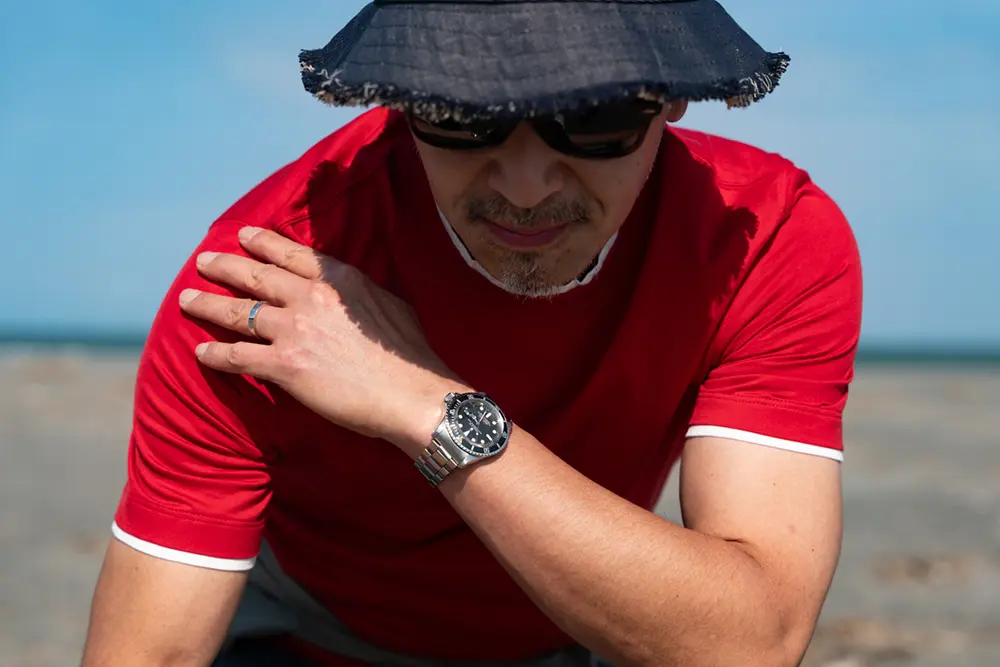
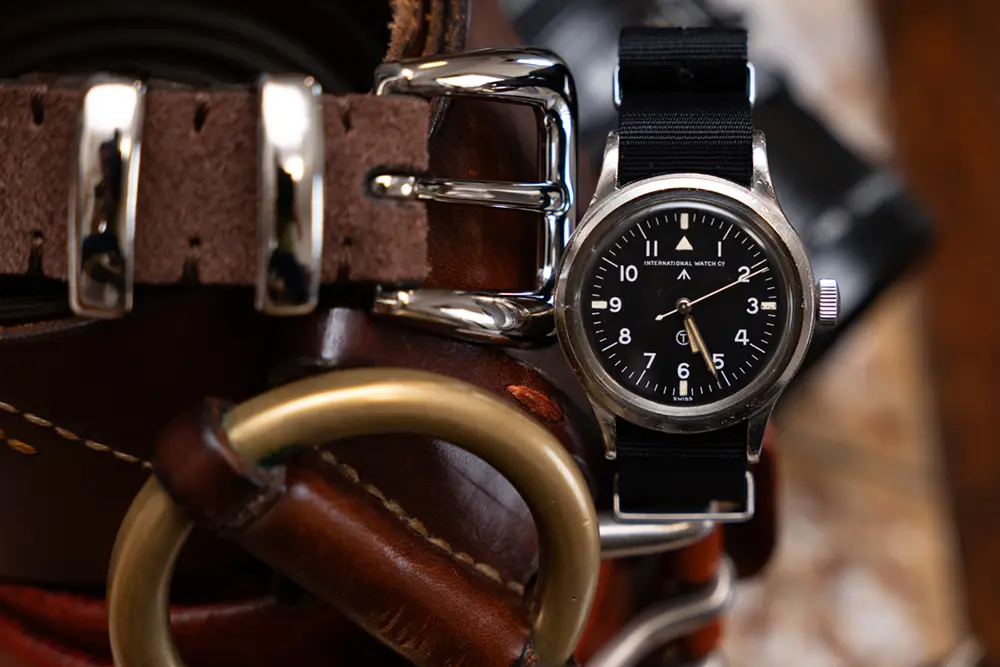
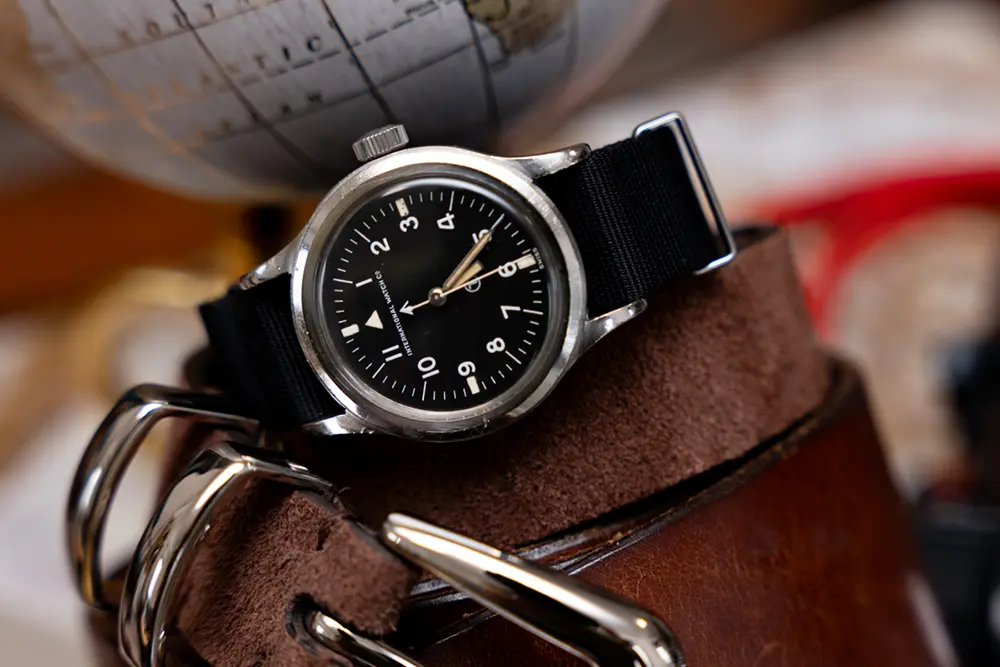
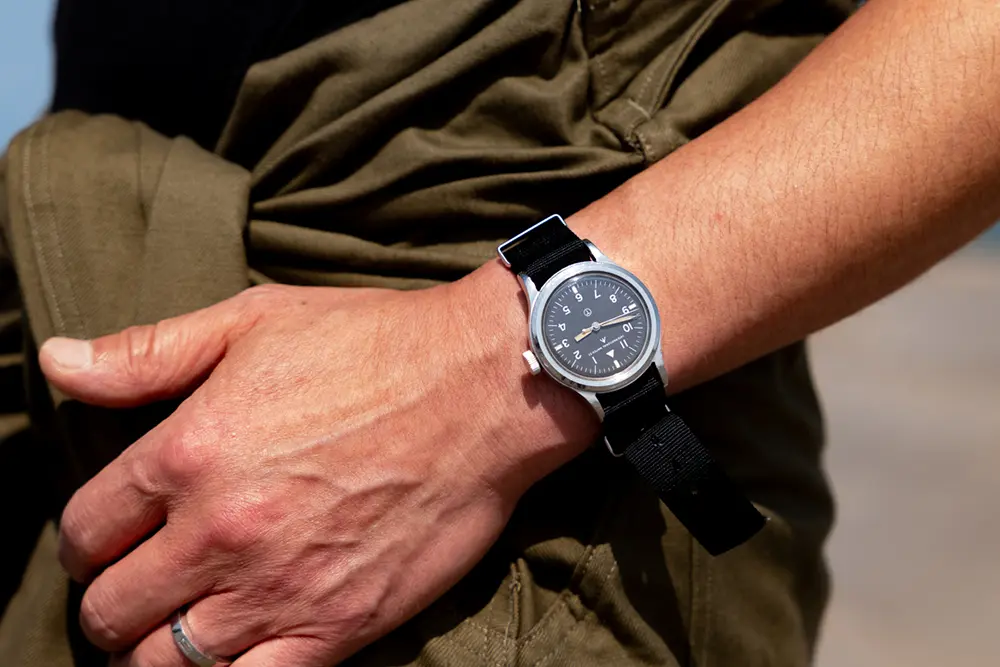
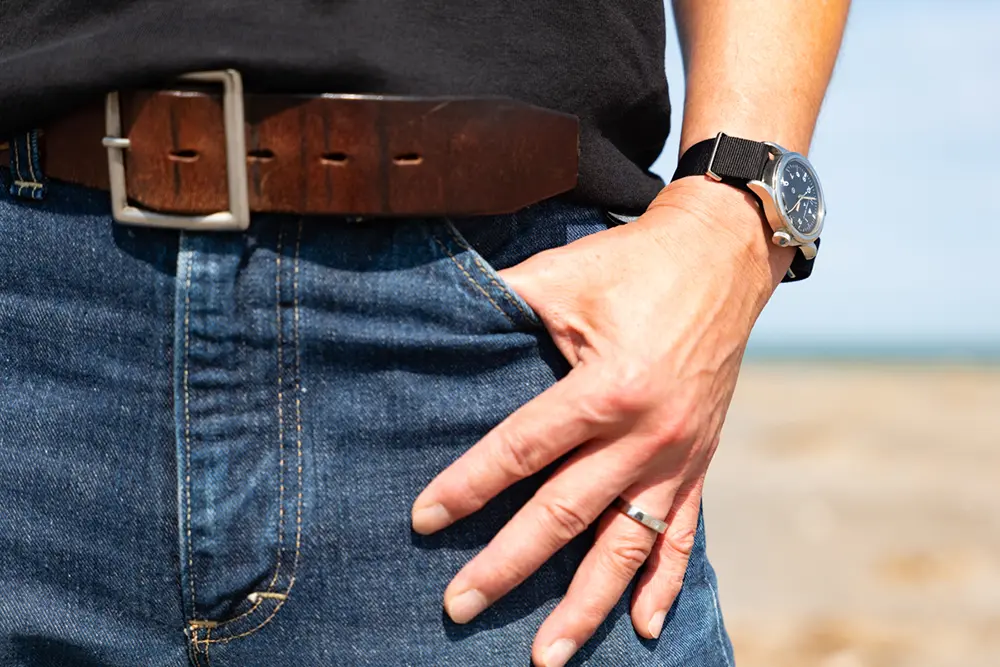
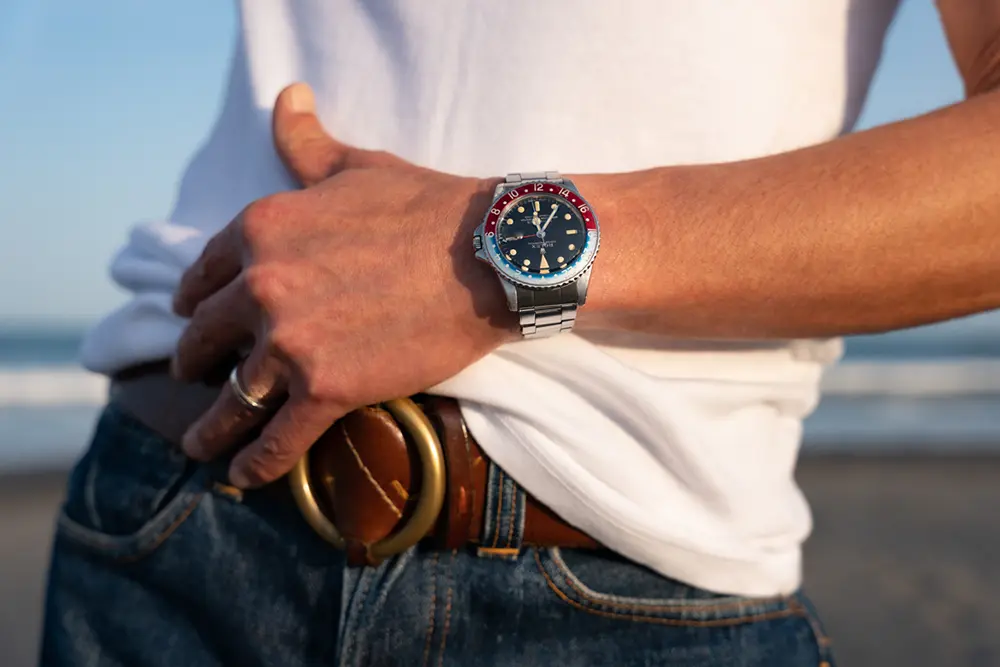
    A genuine military watch, commonly known as a “Broad Arrow”, delivered to the Royal Air Force and owned by the Royal Air Force and issued to its personnel.

    IWC Mark11 RAF.
    IWC Mark11 RAF.

    Introduction

    IWC (INTERNATIONAL WATCH CO) was commissioned by the British Ministry of Defence in the late 1940s to produce the Mark 11, a genuine military watch with high military specifications. IWC (INTERNATIONAL WATCH CO) and Jaeger-LeCoultre were the two companies that received the order at this time, and the request was for an inner case to provide high precision, antimagnetic and dustproof properties as an aviation watch, and a black dial with Arabic numerals and luminescence for high legibility, so the two companies that had this technology at the time The company has been adopted by two companies that had this technology at the time. The watch is made for use in the Royal Air Force, so it is known as the RAF for Royal Air Force. The military watches delivered by 12 companies, which had been commissioned by the British Ministry of Defence to deliver military watches since wartime, were called the Dirty Dozen and had the Broad Arrow emblem on the dial. The IWC Mark 11 is a genuine Air Force watch, produced and delivered for aircraft by IWC, which had previously delivered the Mark 10 to the Ministry of Defence during the war.


    Attractive military specifications

    The Mark 11 watch introduced here was commissioned by the Royal Air Force in 1948 and produced by IWC (INTERNATIONAL WATCH CO.) as a military watch for aircraft. The features include magnetic resistance, dust resistance, water resistance, easy-to-read black dial with white Arabic numerals, nocturnal paints and high accuracy as an aviation watch, with a double structure (inner case adopted) for magnetic resistance and dust resistance.

    My watch is marked with a T mark (tritium luminescent), but it is said to have been made with radium luminescence in early 1948 and replaced after 1962 at the request of the Royal Air Force. (This is speculation in this area.) My own was manufactured in 1948, and at that time it was radium luminescent, so it makes sense that the T mark was added as a later change.

    The reason I became interested in this Mark 11 and actually got it and started using it is that it was originally made as a pilot’s watch and is very robust with military specifications, it has a simple black dial with high legibility and a NATO belt that fits very well (it is genuine, of course), and I originally I have always liked IWC watches and wanted one of the Mark series.

    I was also attracted to the fact that the Mark 11 is a watch with many stories to tell, such as the adoption of the inner case, the story of how this technology was taken over by the later Ingenieur, the story of the Dirty Dozen, and the story of the Broad Arrow.

    The Mark 11 was manufactured for a long time, from 1948 until 1981, when it was adopted by the Royal Ministry of Defence, and then manufactured for civilian use until 1984. It was delivered not only to the Royal Air Force but also to the Royal Australian Air Force, the Royal New Zealand Air Force and the South African Air Force, and was also made for civilian use, each with its own advantages. Production ceased for a time, but in 1994 the Mark 12 was introduced, and production has continued ever since, with the Mark 20 now in production. Of these, the Mark 11, which was actually made for military use, is a very attractive watch.

    When I visited the shop where it was sold, I decided on it because of the responsiveness of the shop staff, the various conversations we had and the quality of the actual thing. When purchasing an antique or vintage watch, it is very important to want to buy from this person and this shop, and this Mark 11 also met those conditions.

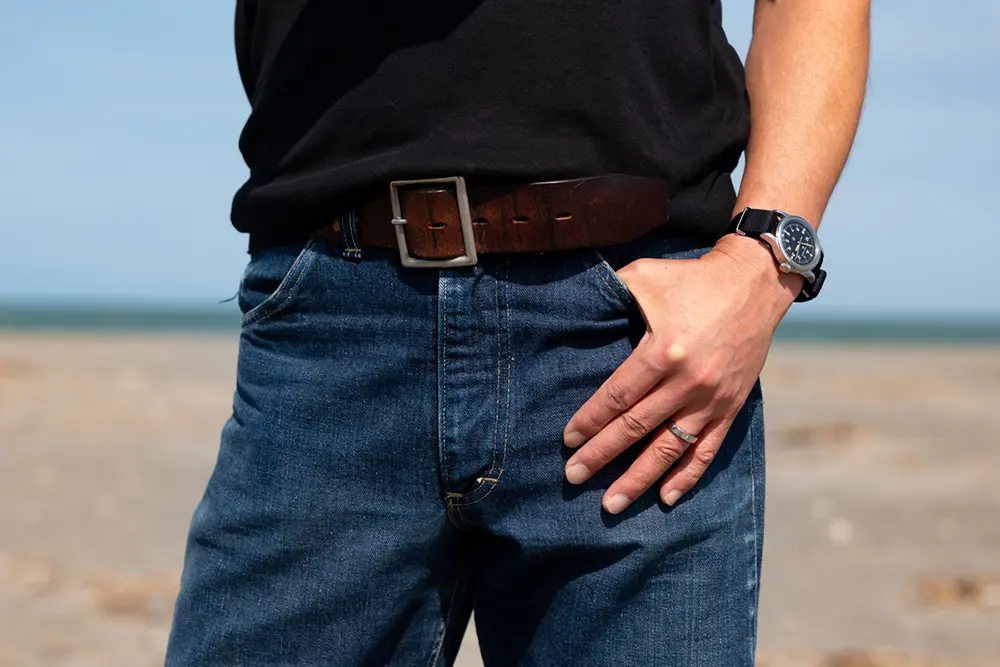
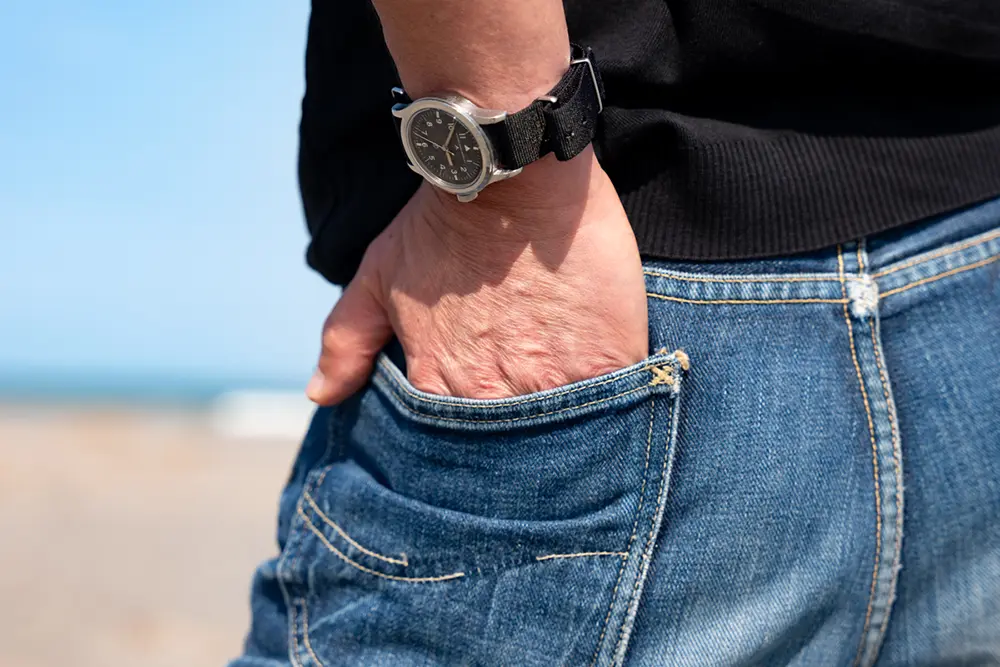
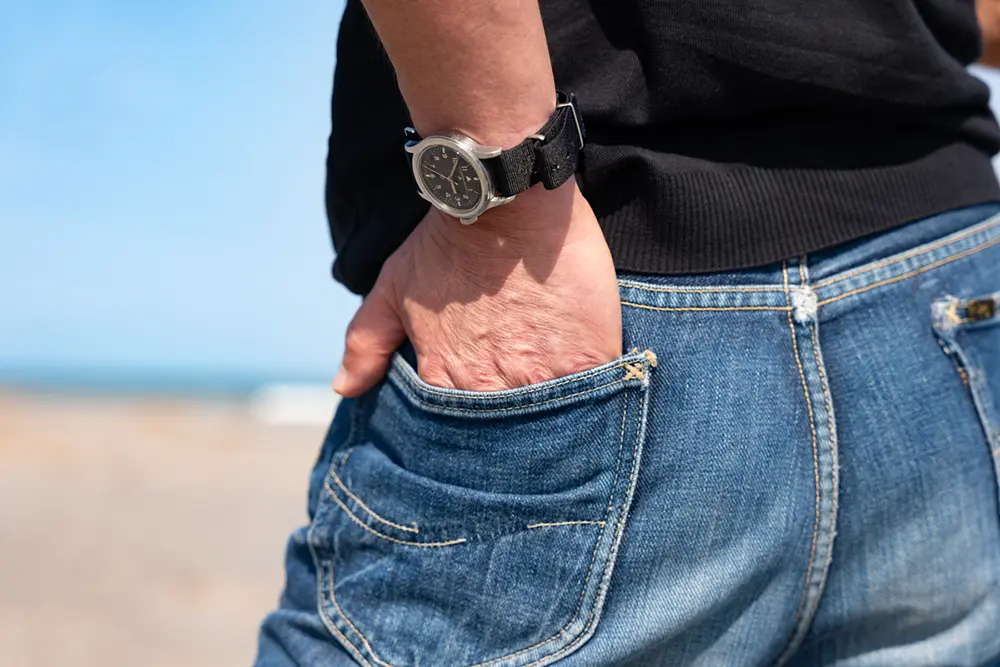
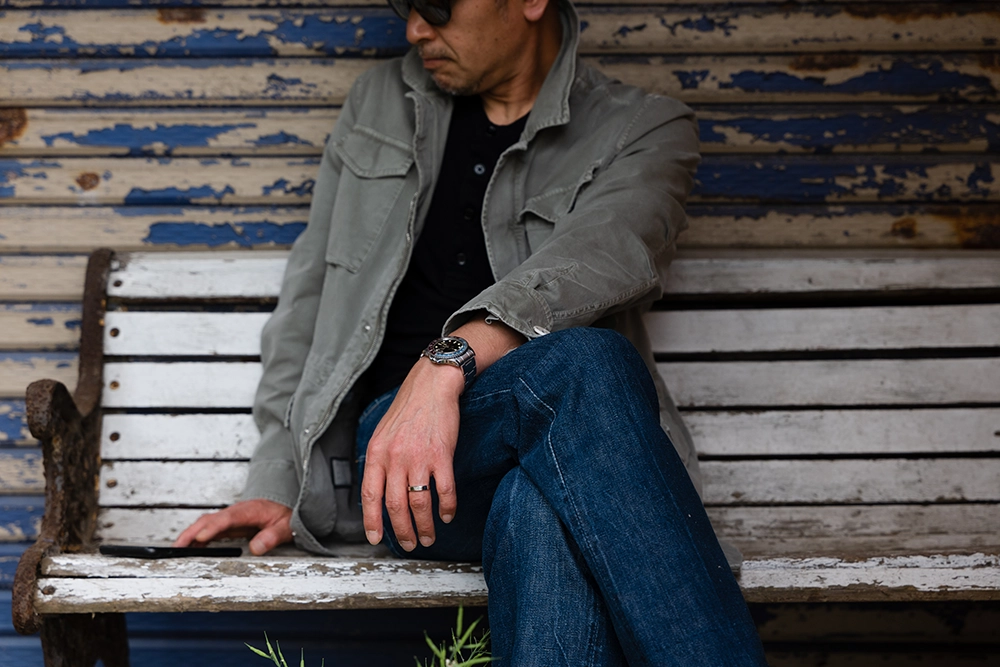
    The small 36mm diameter stainless steel case is just right, and the large crown, easy-to-read dial and NATO belt make it easy to wear, and I enjoy wearing it with jeans, military outerwear and even a T-shirt.
    The so-called “Dirty Dozen” watches from the Second World War, the generation before my Mark 11, have a wide range of collectors, from those who own one of their favourites to those who have completed the so-called 12 watches produced by 12 different companies. If you are interested in IWC watches, I think you can find your favourite one and enjoy it.
    IWC watches are not as well-known to the public as Rolex watches, so it is rare to be approached about watches.


    Examples.

    IWC Mark11 RAF.
    IWC Mark11 RAF.
    IWC Mark11 RAF.
    IWC Mark11 RAF.
    IWC Mark11 RAF.
    IWC Mark11 RAF.

    Details

    1 Mark 11 (6B346)
    2 Year 1948 Supplied later replaced with tritium luminescence
    3 Case Stainless steel
    4 Bracelet NATO strap (current black)
    5 Windscreen Plastic windscreen (Plexiglas)
    6 Dial Black Arabic dial with tritium luminescent hands (slightly but firmly luminescent)
    7 Hand-wound caliper Cal. 89.

    What we like.

    • Simple three-hand manual winding is easy to use.
    • Functional beauty of a real military watch.
    • Easy to read dial made with legibility in mind.
    • Ease of winding thanks to the large crown.
    • User-friendly size of 36 mm diameter
    • Universality of design that continues in later Mark series
    • The ease of use of the NATO belt and its good balance.

    Points of concern.

    • Water resistance is not expected to be as good as current models.
    • The winding moderation is very solid, although not as good as current products.
    • Even considering the above problems, it has a unique atmosphere not found in current products, so it doesn’t bother me too much.

    Conclusion

    I have a IWC Mark 11, which I got because I wanted a military watch to go with it because I like military outerwear, and it has the functional beauty and story of a real military watch that was actually delivered to the British Ministry of Defence and supplied to the Royal Air Force. The fact that it is highly practical leads to attachment and I enjoy using it frequently, even though it is a very old watch that was supplied in 1948.


    Shop

    I bought my IWC Mark 11 RAF from Dazzling in Omotesando, Tokyo. This shop has operated shops in England and Japan in the past and has a British collector’s perspective on antiques. The watches we deal with are as original as possible, and we do not replace parts for the purpose of making them look better, and we mainly deal with watches that maintain their original condition as much as possible so that they can be used normally. The shop has inherited the European culture of antiques, where old things are carefully preserved.

    The shop has a very sophisticated European atmosphere, but the staff are friendly and comfortable. The shop also handles very old and rare watches, and although there are concerns about later repairs, this shop can make a watch from scratch if parts are not available, so you can enjoy your beloved watch for a long time. The shop also has a very interesting stance, like the restoration of old European cars, which is not often seen in Japanese shops.

    Naturally, the shop has a great eye for the watches it handles, with a consistent quality that ranges from rare and highly valuable watches to less expensive ones that can be enjoyed on a daily basis, and it also has a great selection of European values. The selection of watches as well as watches as fashion is also attractive and can be enjoyed by women as well as men.

    When I bought my IWC Mark 11 RAF, the female staff were very kind and talked to me about fashion and my hobbies while I looked at the watches, making the experience a very enjoyable one.
    If you like antique watches, such as Rolex, but not sports models, older watches, IWC, Omega, LeCoultre, Hamilton, Smith, Lemania Chrono, etc., you will never get tired of looking at them, as they are displayed with great taste. We recommend that you visit them when you are in Omotesando or Harajuku.

    Antique watch specialty shop Dazzling

    “Antique watch specialty shop Dazzling” Global shipping is not supported. Come to the shop when you come to Japan.
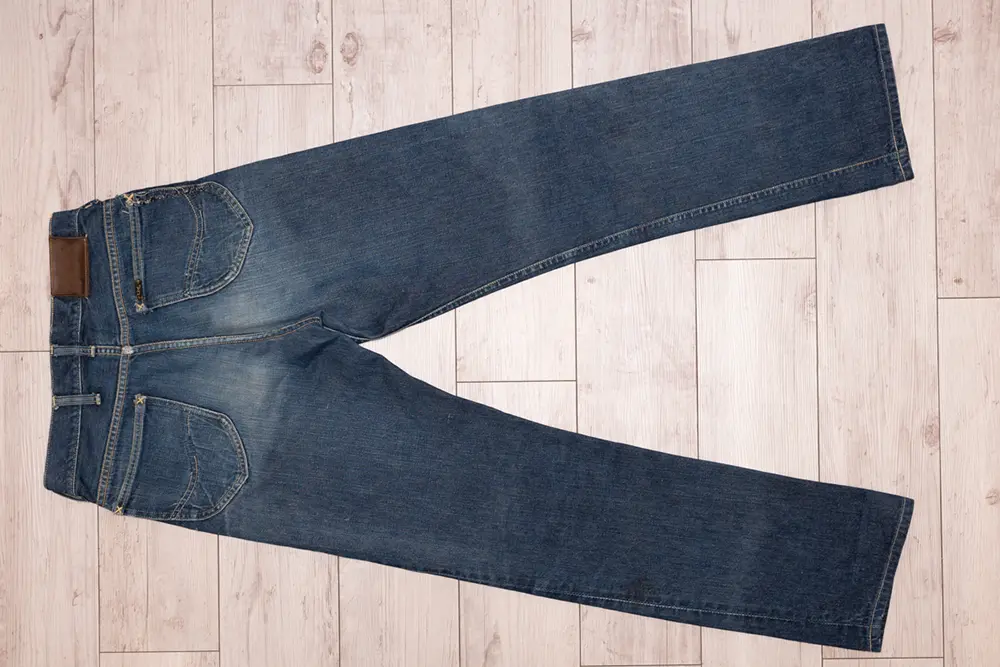
  • Lee 101Z 50’s Center Black tag

    Lee 101Z 50’s Center Black tag

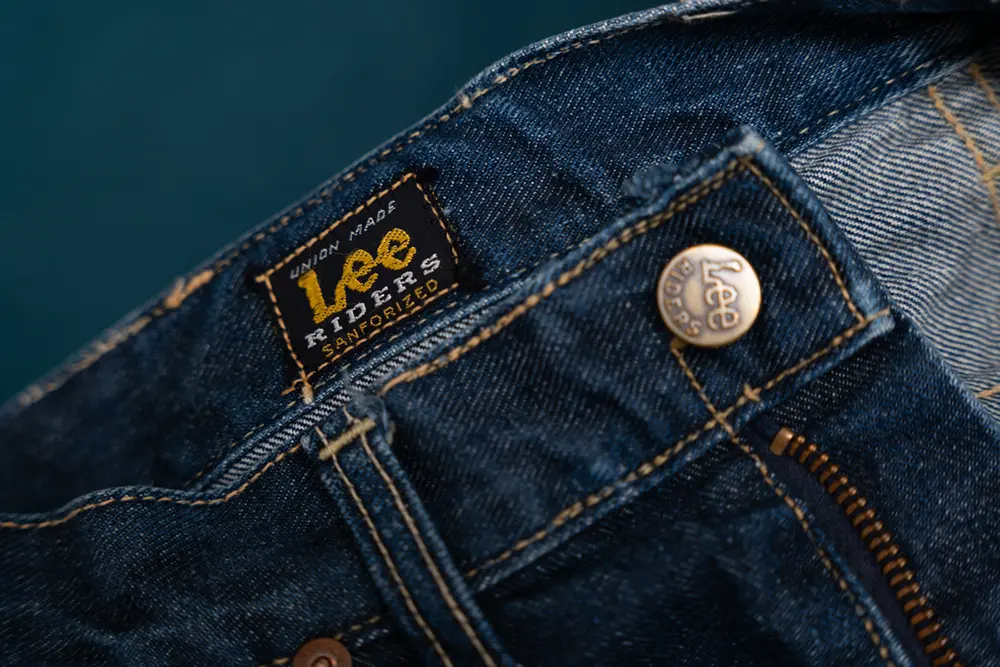
    Zip fly with different charm from Levi’s.

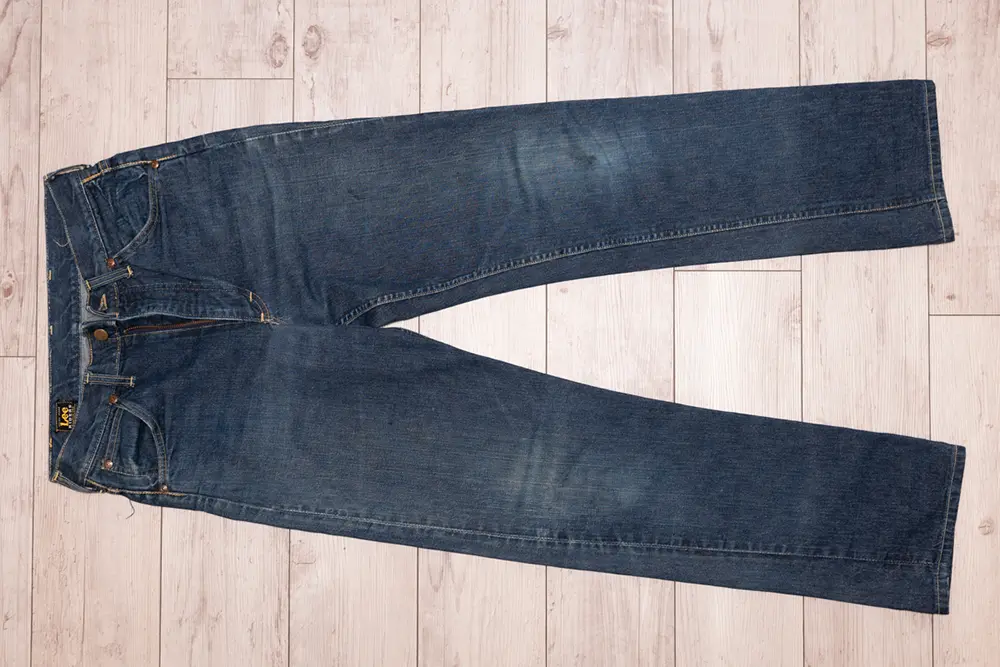
    Lee 101Z 50's centre black tag.
    Lee 101Z 50’s
    Lee 101Z 50's.
    Lee 101Z 50’s.
    Lee 101Z 50’s
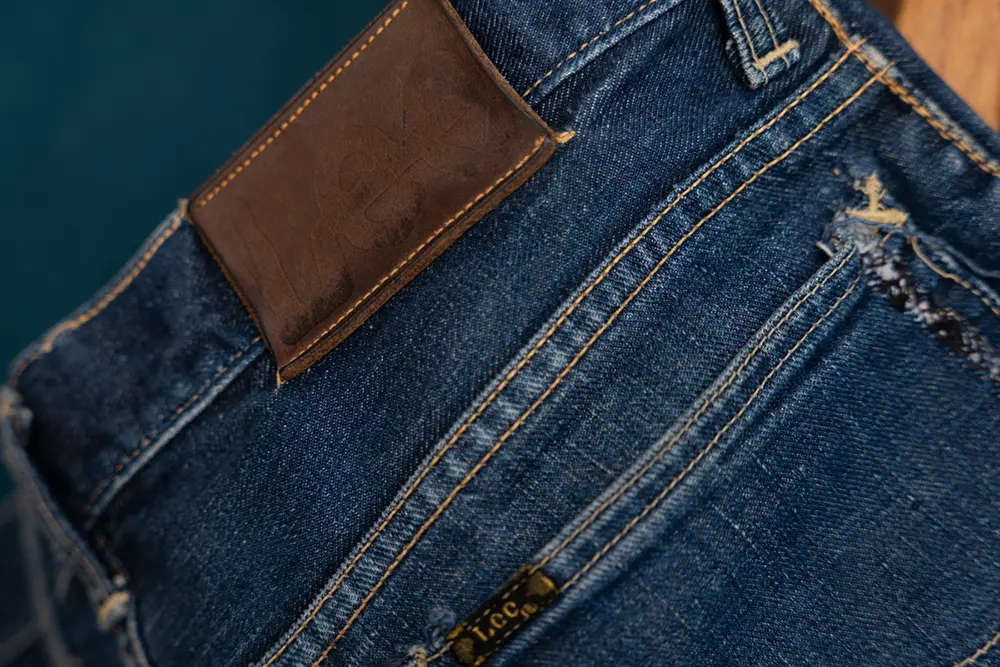
    Lee 101Z 50’s leather patch.
    Lee 101Z 50's.
    Lee 101Z 50’s centre black tag.

    Introduction.

    I used to think of jeans as button-fly Levi’s 501s, but the Lee 101Z taught me the appeal of zip fly and more trouser-like styling, a very wearable model and excellent jeans that are not as fussy as the 501XX! .


    Loose-fitting silhouette and convenient zip fly

    The Lee 101Z is a pair of jeans that I was interested in, but never got around to getting because there are fewer of them than Levi’s and not much information about them. My 101Z is a model from the 50s called the centre black tag.

    They were originally made for cowboys, and compared to 501s, they have a deeper crotch and a slightly looser silhouette, and although they are jeans, they are shaped like straight trousers with a beautiful silhouette, so they are excellent jeans that are easy to match with any clothes and easy to use.

    In modern times, because of their silhouette, they have the image of being chosen by people who ride motorbikes (motorbike riders who ride American styles such as Harleys and classic Triumphs), and in fact, my friend’s Harley rider loves wearing Lee 101Z.

    The reason why I bought 101Z was because I wanted jeans with a zip fly, and when I went to Fake-a in Harajuku to look for 501ZXX, I couldn’t find my perfect size, and the manager recommended 101Z to me.
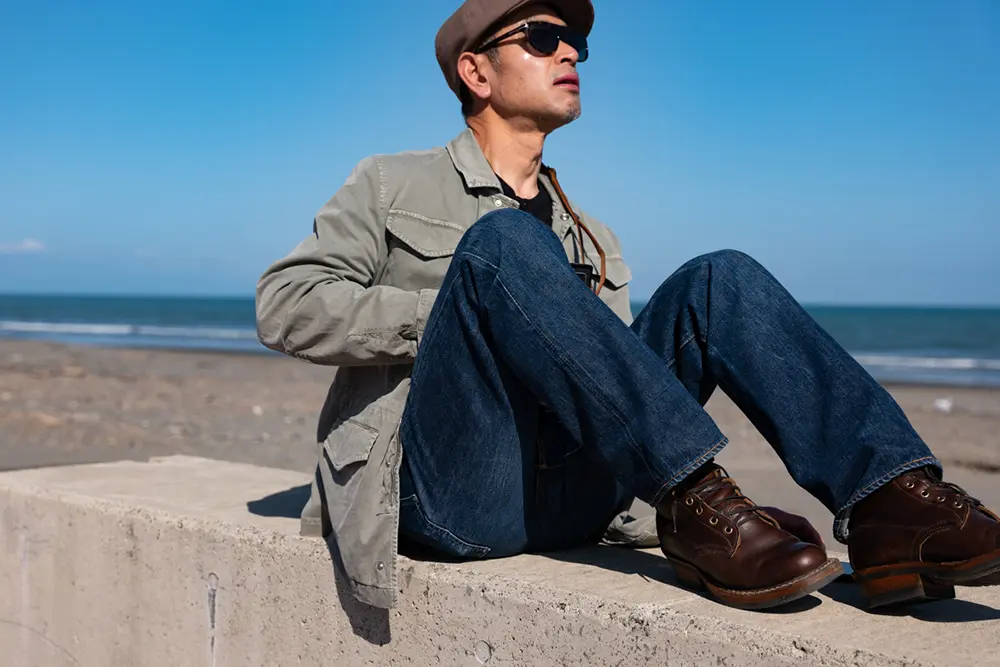
    Thanks to the silhouette, which is thick in the waist and straight to the hem, they go well with heavy boots and give a hard, cool style.

    The size is a little long with a 30inch waist and 33inch length, but I wear them without rolling them up because I can wear them without the hem touching the ground when I wear shoes with heels.
    The Lee 101Z was worn by James Dean in the film “Rebel Without a Cause”, so I have an image of American youths and delinquents in the 1950s. I thought that image was too strong and that they were jeans with strong habits, but when I got them and tried them on, I found that they were very easy to wear, forgiving enough to wear with any clothes, and thanks to their relaxed silhouette and zip fly, they are comfortable to wear and have the goodness to pick up and wear without thinking about it.

    Compared to Levi’s, Lee jeans tend to be more colourfast than Levi’s due to the fabric and dyeing process, with the colour remaining in the jeans. Many of them have faded colour only around the knees and buttocks, but this fading is also a result of ageing and is very appealing.

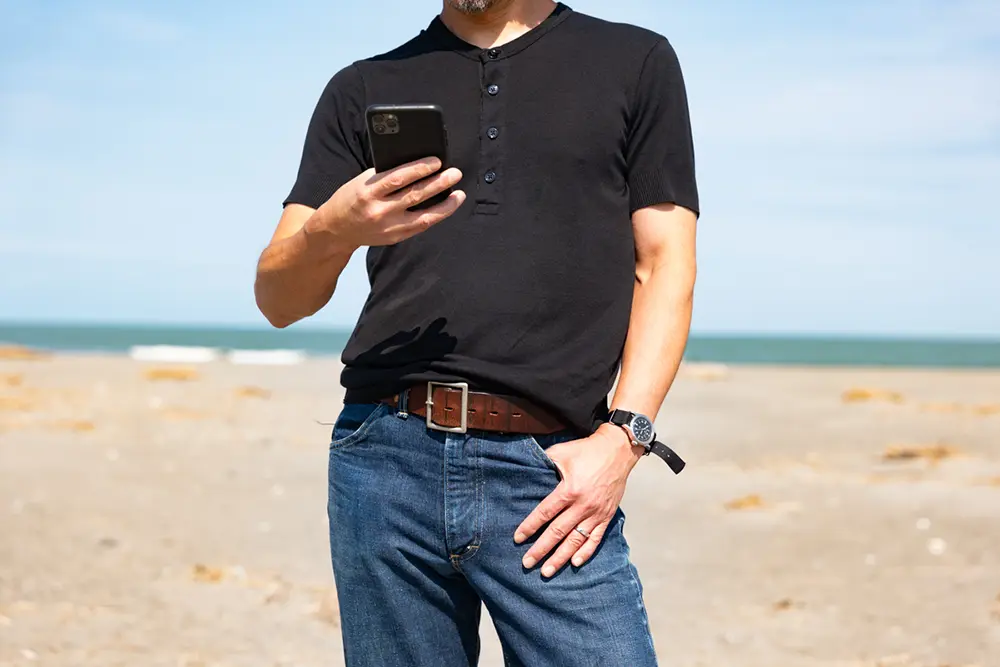
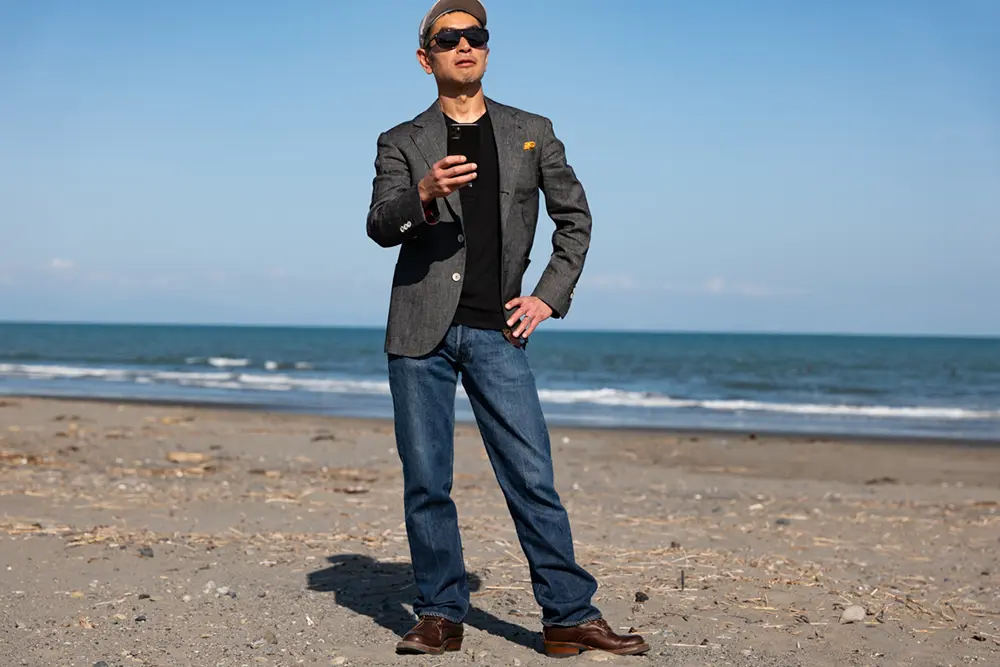
    Like the 501s, these jeans were originally made as workwear and have excellent functional beauty, and they are still made the same way they have been for many years. In winter, I mainly wear them with a leather jumper such as A2 or J100 and a pair of White’s boots for a slightly harder look, but in spring and summer I enjoy wearing them lightly with a T-shirt and suede loafers.


    Examples.

    Lee 101Z 50’s
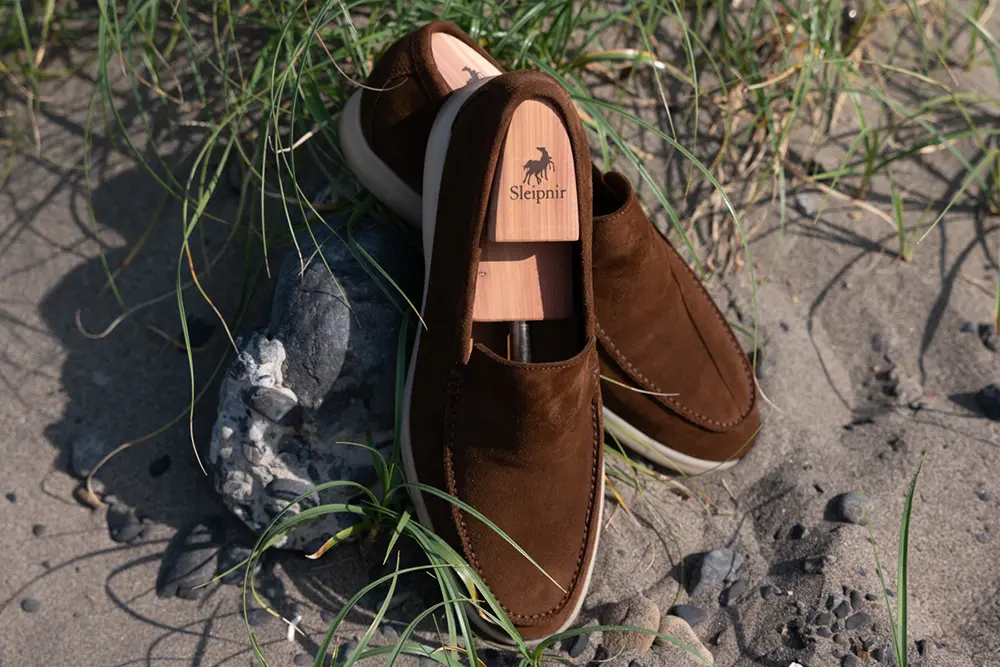
    Lee 101Z 50’s M47 with suede loafers on the feet.
    Lee 101Z 50's
    Lee 101Z 50’s Lee 101Z 50’s T-shirt – a single T-shirt can also be used to create an atmosphere.
    Lee 101Z 50's
    Lee 101Z 50’s Comfortable to wear due to deep crotch.
    Lee 101Z 50's
    Lee 101Z 50’s

    Details.

    • Black centre tag (50s)
    • 6 belt loops
    • 30inch waist, 33inch length.
    • Tapping repair on back pockets.
    • Colour remains dark.

    Combination.

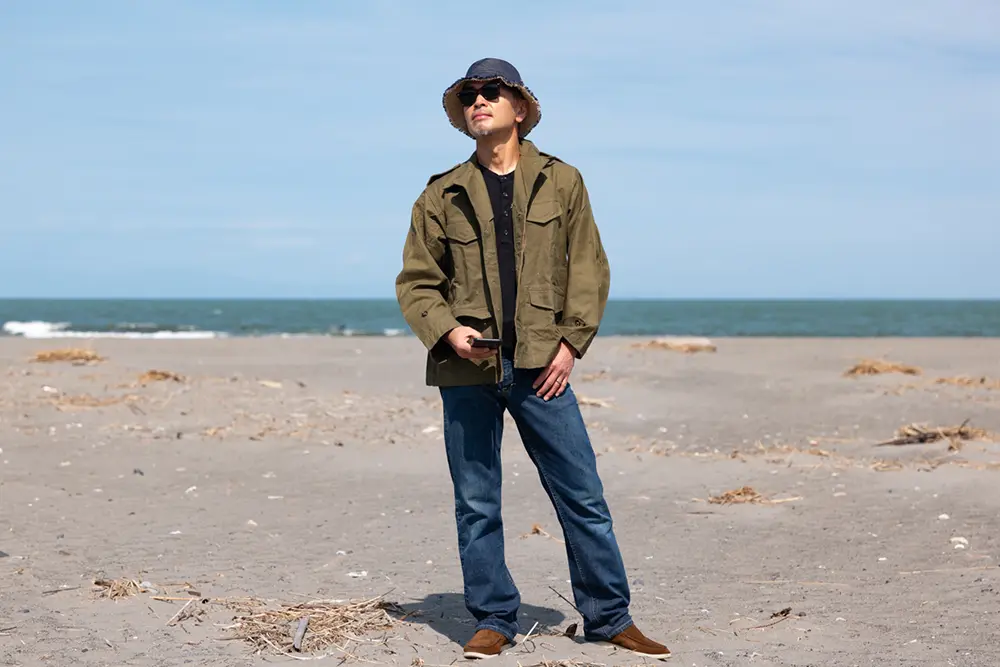
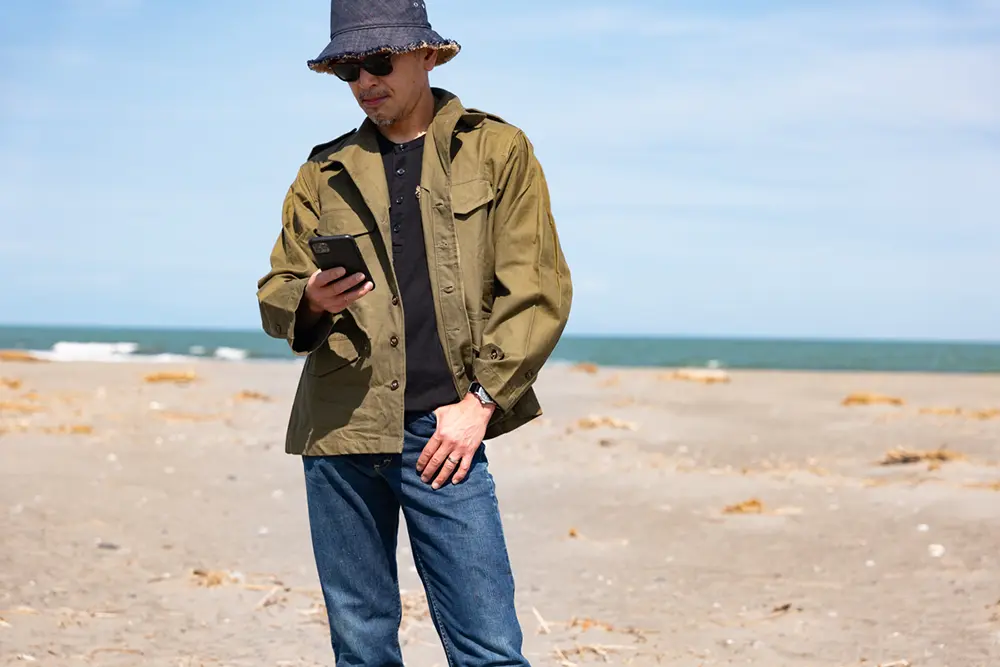
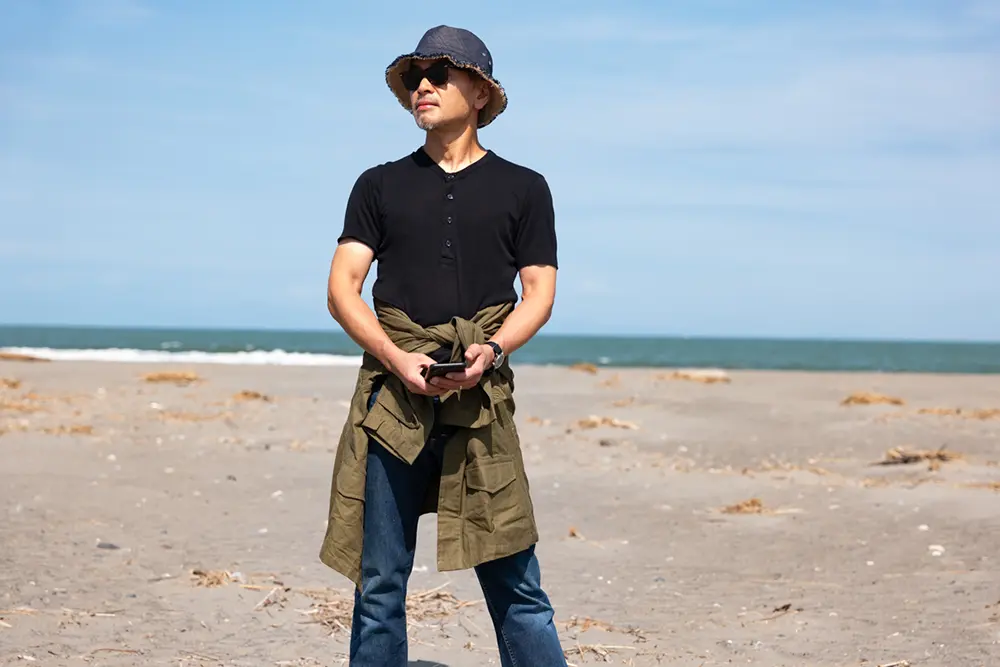
    • Field jacket : M47 size 44.
    • T-shirt-style henley neck knit : TOM FORD size 46
    • Denim : Lee 101Z 1950s waist 30inch:length 33inch.
    • Shoes : Loro Piana : White Sole
    • Hat : Borsalino
    • Watch : IWC Mark 11 1940s
    • Sunglasses : Ray-ban WAYFARER 90’s(BAUSCH+LAMB)

    Conclusion

    I’ve been looking for a 501ZXX and came across these Lee 101Z 50s. But I feel that not insisting on it is the greatest charm of Lee101Z. The fact that they are made like trousers, so they are more relaxed and easier to wear than Levi’s jeans, is also a reason why they are used more often. I’m looking for another pair as a spare, but I haven’t found them yet because there are not many to begin with, but it’s also fun to search patiently for vintage jeans that suit you.


    Shop

    I buy my Lee 101Z 50s at Fake-a (Fake Alpha) in Harajuku, Tokyo.
    As mentioned in the articles on 501XX 1954Model and printed corduroy shirts, the quality of 40s and 50s American vintage clothing is probably the best in Japan, and the staff, including the manager, are well versed in vintage clothing, making it a great shop where you can be satisfied with any item you choose.
    For more information about the shop, see 501XX 1954Model and 50’s printed corduroy shirt

    The website of Fake-a is in the same family as that of Belle Belgin, which is famous in Harajuku, so please visit them when you go to Harajuku.

    Belle Belgin official website

    “Belle Belgin official website” Global shipping is not supported. Come to the shop when you come to Japan.
  • White’s Semi-Dress

    White’s Semi-Dress

    Boots to match 501XX.

    White's Semi-Dress.
    White’s Semi-Dress.

    Introduction.

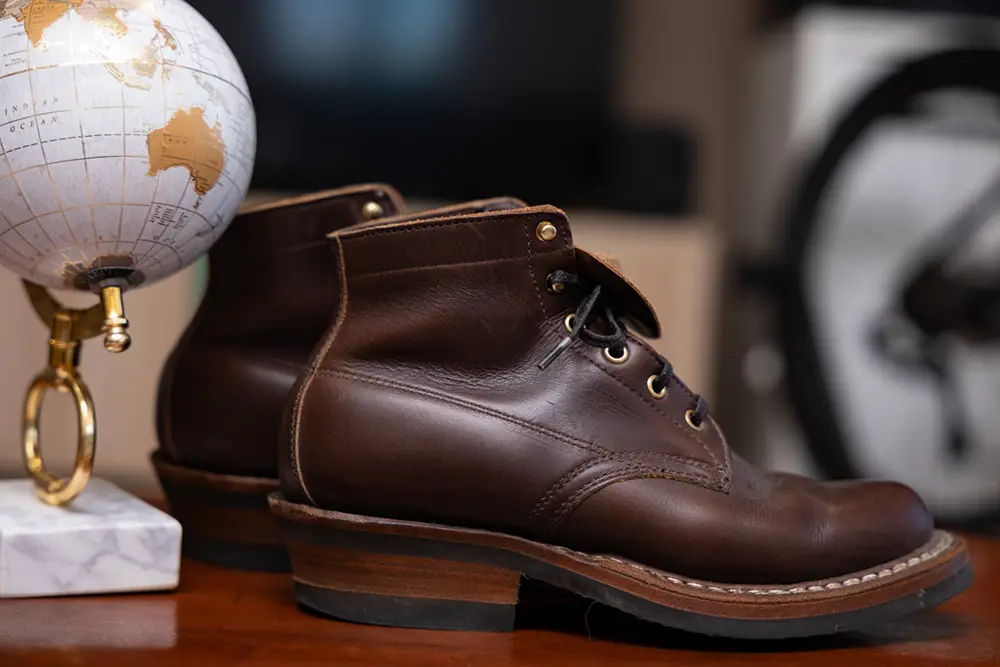
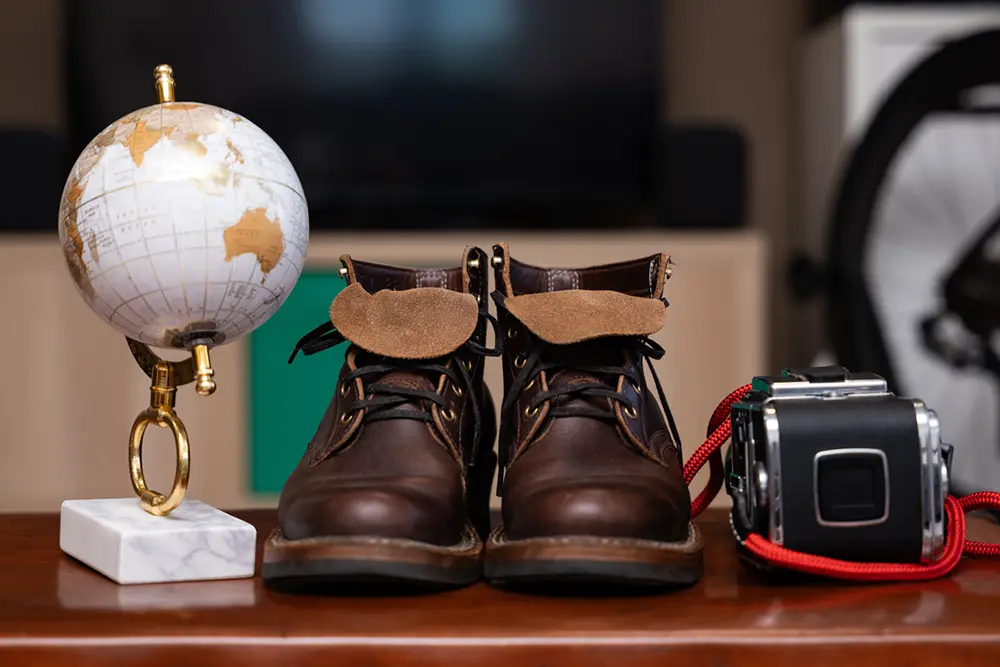
    I often wear boots with long length jeans, and the most frequently used boots are the White’s Semi-Dress boots introduced here.
    The heel is high and the slant is a little forward, so you wear them in a posture like standing on tiptoes, which is uncomfortable at first, but they are very good boots that elongate your back, improve your posture and make your legs look longer.


    Well-made and once they feel good on your feet, you won’t want to let them go.

    Unlike other boots, the feeling of wearing them is like standing on tiptoes, and until your feet get used to the hard leather and the thickness of the soles, you may feel uncomfortable, but after wearing them for a few days, you will soon get used to them. The hard leather becomes soft and comfortable when you get used to them, and the shape of the toe stand gives you a good posture and a good look when you wear them.

    The size recommended in the shop is one to two sizes smaller than the average shoe size. When the shop staff fits you, they do not dare to tell you the size, but you will be surprised when you hear the actual size.
    The leather is made from chrome Excel leather, a thick, carefully tanned cowhide from the Hawwynn company. The Horween company is famous for its Shell Cordovan, and many Alden leather shoes are made from Horween leather and are well known to people who like leather products and leather shoes. The leather is of very high quality, so it is highly durable and the more you use it, the more it adapts to your feet.

    They are made using the Goodyear welt method, sewn with sturdy Irish linen, with a hot sole and a Vibram sole, so they are made to be durable and prevent water penetration, despite being leather shoes.
    The boots are made of carefully selected materials with priority given to functionality, so they are highly recommended boots with a very high degree of attachment when worn. I wear them with my long 501XX and Lee 101Z.


    Wearing example.

    White’s Semi-Dress.
    White’s Semi-Dress.
    White’s Semi-Dress.
    White’s Semi-Dress.

    DETAILS.

    • LAST: #55 E.
    • HEIGHT: 5 INCH
    • UPPER LEATHER: CHROMECXEL BROWN
    • MID SOLE: SINGLE
    • SOLE: VIBRAM #700STITCH: DOUBLE
    • HARD WEAR:BRASS
    • * Information as stated by the retailer.

    What we like.

    • Functionality made tough with high quality, tough cowhide leather.
    • Lasts based on dress shoes, a style that’s more than just hard wearing.
    • High heel and styling that makes the foot look longer when worn.
    • Leather shoes are often hesitant to use in the rain, but the functionality allows you to wear them without worrying about the rain.

    Concerns.

    • The leather is hard when you first take them down, so they hurt around your ankles and the base of your thumbs, but after wearing them a few times you will get used to them and not mind them.
    • The boots are worn with a high heel and forward lean, so they feel a little uncomfortable when running (I don’t think you’ll be running in these boots most of the time).
    • The above points are minor things, and these are excellent leather boots that you will love once they are comfortable on your feet.

    Conclusion.

    White’s Semi-Dress boots were chosen as boots to wear with long length jeans. The leather products are made and made of materials that are perfect for leather goods lovers, and the more you use them, the more you will love them. They are also sturdy and functional and will not wear out in the rain, so we recommend them to anyone who wants to cherish and use their favourite pair of boots for a long time.


    SHOP

    My White’s Semi-Dress boots were purchased at StompTown in Shibuya. As mentioned in the article, the staff, who know White’s shoes inside out, will fit you exactly to size, so I recommend them to those who are looking for boots that you can love for a long time, as they offer shoes in such a way that you can later become attached to your feet and get used to them.
    The shop also stocks Danner and Red Wing shoes in the American style, so you will be able to find shoes and boots to your liking.
    There is also an online shop, so those who live far away can also buy from the online shop.
    The shop offers fitting services so that you can use your favourite shoes for a long time, so I think you will be more satisfied if you go to the shop and actually have them fitted before you buy them.

    STUMPTOWN online shop

    “STUMPTOWN online shop” Global shipping is not supported. Come to the shop when you come to Japan.
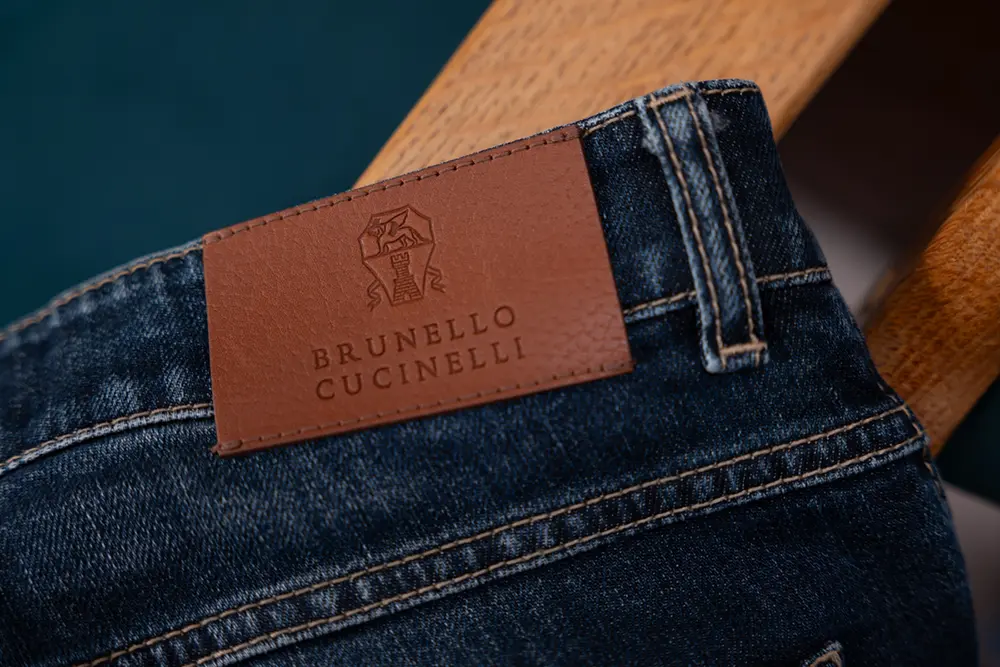
  • Slim fit comfort denim : Brunello Cucinelli

    Slim fit comfort denim : Brunello Cucinelli

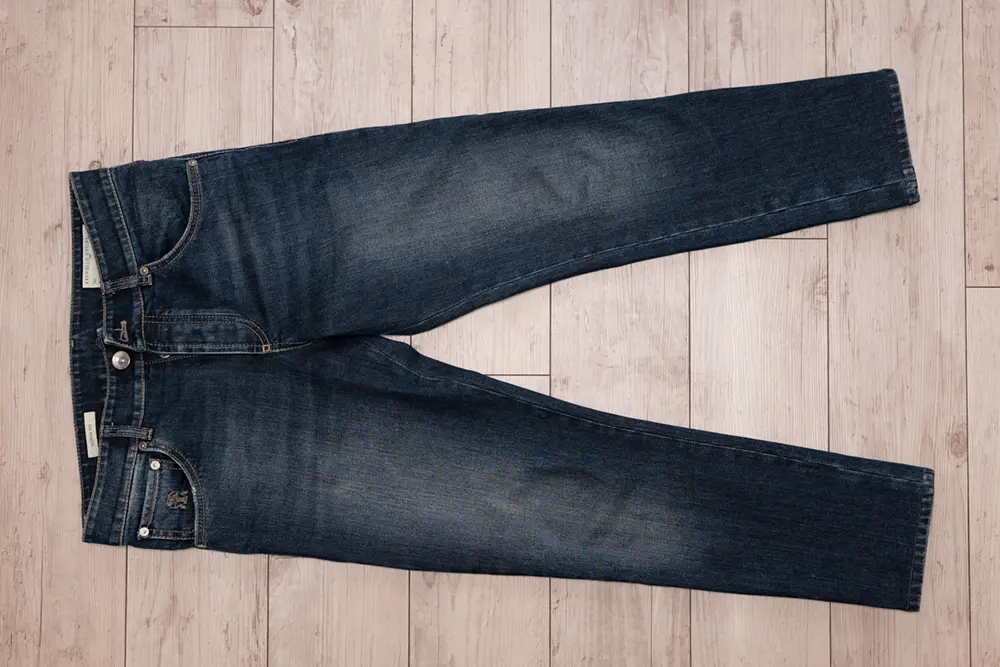
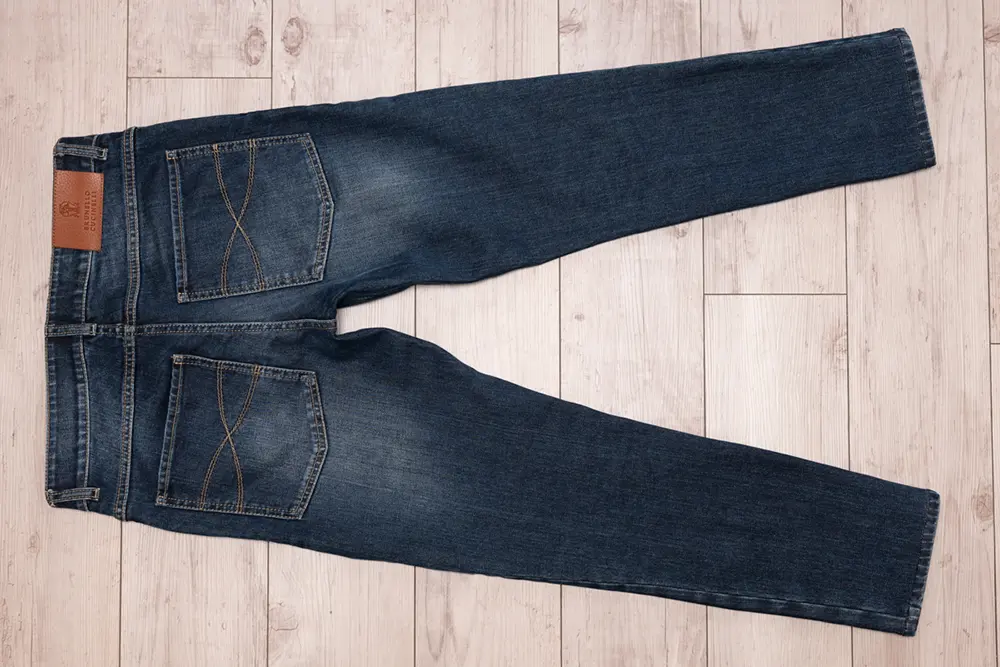
    Italian-style slim-fit denim with a beautiful silhouette.

    Slim fit comfort denim
    Slim fit comfort denim
    Slim fit comfort denim
    Slim fit comfort denim
    Slim fit comfort denim
    Slim fit comfort denim

    Introduction.

    Most of the jeans I wear are straight jeans, but the staff at the Brunello Cucinelli Ginza shop recommended the Slim Fit Comfort Denim, which I tried on and was amazed at the beautiful legs.


    Try everything

    When I was younger, I used to choose clothes based on what I liked, and I would buy the same kind of things all the time.
    In the past I would not have worn a casual tailored jacket, but in my relationship with the staff at the Brunello Cucinelli Ginza shop, who have been very helpful to me, I was recommended a jacket for the spring/summer season, and when I made it to order, I became very attached to it, and it has come in handy when I go out in Tokyo, have dinner with friends, etc. It is very useful for outings in Tokyo and dinners.
    I chose the field jacket as this season’s outerwear as an extension of my original love of military wear, but when I tried on a tailored jacket that was recommended to me, I found that it fit better than I had imagined, so the Ginza shop staff’s suggestions give me new discoveries, so I don’t decide what I like or dislike based on my image and try them out. I try to give it a try.
    I often talk about my preferences for straight jeans and military wear, so the staff at the Ginza shop also recommend Brunello Cucinelli jeans, but I have never tried them on until now because they said they would suggest them to me at a time when I would want them.

    It all started with shoes

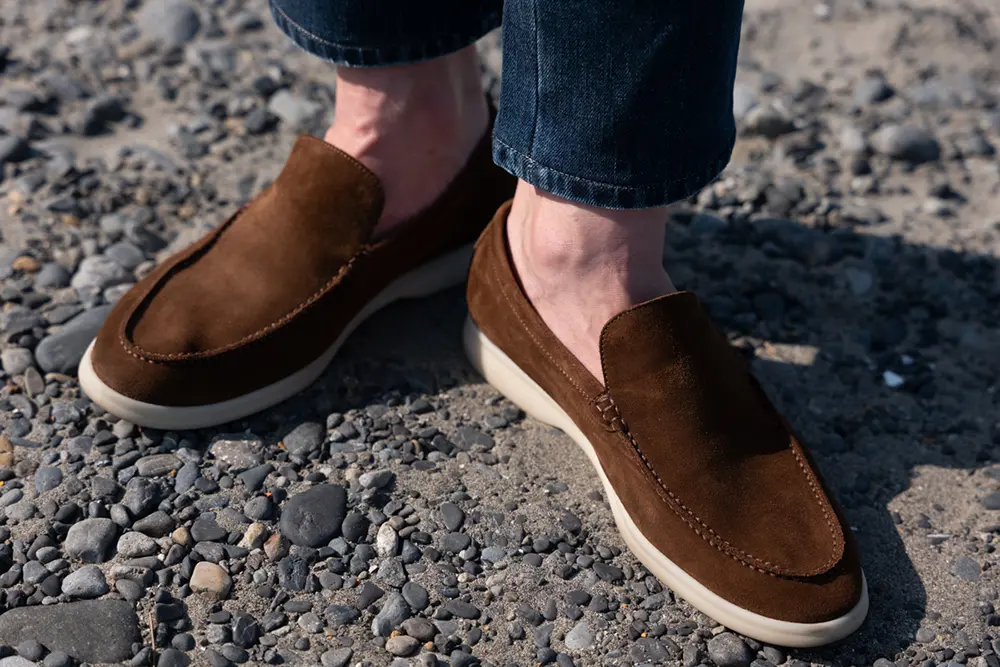
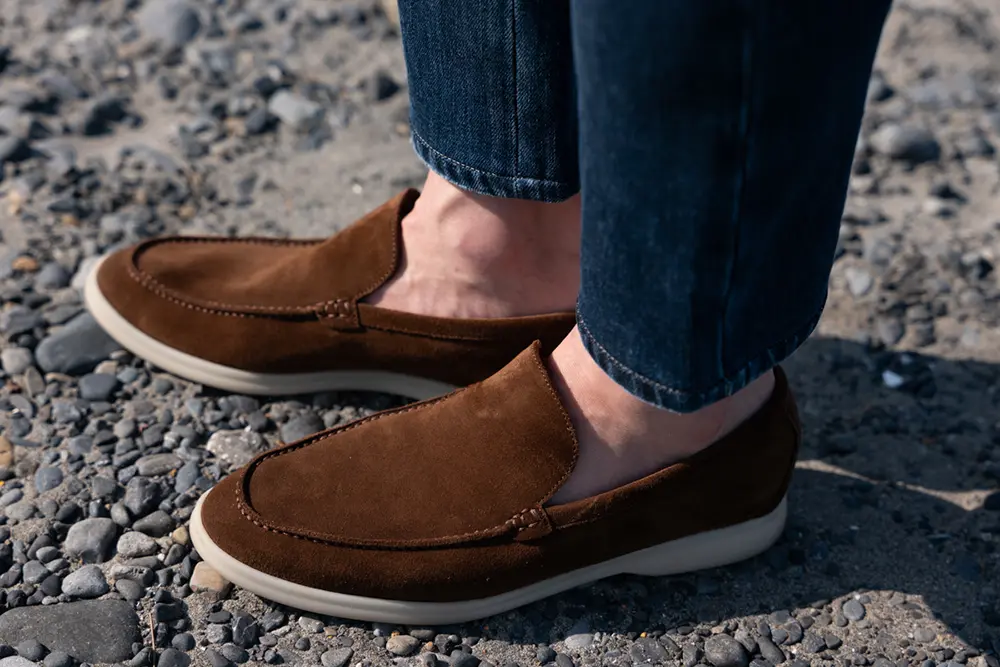
    Brunello Cucinelli has high quality shoes as well as clothes, and I have mountain boots that are developed in the autumn/winter season, but the sole is soft and they are very comfortable to wear, so I also got suede loafers because of their comfort, and I heard that sneakers are also recommended during the summer, so I also got trainers.
    When it comes to enjoying very comfortable loafers and trainers, the tapered jeans developed by Brunello Cucinelli are a better candidate than my straight jeans.
    I also decide to try the Brunello Cucinelli jeans as they are useful as jeans to wear in the summer, as the 501XX and Lee 101 are closed during the summer months.

    I chose a darker slim fit

    Brunello Cucinelli jeans come in three main shapes: relaxed fit, regular fit and slim fit, each with different fabrics, colours and, for blue jeans, different types of damage or fading.
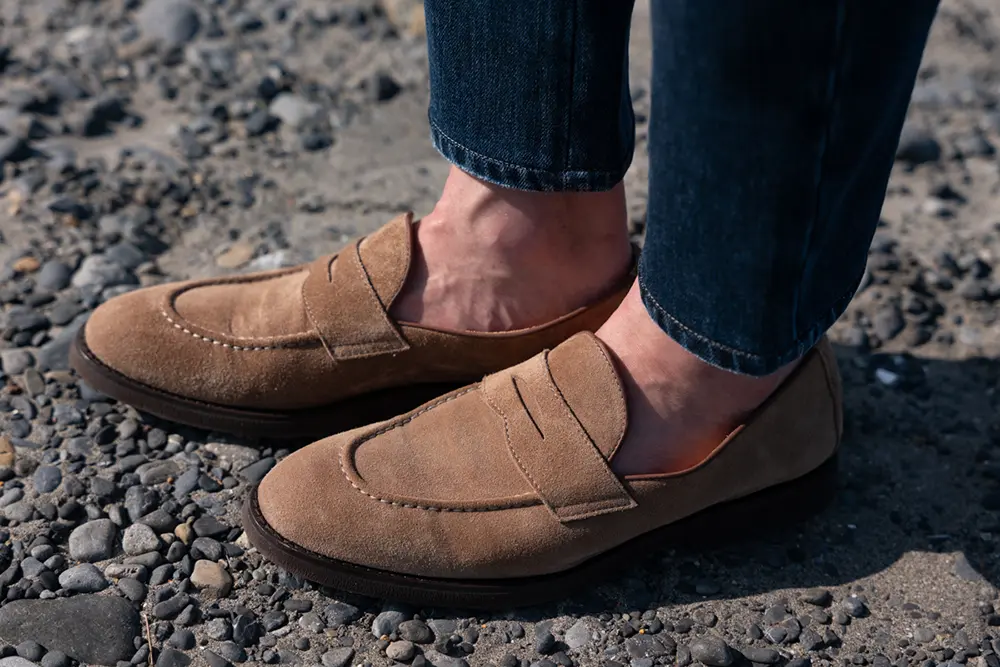
    The slim-fit jeans proposed this time are the most tapered hemmed shape, called slim fit. I chose this shape because it is a little shorter in length and can be worn with loafers or sneakers, barefoot in summer to show the ankles, and in winter to play with the colour of socks, and because it fits best with my body shape and the outerwear I wear.
    There are four colours available, from dark blue to light blue, but I choose the darkest colour, dark denim, in consideration of the outerwear and T-shirt I wear with them.

    Jeans but made and fitted like tailored trousers

    We ask you to bring your size and try them on. Normally I would be a size 46, but as there is a bit of extra room, I go for a size 44. When I tried them on, I felt that they were tight in the thighs and shins, but had a slight extra in the waist. This waist room turns out to be room enough for tucking in a shirt. The tailoring of these jeans is quintessentially Brunello Cucinelli, and although they are slim, they are calculated to be worn with a jacket.
    We choose a size 44 and decide on the length. At this point, we talk to the staff and they suggest that the length should be a little shorter, but when wearing loafers, it should be styled as if you were wearing trainers rolled up, not rolled up, so we adjust the length to achieve that shape.
    The length is packed, but with a beautiful hit on the hem, so when the hemming is done, we have the hemming done in such a way that the hit is left on the hem. I am impressed by the skill and the fact that this kind of finishing is a matter of course.
    After the hemming is done, when I actually try them on, I am impressed that the exquisite length, originally beautifully styled slim jeans fit my body exquisitely and have a beautiful leg effect, and the slim-fit jeans that I chose after various exchanges based on the staff’s suggestions again this time exceeded my initial likes and dislikes and have changed my I had a very satisfying experience that changed my stereotypes about jeans.


    Examples.

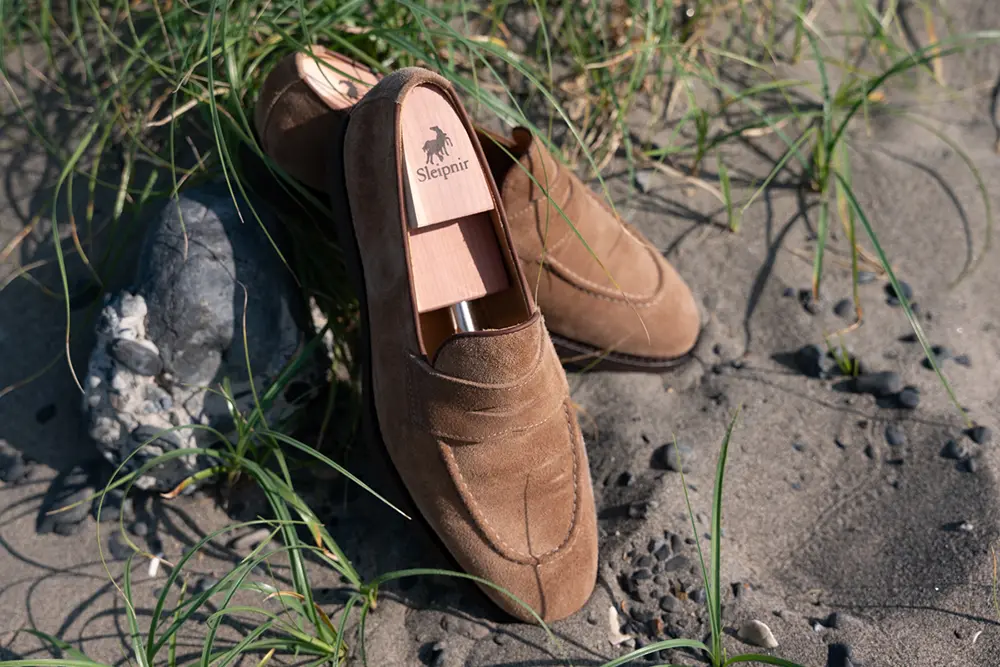
    Suede loafers with cavallos.
    Suede loafers with cavallo Jacket.
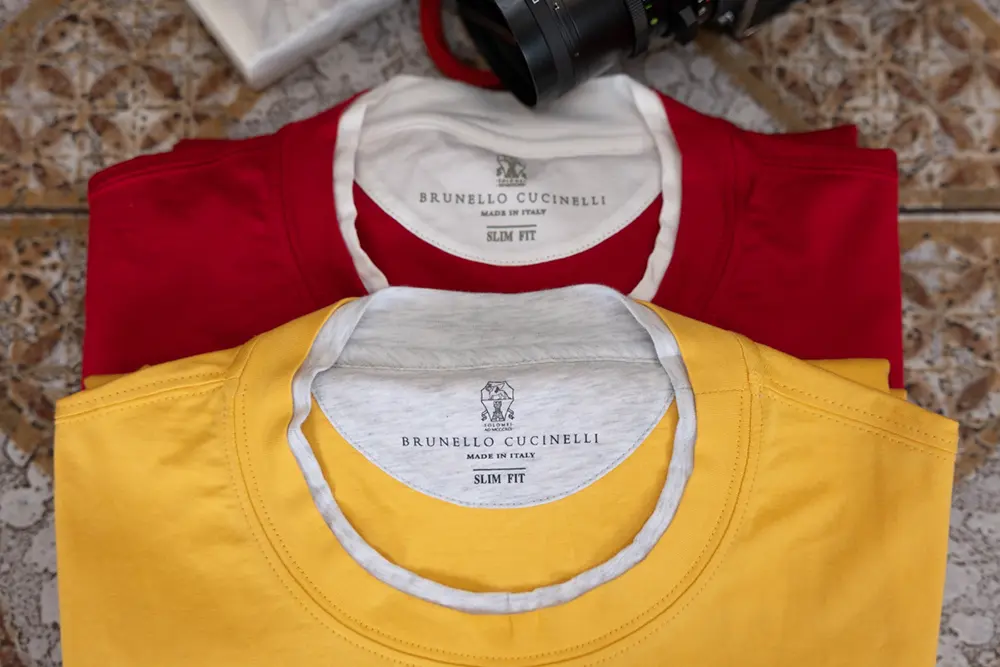
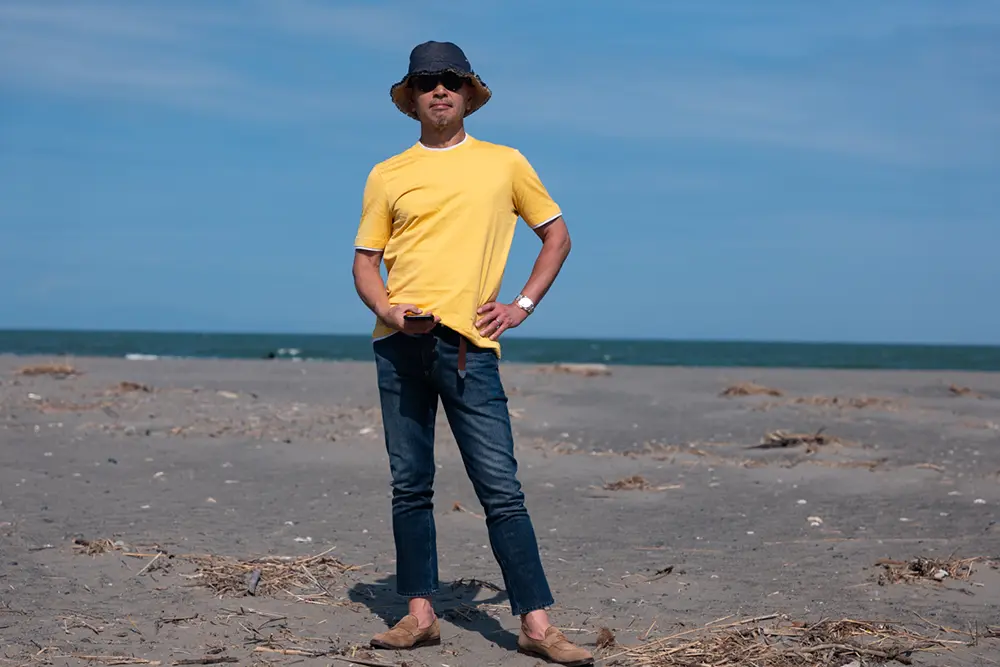
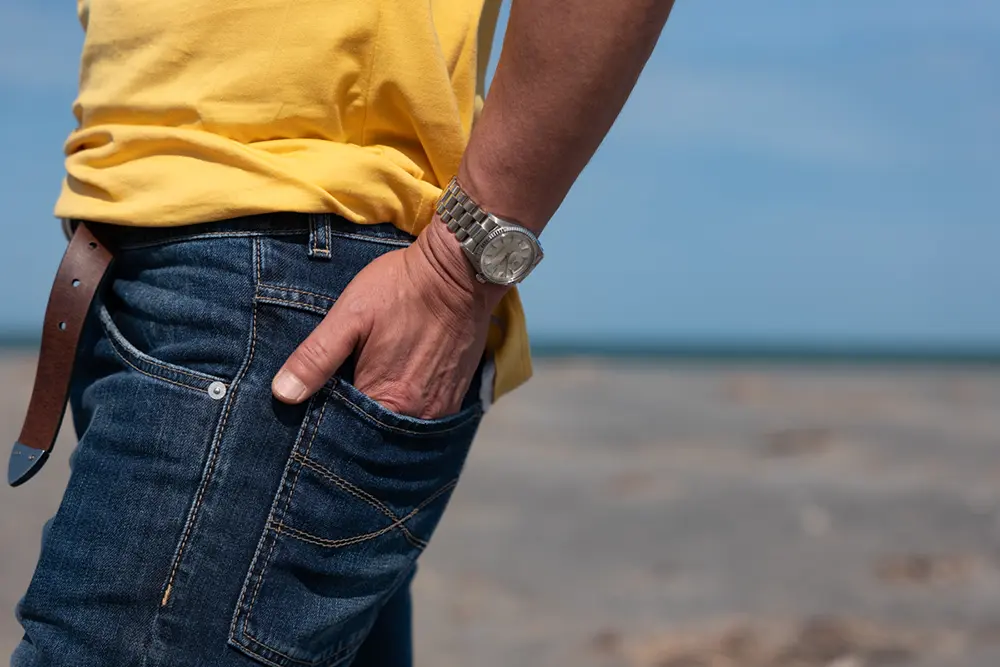
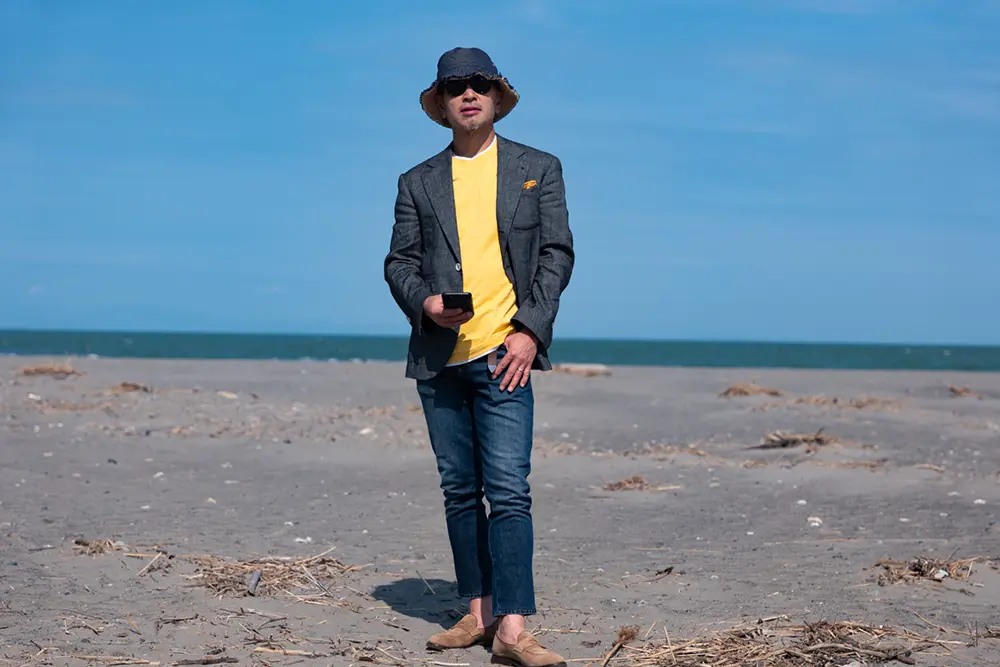
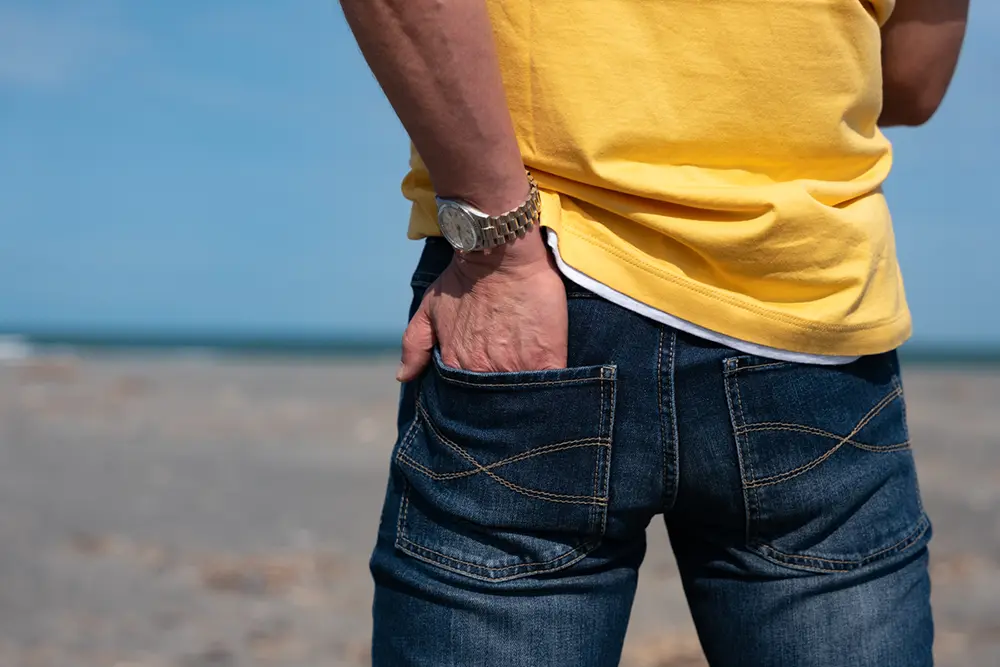
    With yellow slim-fit T-shirt.
    With yellow slim-fit T-shirt.
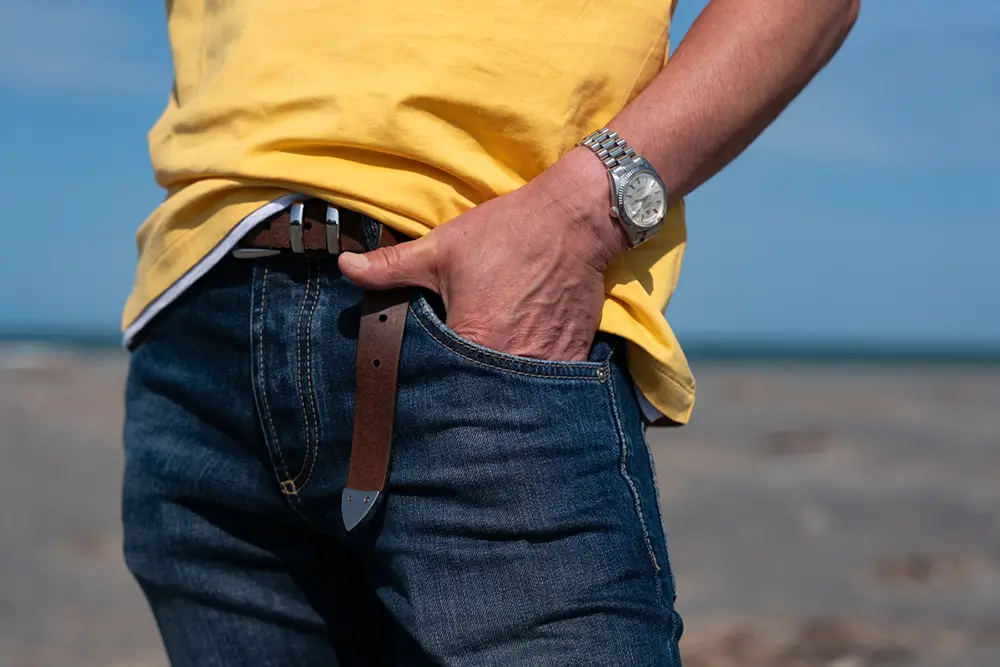
    The belt is a "Puntale" belt with a tip.
    The belt is a “Puntale” belt with a tip.
    Hips also show nicely.
    Hips also show nicely.
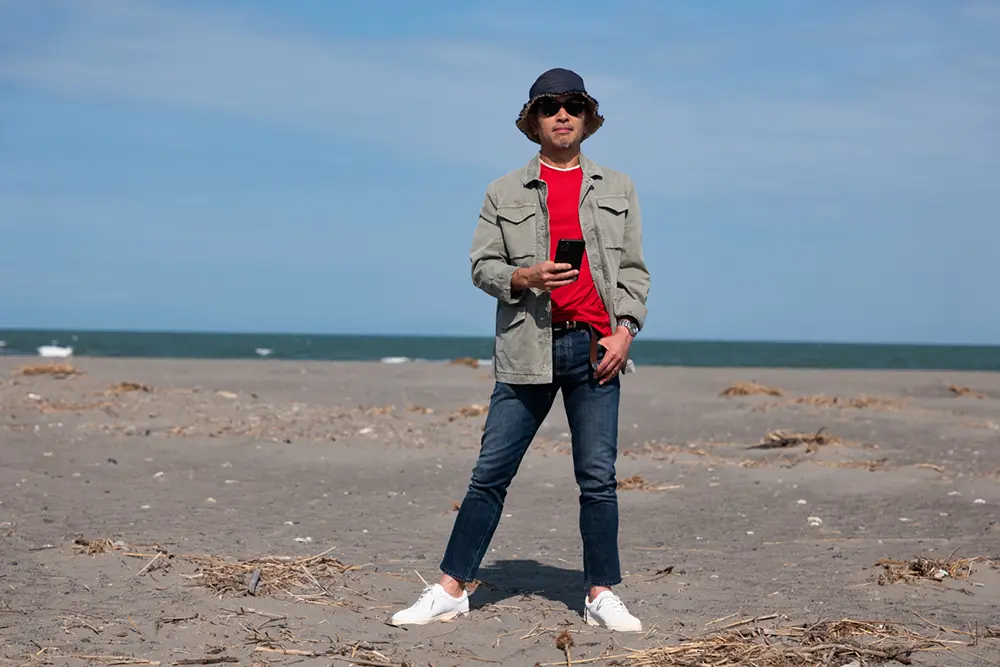
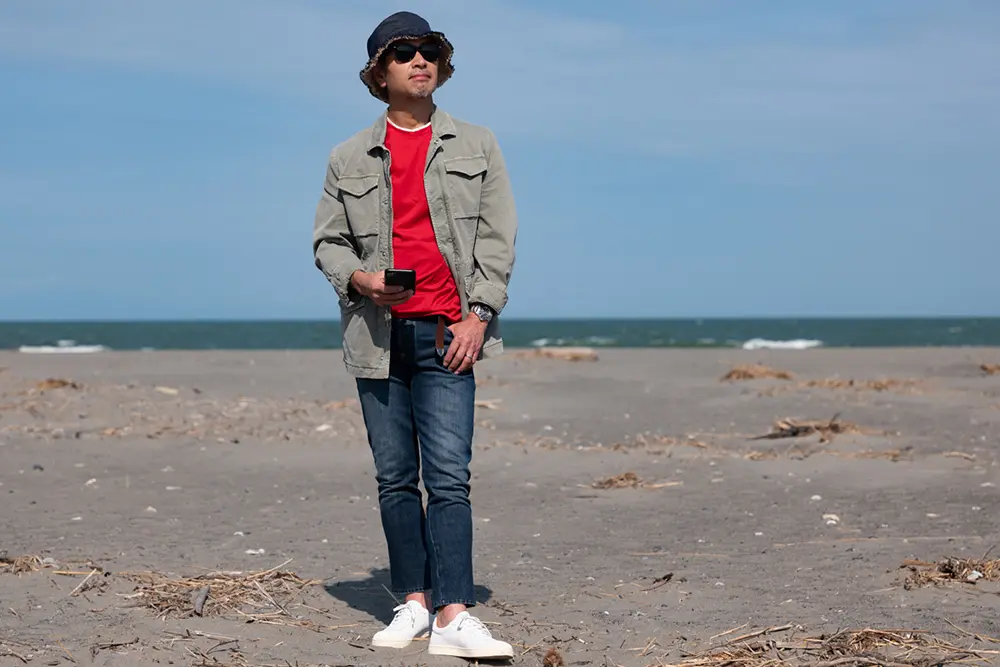
    Field jacket with white suede sneakers.
    Field jacket with white suede sneakers.
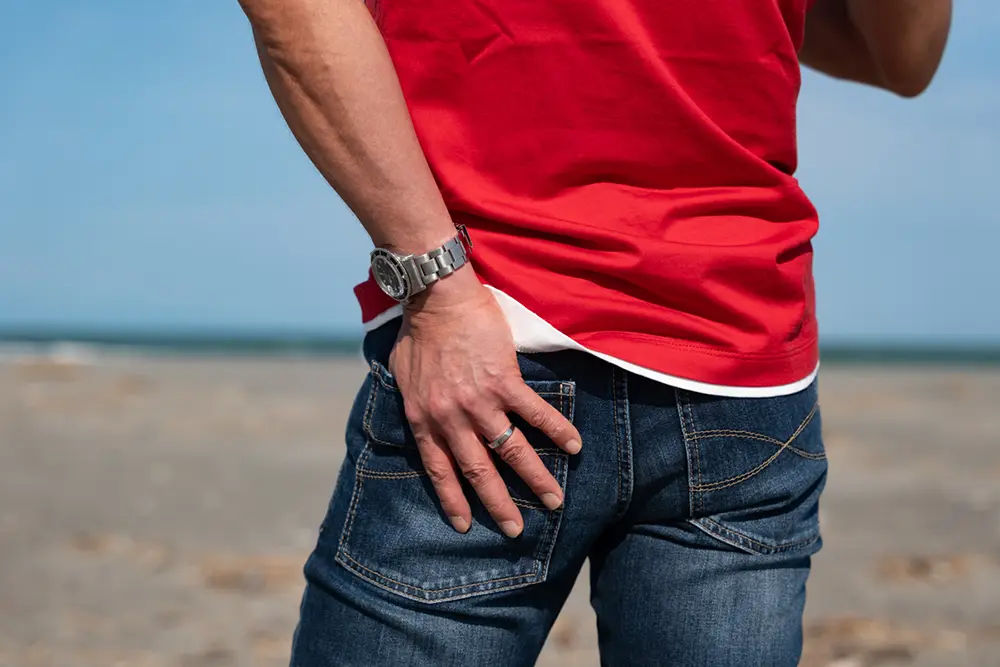
    Red slim-fit T-shirt and blue, red and white are the colours of the French flag tricolor.
    Red slim-fit T-shirt and blue, red and white are the colours of the French flag tricolor.
    Slim fit comfort denim
    Slim fit comfort denim

    Details.

    • Button fly
    • 11 oz denim
    • 17.5cm hemline.
      Slim fit: close-fitting line from waist to leg, slightly low-rise waist * 98% cotton, 2% elastane
    • 98% Cotton, 2% Elastane
    • Indigo colour is closer to Lee than Levi’s
    • Size 44.

    Combination.

    Jaket.

    • Crew neck T-shirt : Brunello Cucinelli Slim Fit T-Shirt (Yellow)
    • Jacket : Cavallo Jaket : Brunello Cucinelli (MTM)
    • Denim : Brunello Cucinelli Slim Fit Denim
    • Hat : Borsalino
    • Watch : Rolex Day Date 1803(1969)
    • Sunglasses : Ray-ban WAYFARER 90’s (BAUSCH+LAMB)
    • Belt : Brunello Cucinelli : Calf suede belt
    • Shoes : Brunello Cucinelli : Suede penny loafer

    Field Jacket.

    • Crew neck T-shirt : Brunello Cucinelli Slim Fit T-Shirt (Red)
    • Field Jacket : Brunello Cucinelli size 46
    • Denim : Brunello Cucinelli Slim Fit Denim
    • Hat : Borsalino
    • Watch : Rolex Sub Mariner 1680(1972)
    • Sunglasses : Ray-ban WAYFARER 90’s(BAUSCH+LAMB)
    • Belt : Brunello Cucinelli : Calf suede belt
    • Shoes : Brunello Cucinelli : Perforated suede sneakers

    Conclusion

    Brunello Cucinelli’s slim-fit denim changed my idea that jeans should be straight, and once again I am impressed by the nostalgic clothing production that changes stereotypes and proposes new ways to enjoy them. Originally, I had avoided wearing loafers with bare ankles because I thought it would not suit me, although it looks great on fashionable people, but when I tried it on myself, I found it very interesting. I now realise that the bottom is made with the effect of beautiful legs in mind in how the whole body is styled, and I hope to incorporate it into my style in the future.


    Shop

    My Brunello Cucinelli items are purchased at the Brunello Cucinelli Ginza store.
    As I mentioned in my article on field jackets, it is a wonderful store not only for its products and stores, but also for the people involved.
    For more information about the store, please refer to article on Field Jacket.

    Field Jacket : Brunello Cucinelli

    Brunello Cucinelli official website

  • Leica SL2-S

    Leica SL2-S

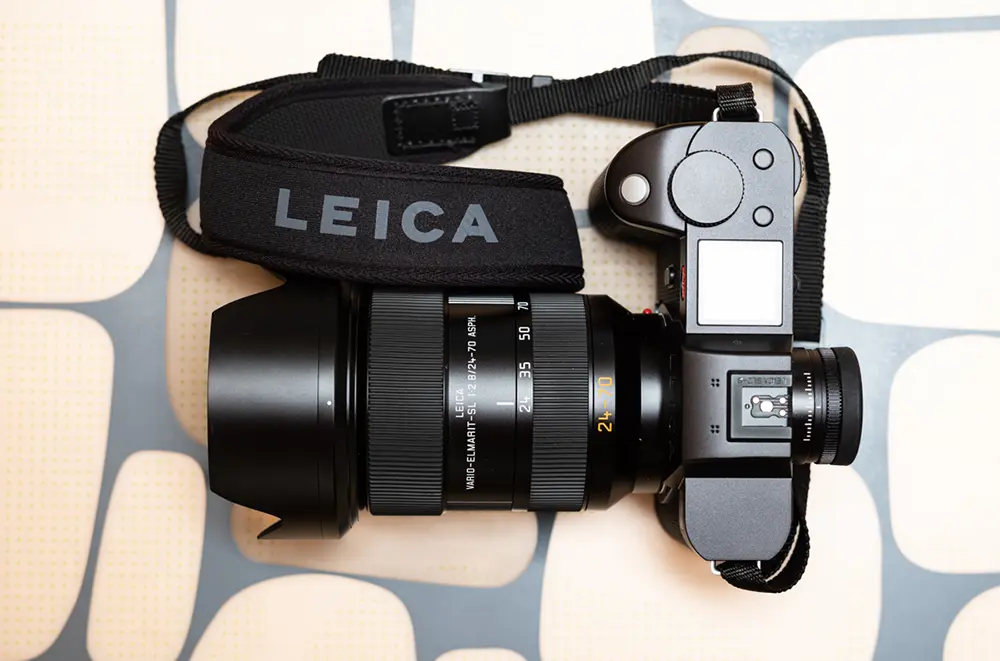
    The photos on this site were taken with a Leica SL2-S.


    When I decided to create this media and thought about photography, I thought a lot about which camera would be best, but I decided that I wanted a Leica that I was familiar with, and since I had only used the M-type before, I took the plunge and went with the mirrorless Leica SL2-S.

    I also considered the high pixel Leica SL2, but for my purposes, the Leica SL2-S, with just the right number of pixels, has been useful.
    Both the Leica SL2 and the Leica SL2-S are just running a campaign and are very reasonably priced.
    I purchased the Leica SL2-S & Vario-Elmarit SL f2.8/24-70mm ASPH. set.

    Decided with precise advice.

    I purchased this camera at Leica Ginza store. I decided on this set after consulting with the experienced staff at the Leica Ginza store. I have known him for a long time as he is a veteran of the Leica Ginza store and has been spreading the charm of Leica to various customers for many years.

    He used to work in the lab, so he has seen the final finishing process of professional photographers for a long time, and he knows the whole process from taking the picture to the final finishing. He also explains why this is so.

    The main reasons for the SL2-S’s advantages are its high sensitivity and the fact that the file size is appropriate and easy to use. He is a person who has seen a lot of professional final products, so we talked a lot about the final size, how much margin to allow for when considering cropping tolerance, and how much of a burden the margin would be on the actual file management and development work. I decided on the SL2-S after receiving advice from a more professional viewpoint rather than my own, which was to buy a high-resolution camera if I had to.

    He also told me that although there are many high-performance single focal length lenses available, it is not too late to actually take pictures and see which size fits best, and that although it is a standard zoom, the picture at the telephoto end is of sufficiently high quality to convince me. He also explains that the wide end is also fine for non close-up shots and that it is a good lens when viewed as a stand-alone lens, although you can feel the difference when compared to Leica’s single focal length.

    After using it for a while.

    After using the lens for a while, I can say that it was a good choice.
    I have no complaints about the way I take pictures now, and the quality of the pictures is very Leica quality.

    It doesn’t have the fun of the M model, but the versatility of the SL series is its greatest appeal.

    Also, the concept of menus and buttons is similar to that of the M model, so I can use most of them without even looking at the instruction manual.
    It seems that the next generation of SL series will be coming out soon, but for the time being, this SL2-S has enough quality to satisfy my needs, so I am very satisfied with this purchase.

    I can also take the following photos with the Selfie
    The choice of the Leica SL2-S & Vario-Elmarit SL f2.8/24-70mm ASPH. set was a big factor.

    Brunello Cucinelli
    Field Jacket : Brunello Cucinelli
    Schiesser Revival Karl-heinz
    Schiesser Revival Karl-heinz
    Levi’s 501XX 1955 Model
    Levi’s 501XX 1955 Model

    Shop.

    The Leica SL2-S & Vario-Elmarit SL f2.8/24-70mm ASPH. set was purchased at the Leica Ginza store.

    I recommend this store because it is the first directly managed Leica store in Japan and the staff, who are well versed in Leica, can make various suggestions to make your shopping experience a satisfactory one. The SL series, which I purchased this time, is a versatile camera and there is no picture that it cannot take, but the picture that comes out is definitely Leica quality.

    Leica Camera website

  • Enjoy your photos Leica M

    Enjoy your photos Leica M

    Film photography is more tedious than modern digital photography, but it’s a lot of fun.

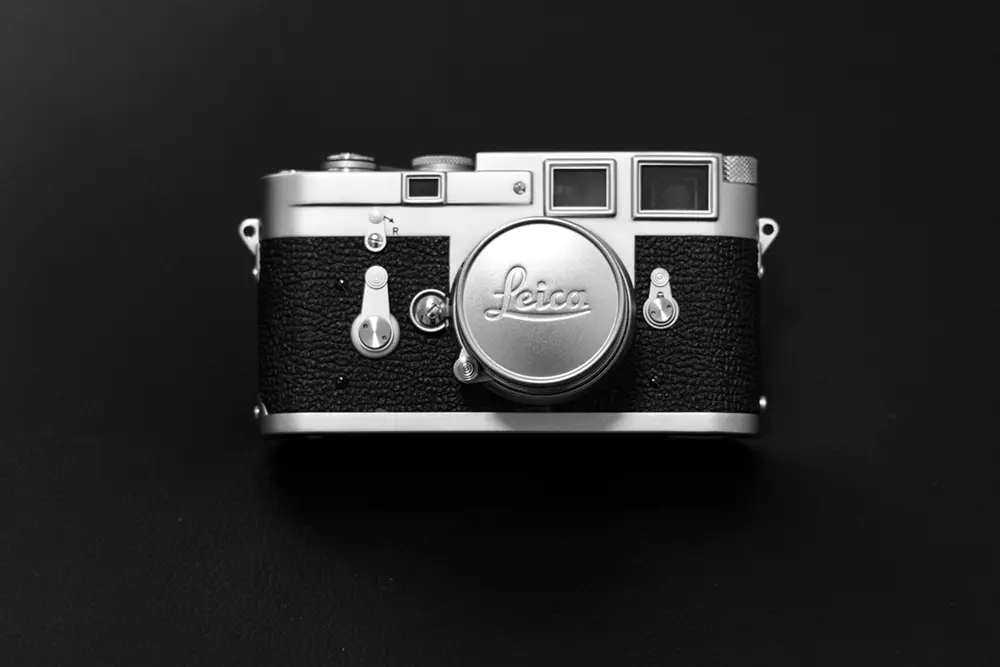
    Leica M3
    Leica M3

    Introduction.

    In this article, I would like to introduce film Leica cameras.
    Leica cameras have many fans all over the world and are famous for their rangefinder cameras, so called “M” cameras.
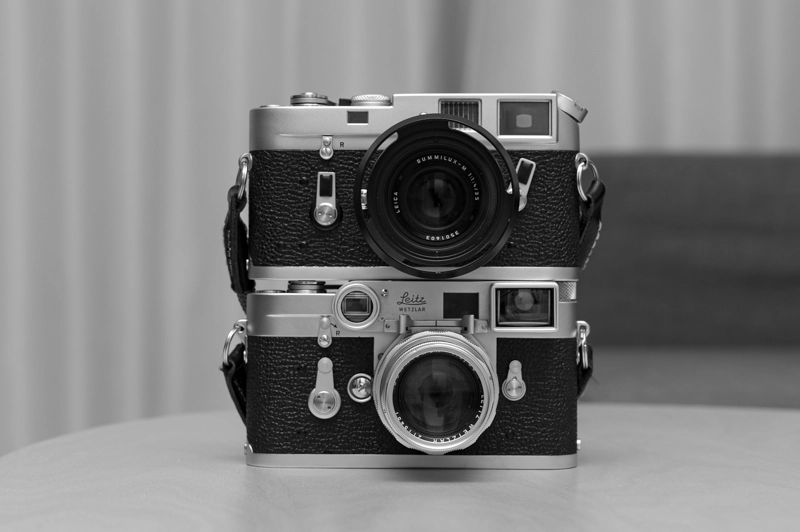
    I also love Leica cameras and own three film cameras, the first generation A, M3, and M4, and three digital cameras, MD (Type 246), the first generation MMono-Chrome, and M10-R Black Paint.

    Shooting with a distance meter? A brief description of the M Leica.

    There are many books and websites that explain Leica, and talking about it would take a book or so, so I won’t go into them here, but simply put, the rangefinder of the M-type Leica is a frame linked to the rangefinder, and when the double images match, the camera focuses on the subject as seen by the lens. The camera does not focus on the subject as seen through the lens, but on the subject in the separate window of the rangefinder.
    With an SLR camera, you focus on the subject actually reflected through the lens, and if the f-number is 1.4 or so, the difference in focus between the background and the subject (depth of field) is visible in the viewfinder, so you can take a picture as it actually appears in the viewfinder while confirming that the background is beautifully out of focus. With the Leica, however, the subject is not seen through the lens, so the viewfinder shows only that the subject is in focus and the rangefinder shows only that the subject is in focus, and the photographer uses this as a guide.
    Thanks to this system of shooting with the rangefinder, the depth of field and distance information on the lens is extremely accurate, and the accuracy of the depth of field is high, so that even when the lens is slightly stopped down, a picture can be taken with the depth of field as a guide. You don’t have to look through the viewfinder and focus on the subject every time you want to take a picture.
    In fact, newspaper reporters used to take pictures of celebrities and politicians by “hand-held” (i.e., holding the camera above their heads with their hands outstretched, and taking pictures of them in the midst of a large press corps).
    I’m not going to go into the product description, mechanical description, and the vast amount of knowledge about the M Leica, as there are many such things out there.
    (Film is the image sensor in the modern sense of the word, and can also be called the camera body.)


    There are three main types of film.

    Color is reversal and negative, and monochrome is negative.
    When taking photographs, it is important to understand the characteristics of reversals and negatives, so here is a brief explanation.
    A negative is a film that records a reversed image. The process of negative film is the reversal of a positive image and then the reversal back to the original to create a photograph. When a picture is taken, there are bright areas (highlights) and dark areas (shadows), and negatives, due to their structure, are more forgiving on the highlight side and more severe on the shadows.
    It is true that negatives are often said to have sticky highlights and crushed shadows, and while it is basic to set the exposure to the correct value when shooting, if you think the subject is a little dark, shooting brighter tends to produce better results.
    The structure of a reversal is the opposite of that of a negative, so highlights are more severe and shadows are more forgiving.
    This is the same characteristic as that of a digital camera, so it should be easy to understand.


    Reversal film (Fuji Provia 100)

    This is a film for reflective manuscripts, known as a positive film, which produces more accurate colors than color negatives.
    When I first started using film, I often used this film because it was the closest to digital film.
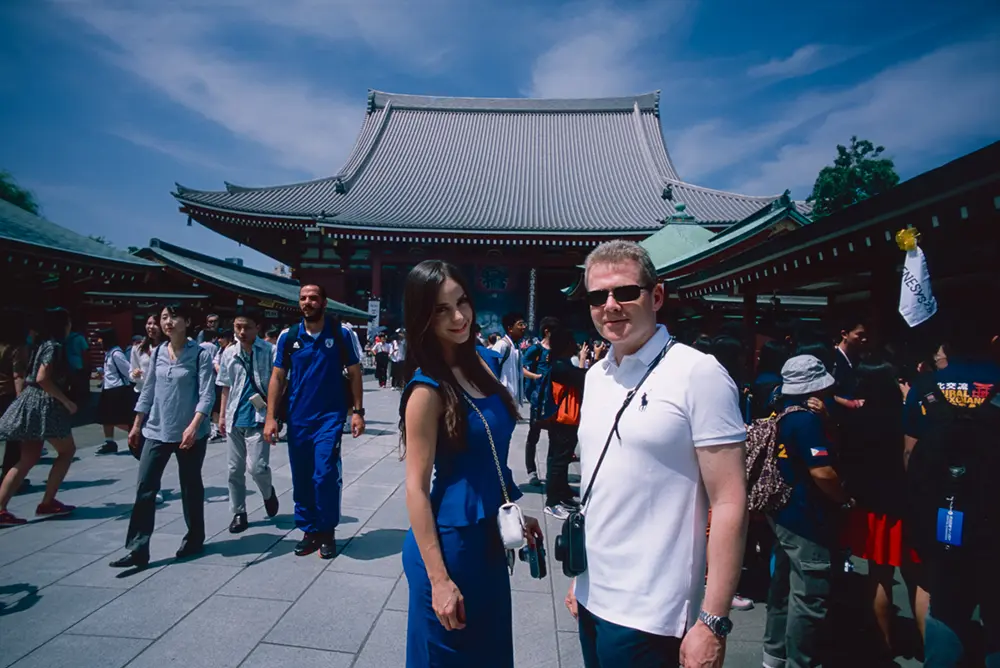
    This photo was taken of a tourist in Asakusa who approached me and we chatted for a while with a large aperture wide-angle Summilux 21mm/1.4 lens attached to an M3 from the 1950s. Leica lenses are very high performance, and the sharpness is very high and the image is very sharp, even on film. I often take pictures with a 21mm lens at f/5.6 with the focus plane set at 3m, but with this set up, the depth of field (the range where the subject appears to be in focus) is pan-focus from 1.5m to infinity, so I can take pictures very quickly without focusing by simply framing the subject. You can take a picture very quickly.

    Provia100
    Leica M3 Summilux21mm Fuji Provia100

    Color negative film (Kodak Portra160)

    If you are older than a certain age and have taken pictures with a camera in the film era, you have probably used this type of film at least once.
    Compared to the photo taken with the reversal film above, the color tones (orange and yellow) are a little warmer, but this is a characteristic of negative film, which tends to turn warm in strong light and cool (blue and green) in weak light. However, nowadays, with digital cameras, the camera can take care of these corrections for you, and many people may prefer to leave the colors as they are, as if they were taken with a film camera.
    This picture was taken with the DR Summicron 50mm lens on my M3. This lens has a high resolution that is as good as modern high-performance lenses, and I left it attached to my M3.

    Portra160
    Leica M3 Summicron 50mm(DR) Kodak Portra160

    For comparison, I also had a digital M10 on the same day, so I will also include photos taken with the M10 so that you can compare the differences between film and digital.

    Leica M10
    Leica M10 Apo-Summicron90mm

    Monochrome film (ILFORD DELTA400)

    From here, we will start with monochrome film.
    One of the interesting things about monochrome film is that you can develop and print the film yourself.
    This photo is also a scan of a film I developed myself, but it was developed with ILFORD DELTA400 film in what is called “straight development” (ISO400 film shot at ISO400 and developed at ISO400). The film was developed using ILFORD’s DDX developer, which differs from the normal process in that it is a dilute developer (i.e., the developer solution is made thinner than specified to lengthen the development time). The dilute development process is used to control the development of the film in order to bring out the silver tone of ILFORD’s DELTA film, which has a characteristic of producing very beautiful light gray (silver) highlights.

    Delta400
    Leica M3 Summicron50mm(DR) ILFORD DELTA400

    Monochrome film (Kodak Tri-X400)

    Here is another monochrome film photo. This one is called Kodak Tri-X400, which is the industry standard and is probably the most famous film you will ever see.
    The interesting thing about this film is that by simply changing the sensitivity, you can get completely different images and tones, and it is very interesting to control the tones.
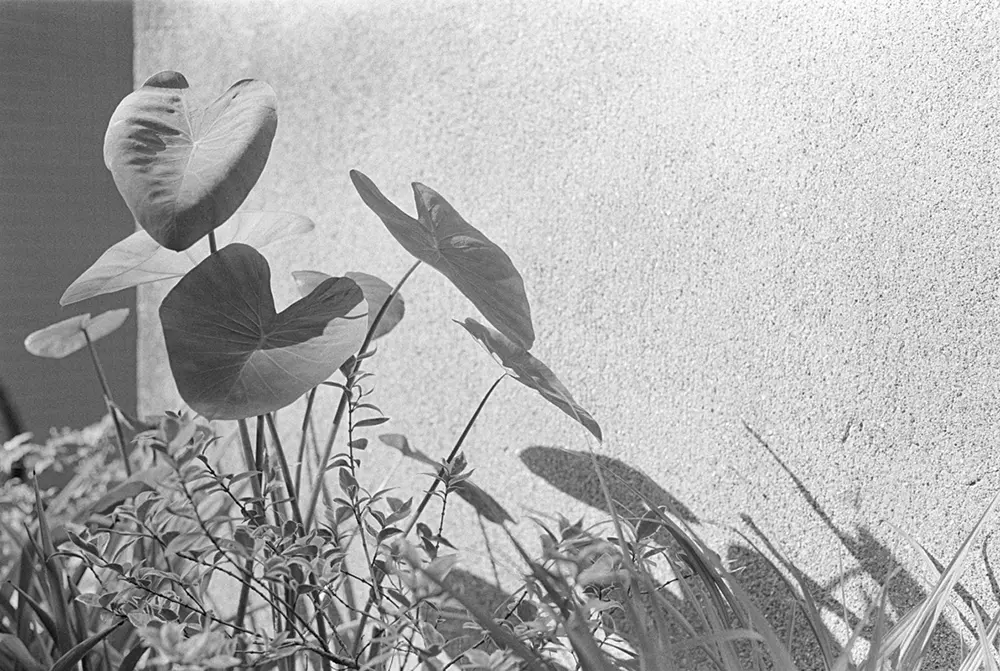
    I can’t introduce it all here, but when I use Kodak Tri-X400, I use ISO 200, 400, 800, 1600, 2500, and so on, from pull (reduced sensitivity development) to push (increased sensitivity development), changing the sensitivity and development according to the shooting conditions and my shooting intentions. Another feature of this film is that it is very straightforward in the way it captures light, so it is easy to imagine what the print will look like when you take the picture. The sweet potato leaves I am shooting this time have an indescribably soft tone, which is created by reducing the sensitivity at ISO 200. Kodak also offers a high-performance film called T-MAX. This film has high sharpness and high resolution, and the intensification can go up to 3200, but it has a slightly harder tone (more digital-like) than Tri-X, so I often use Tri-X.

    Tri-X400
    Leica M3 Summicron 50mm (DR) Kodak Tri-X400 (Pull200)

    Conclusion.

    Since Corona, I have stopped taking photos, but after reviewing the photos I took in the past, I am thinking about taking photos again. I could use a digital Leica, but film is still interesting, and since a 35mm camera can only take 36 shots, it is also interesting, and it is very interesting to start developing and producing black-and-white tones. I hope this article has piqued your interest in the M-type Leica, whether digital or film.

    One of the reasons I stopped shooting film is that my favorite developer, R09 (Rodinal), has completely disappeared from the market, but it has recently reappeared in the market, which is another reason to start shooting film.


    Shop.

    I buy my film cameras from Onuki Camera in Yokohama.
    This store is also a long-established store and carries a variety of cameras. They also have a wide range of accessories and peripherals, and their main focus is on photography, so no matter how old your camera is, it will be well maintained and if anything goes wrong, they will fix it.
    The staff is also very knowledgeable and skilled in photography, so they can help you with any problems you may have with your photos.
    This store can satisfy everyone from beginners to experienced photographers, so if you have a chance to visit Yokohama, why not extend your visit?

    Onuki Camera WEB site

    “Onuki Camera WEB site” Global shipping is not supported. Come to the shop when you come to Japan.

  • Shooting Flowers in Film with Macro.

    Shooting Flowers in Film with Macro.

    Let’s take pictures of flowers on film using a macro lens!


    Many people use macro lenses to take pictures of flowers. Here are some photos I took using Macro lens with Film.

    Camera is a single-lens reflex camera

    The camera used will be a Canon EOS-1V, a film camera that was made for professionals. It is the current EOS-1D X series camera, and unfortunately it was discontinued about 5 years ago.
    I used the EF100mm f/2.8L Macro IS USM macro lens.
    This time, all photos were taken in vertical composition. The photos were taken with three types of film: color negative, color reversal, and black-and-white.

    • Taken with color negative film KODAK Portra160 ISO160
    • Taken with color reversal film Fuji Velvia50 ISO50
    • Taken with monochrome negative film ILFORD Pan-F50 ISO50
      The characteristics of each film will be introduced while looking at the photos taken.

    KODAK Portra160

    Portra160
    Canon EOS-1V KODAK Portra160
    Portra160
    Canon EOS-1V KODAK Portra160

    KODAK Portra160 produces very soft pictures. The colors are a little warmer than they actually are, but this is what gives the picture its unique softness. (The background of the film is also very soft, which makes the subject stand out in the picture. This is another interesting feature of film.

    Fuji Velvia50

    Velvia50
    Canon EOS-1V Fuji Velvia50
    Velvia50
    Canon EOS-1V Fuji Velvia50

    Fuji Velvia 50 is a film that tends to produce vivid and flashy colors, which are called “memory colors. It is a film that is often used by people who take landscape photographs.
    The first photo of a leaf looks somewhat like a photo you might see in a picture book, but I realized that the pictures in the botanical illustrated books I saw as a child were taken with reversal film at the time.
    As is characteristic of film photography, shadows tend to fall off, and this is what gives the leaves their thickness.

    ILFORD Pan-F50

    Pan-F50
    Canon EOS-1V ILFORD Pan-F50
    Pan-F50
    Canon EOS-1V ILFORD Pan-F50

    The last image is ILFORD Pan-F50, a black-and-white negative film. Although it is a low-sensitivity film at ISO 50, it has a wide dynamic range and beautiful tones when taken in good light. Although it is rarely done, reducing the sensitivity to ISO 25 produces even softer tones.


    Conclusion.

    I believe that many people take pictures of flowers. There are many ways to take pictures, but I often shoot with a macro lens and film. I rarely take pictures of flowers because they inevitably end up looking the same, but when I look at the pictures I do take, they have a different charm than pictures taken digitally. You can take completely different photos with different film choices, so why not give it a try?

    The Canon EOS-1V I used this time has been discontinued, so I did not introduce the Shop.
    If you are interested in Canon EOS-1V or Nikon F6, it would be interesting to look for a used one.

  • HASSEL BLAD 503CX True square photo.

    HASSEL BLAD 503CX True square photo.

    Let’s try square photos.

    Hassel Blad 503CX
    Hassel Blad 503CX

    Introduction.

    When it comes to square photos, Hasselblad and Rollei are well known for their 6*6 format.
    In this article, I would like to talk about Hasselblad.

    The film used is medium format.

    Today, the full-size format referred to in digital cameras is based on the 24mm-36mm length and width format, which in film is called the Leica version. In the film era, there was a larger format called the 120 format, which was 60mm in height and had a different screen size depending on the camera, and was also called medium format. The Hasselblad introduced here is in this 120 format, which can take 12 square photos of 56mm per film.

    Reverse image viewfinder that reverses the left and right images.

    The Hasselblad is an SLR camera, but instead of prism glass like modern cameras or mirrorless cameras, it has a reflective mirror, which means that the image in the lens is viewed through the viewfinder, so the picture seen in the viewfinder is the opposite image. Since the image seen in the viewfinder is the opposite of the movement, it may be uncomfortable at first, but you will soon get used to it.
    Since it is a single-lens reflex camera with interchangeable lenses, there are a wide range of lenses from wide-angle to telephoto, and since the lenses are Carl Zeiss lenses, they are very good at taking pictures.
    The most famous lens is the Planar 80mm/F2.8 standard lens (equivalent to 50mm in full size format). I use this Planar as a base lens and also use the Distagon 60mm/F3.5, Macro Planar 120mm/F4, and Sonar 180mm/F4 lenses.

    The original tilt LCD, the fun of looking into the camera from above.

    The waist-level viewfinder is a feature of Hasselblad and Rollei lenses, and is used to look through the viewfinder from the top.
    I use Hassel and Rollei lenses because I enjoy the act of looking through the viewfinder from above and taking pictures. I am especially impressed just by looking at the beautiful subject reflected in the Hassel waist level viewfinder.

    It’s a bit tedious, but once you get used to it, it’s fun!

    There is a bit of a ritualistic element to using the camera, such as loading the film, taking out the film, and changing the lens, but once you get used to it, it is not so much of a problem. I won’t go into the technical specifications or how to use it this time, but if you are interested, I recommend you check out the Internet.
    Since we are talking about enjoying film photography, we have omitted camera specifications, lenses, and detailed explanations.
    One of the features of Hasselblad photos is that there are two wedge-like trails on the left side of the frame of the photo. This is because the notch that holds the film in place when the film is sent is visible in the frame of the photo. (Assuming you do not crop the image.)


    1.KODAK Portra400

    Portra is the standard for color photography. Portra is a standard for taking color photos. It has a soft tone and is often used for portraits of women. It is a high performance film, and the red of the lanterns at Kaminarimon in Asakusa comes out well. This photo was scanned from film, but the actual print will be corrected and the colors will shift toward warmer tones. I noticed after scanning that the film was taken with a colder color tone, closer to cyan.

    KODAK Portra400
    KODAK Portra400

    2.KODAK Portra160

    This is Portra160, a film with higher image quality and better grain than 400, but I myself am not looking for high image quality, so I use it less often than 400. The colors are more saturated than 400, so I use it when I want to bring out the colors. The red color of the signboard of the store in this photo is a little cold (cyan), but it is Portra’s unique tint.
    The straight lines in the composition make for an interesting picture of a perfect square. This is simply a photo of a signboard in the center of a wall, but it is this square photo that creates the atmosphere of a typical store signboard, even if it is taken in a staggered position.

    KODAK Portra160
    KODAK Portra160

    3. FUJI Pro400H

    This is FUJI’s Pro400H film, which is the twin of Kodak’s Portra.
    It is basically a film suitable for portraits, but it has low saturation and is designed to be used by professionals who use filters to add color to their photos for printing.
    It is a film that produces more beautiful colors in low light than in high light.
    When you take pictures with film, you will see elements in your photos that you don’t think about as much with digital, and it will change your understanding of photography.

    Pro 400H
    Fuji Pro 400H

    4. FUJI Provia 100

    All three photos above are color negative film, but this is reversal film.
    As explained briefly in the Leica section, reversal film is color accurate and produces near-digital images.
    The Provia 100 used for this photo was poorly stored and had been purchased some time ago, so the film has deteriorated and is covered. The white frames on the left and right sides of the frame are covered with the film. I reconfirmed that if you use reversal film, you should store it in a refrigerator.

    Provia100
    Fuji Provia100

    5.KODAK T-MAX100

    From here on, the photos will be in black and white.
    T-MAX has high sharpness, good resolution, wide dynamic range, and a modern look.
    This photo was taken and developed straight through, using R09 (Rodinal) as the developer.

    T-MAX100
    Kodak T-MAX100

    6. KODAK Tri-X 400

    The last one is Tri-X400, which is a royal road.
    This picture was developed with Tri-X400 at Pull200 (shot at ISO 200 and developed at ISO 200).
    As I recall, the photo was taken with the aperture wide open, so it has a very soft impression.
    I love the subtractive tone of Tri-X400 and use it often. This photo was also developed with R09 (Rodinal).

    Tri-X100
    Kodak Tri-X100(Pull200)

    Conclusion.

    I had planned to write an article about enjoying film photography with Hasselblad, but it turned out to be an unconnected article and it was difficult to convey what I wanted to say.
    Here is a brief introduction of the Hasselblads I own

    • Hasselblad 503CX
    • Carl Zeiss Planar 80mm 2.8 (standard)
    • Two Film Magazine A12s (used for simultaneous color and B&W photography)
    • Carl Zeiss Distagon 60mm 3.5 (equivalent to standard 35mm on the wide-angle side)
    • Carl Zeiss Distagon 50mm4 (equivalent to 28mm on the wide-angle side)
    • Carl Zeiss MacroPlanar120mm4 (telephoto, for macro)
    • Carl Zeiss Sonnar 180mm4 (telephoto)
      I use the Hasselblad.
      The Hasselblad has a beautiful viewfinder, and I enjoy taking pictures through this viewfinder. Also, since the film size is a perfect square, the composition of the picture is different from that of a 3*2 digital camera, which makes the picture more interesting when viewed with eyes accustomed to full-size photography.
      However, once you get used to it, you will have no problem operating the camera, loading and unloading the film, and changing the lens after a few times.
      I feel that you can only take 12 pictures with one roll of film (although 12 is enough), but it is an interesting way to take photographs, capturing exactly what you really want to capture, so if you are interested, please give it a try.
      As a side note, many fashion photos taken before the spread of digital technology were taken with Hasselblad cameras, which are used by professionals in studios. It is also famous for being the camera that took the Apollo mission to the moon.
      I think it is fun to use a Hasselblad with such historical background in mind.

    Shop.

    I buy my film cameras from Onuki Camera in Yokohama as well as Leica.

    This store is also a long-established store and carries a variety of cameras. They also have a full line of peripherals and accessories, and their main focus is on photography, so no matter how old your camera is, it will be well maintained and if something goes wrong, they will fix it.

    The staff is also very knowledgeable and skilled in photography, so they can help you with any problems you may have with your photos.
    This store can satisfy everyone from beginners to experienced photographers, so if you have a chance to visit Yokohama, why not extend your visit?

    Onuki Camera WEB site

    “Onuki Camera WEB site” Global shipping is not supported. Come to the shop when you come to Japan.
  • Santa Maria Novella’s Pot Pourri.

    Santa Maria Novella’s Pot Pourri.

    Santa Maria Novella’s Pot Pourri removes odours from clothes and gives them a subtle scent.


    A step to make sure your clothes are loved, cherished and loved well for a long time.

    Clothes inevitably smell when you wear them. This is fine for T-shirts and shirts that can be washed frequently, but not for outerwear and jackets. This is where Santa Maria Novella’s Pot Pourri comes in handy.
    Santa Maria Novella was originally a monastery pharmacy that used herbs and other ingredients to make medicines, and has a long history of producing colognes and room fragrances with scents extracted from natural ingredients. The store has a long history and sells colognes and room fragrances made from natural ingredients.
    If you have a closet, you can place one of the larger types on the floor to give the whole closet a subtle plant-based fragrance. If it is not a closet, but a wardrobe or drawer, you can buy potpourri leaves only, put a small amount in a tea packet and put it in the wardrobe or other place to give a subtle good fragrance to the clothes as well.
    My wife has been using it for many years as it is an easy-to-use air freshener, whether in her room or in her bag.
    We originally started using Santa Maria Novella’s Pot Pourri about 15 years ago, when my wife bought a Kiton coat and suit and Kiton gave it to us. (I also found out about Ishikawa brushes when I received them from Kiton.)


    Santa Maria Novella Pot Pourri
    Pot Pourri by Santa Maria Novella

    If you have a large space, such as a closet, we recommend the ones in ceramic called terracotta.

    Santa Maria Novella Pot Pourri
    Pot Pourri by Santa Maria Novella

    If you don’t have a lot of space, there is also a silk sachet, which comes in a silk bag.


    A little effort can make a difference to the longevity and frequency of use of things.

    Inevitably, clothes smell when worn, but it is difficult to send them to the cleaners as often. Simply place Santa Maria Novella’s Pot Pourri in your wardrobe to impart a subtle fragrance extracted from natural herbs and medicinal plants to your clothes, making them pleasant to wear in everyday life.
    This little effort will increase your chances of wearing and using things you love, and if they are pleasant to use, you will love them even more.


    Shop.

    The Santa Maria Novella Pot Pourri introduced this time was purchased at the Santa Maria Novella Ginza shop. In addition to the potpourri introduced this time, there is also a full range of colognes and bath salts. Many of the products are more popular with women than men, so if you drop in on a holiday with your wife in Ginza, she will probably be pleased.
    There is also an online store, so you can also buy here.

    Santa Maria Novella Online Store

  • Iron on T-shirts.

    Iron on T-shirts.

    I love to iron my T-shirts as well as wash them.


    A little effort to make sure you love and cherish them for a long time.

    As we get older, things that were troublesome when we were younger become less troublesome and become habitual, just as a nice distraction. One of these is ironing clothes, something I never thought about ironing T-shirts when I was younger, but now it’s a matter of course.
    T-shirts that I like, I put in a net, wash in soft mode and hang dry flat or close to flat, away from direct sunlight. In winter, even knitwear is lightly hand-washed with a special detergent, dried with a towel and laid flat in the shade.
    The theme of this media is things and things that you can be crazy about for a long time. I choose things that I really like and love and use them carefully for a long time, and as I get older, this is spreading more and more. I have always liked taking care of my leather shoes since I was young, and I used to do it whenever I had time, and I still usually brush my suits before I put them away, or my knitwear.
    However, I was impressed by the quality of a T-shirt I recently bought, and I want to take good care of it for a long time, which has led me to take some care when washing and hanging it up, and to iron it before putting it away.
    I have ironed shirts since I was young, so there is no problem with ironing them, but T-shirts are made of softer fabric than shirts, so I iron them in the same way as I iron thin knitwear, in terms of sensation.

    • Selecting a temperature that is basically low.
    • Do not press too hard.
    • Since it is softer, apply the iron to the entire garment as if you were lightly placing the iron on the garment.
    • Around the neck, apply the ribbing firmly.
    • How well you place the iron on the ironing board is important.
      I iron my T-shirts paying attention to these things.
      If you have a chance, please try it out because you can wear the T-shirt quite comfortably if you try it as a distraction.

    Brunello Cucinelli Slim Fit T-Shirt
    Brunello Cucinelli T-shirts are also ironed.
    gicipi GRANCHIO
    Gicipi T-shirts are also ironed.
    Wasew Crew Neck
    Wasew Keep it washed Best but we iron it.
    Schiesser Revival Karl-heinz
    Schiesser Revival is also ironed.

    A little effort can make a difference to the longevity and frequency of use of an item.

    When ironing, you start to look at the ironing marks and ironing labels, so you understand the material of the fabric, and when you buy something new, you have some idea of how to take care of it.
    When ironed and folded properly, the items are surprisingly compact and easy to store and organise.
    The best thing to do is to use the things you love more and more while taking good care of them. Clothing with wrinkles removed feels good to wear, so you will naturally have more opportunities to pick it up.
    If you find something that suits you, something you like and something you are attached to, I think you will enjoy wearing and using it even more if you consider a little care to be one of the pleasures of using it carefully for a long time.