Language
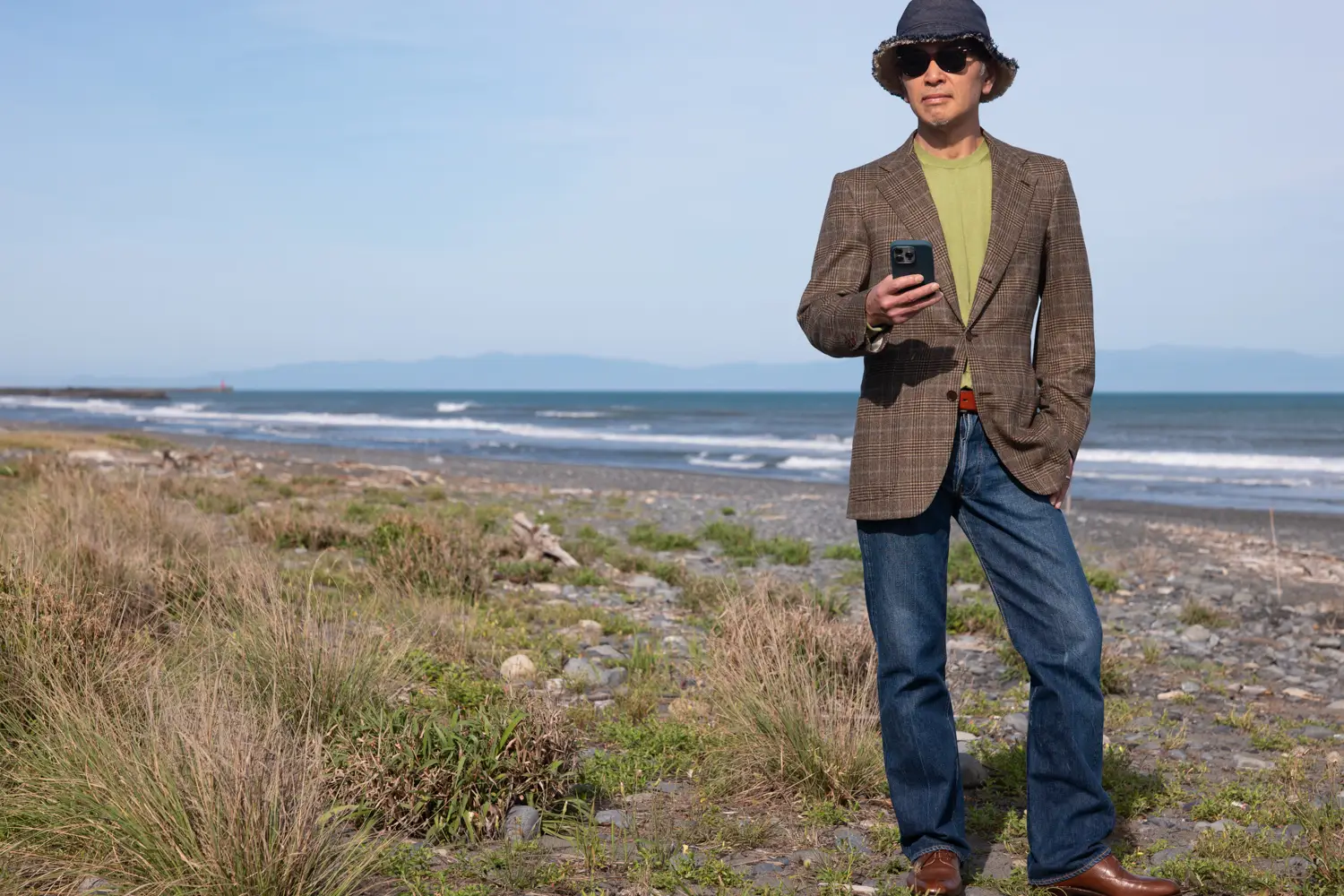
This season, alongside the casual pieces I usually reach for, I’ve found myself wearing suits and jackets that hadn’t seen daylight in some time. The Formosa cashmere jacket I’m introducing here pairs beautifully with my regular Levi’s 501XX and other denim, and because it’s tailored from cashmere, it earns its place in heavy rotation through the depths of winter.
Beyond the jacket itself, I’ve also written through what I take to be the deeper cultural side of Italian sartoria — a strictly personal reading. Working that out, in turn, has deepened my own understanding of what makes the Formosa jacket so quietly remarkable.
This piece runs long, so I’ve broken it across six pages.
Formosa
Formosa is not a fashion brand but a sarto — a Naples tailoring house. Its full name is Sartoria Formosa, and the workshop sits in the Chiaia district of Naples.
It is an old house. Mario Formosa founded the atelier in 1965, and he became one of the legendary masters who carried Naples tailoring through its “golden age.” Trained under Roberto Combattente, he stands in the legitimate line of succession of the Neapolitan style.
With Mario’s passing, his son Gennaro Formosa now carries the house forward in his father’s name. The atelier was historically bespoke-only, though it has begun offering ready-to-wear in modest quantities.
What’s worth noting is that even the ready-to-wear isn’t farmed out to an external factory — it is made in-house by Formosa’s own tailors, which means the off-the-peg pieces carry essentially bespoke-grade build quality. There is no Japanese distribution, but the line shows up at high-end North American department stores.
The Neapolitan suit is, in a sense, a philosophy born of Naples itself — lightness and softness, freedom rather than formality. Manica camicia (the shirt-sleeve construction), thin canvas, and a generous use of hand-stitching are its hallmarks. The warmth that only human hands can give a garment, and the rounded silhouette that follows the body in three dimensions — neither of which a sewing machine can replicate — soften the British-derived austerity of the suit and leave behind something refined, light, and easy to wear.
To this inherited Neapolitan craft and philosophy, Formosa adds its own techniques and judgment, producing a take on the Neapolitan style that feels easier to wear and more contemporary in everyday life.
The house places real emphasis on cultural transmission, and the workshop is notable for the number of young, promising tailors working in it.
Tailoring Hallmarks
Formosa carries the traditional Neapolitan techniques and thinking forward, but compared to other Neapolitan sartorie, it has a distinctive balance — a kind of restraint, a refusal to over-construct the form.
Like the rest of Naples, it works with minimal canvas and an exceptionally soft hand. What it does particularly well is build dimensional volume from the chest up through the shoulder — without forcing the body’s line through construction or stiffening, it arrives at a silhouette that fits the body cleanly, but no more than is needed.
This technical command produces a cleaner line than most Neapolitan tailoring, and Formosa’s jackets and suits are accordingly described as marrying the Neapolitan tradition with a contemporary modernity.
Because Formosa doesn’t lean on cloth weight to hold a jacket’s form, the house can work freely with light and soft fabrics that other tailors tend to avoid. The result is a Formosa hallmark — an excellent silhouette that nevertheless carries softness, an unusual lightness, an unforced ease in the wearing.
Not everything is built from light, soft cloth — at the customer’s request, Formosa will of course produce heavier, more structured suits with longer service in mind. But the customers who walk in tend to be there for the soft and the light.
The house’s cloth library — including vintage fabrics — is among the most extensive in Naples, and Formosa takes the matching of customer to cloth as a serious matter.
To my mind, Formosa is the workshop that has carried the legitimate Neapolitan techniques forward and, with its own native deftness and sense of balance, evolved the traditional style into something genuinely modern.
A Light, Soft Cashmere
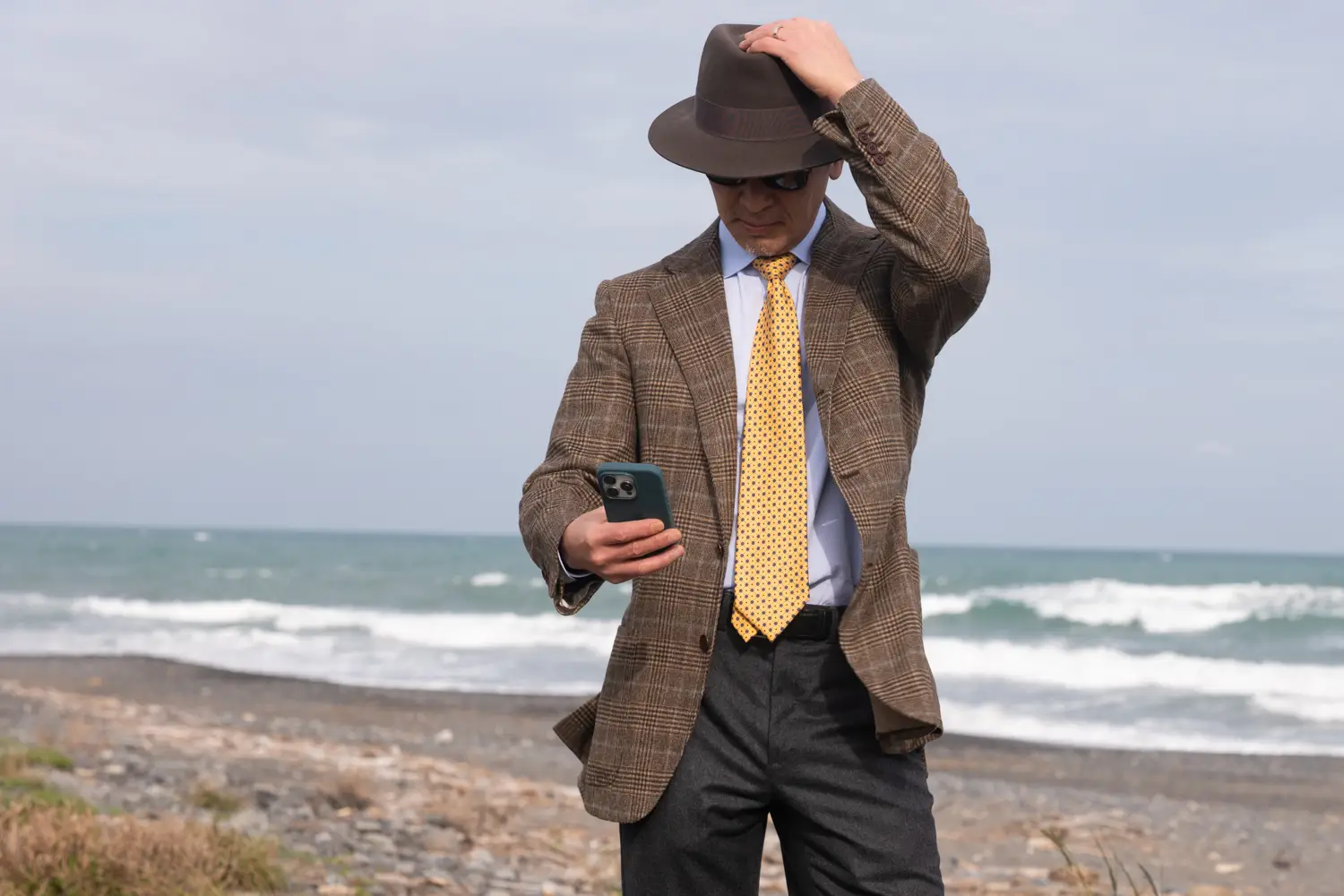
When a breeze catches it, you can see — and feel — how light and soft the cashmere truly is.
The Neapolitan Curve from Shoulder to Chest
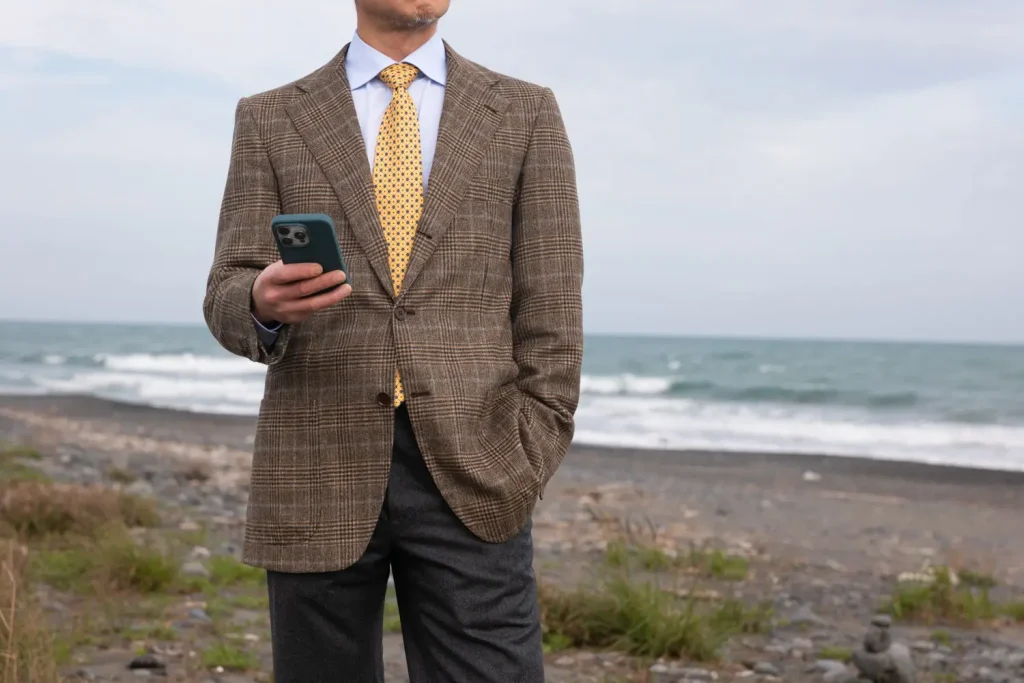
The signatures of the Neapolitan tradition are all in place — the high gorge, wide lapel, generous armhole, and a clearly built line running from shoulder to chest. What is most Formosa here is the choice not to overstate the body’s fit, and to let the overall balance carry the look. The result is decidedly modern.
A Measured, Three-Dimensional Back
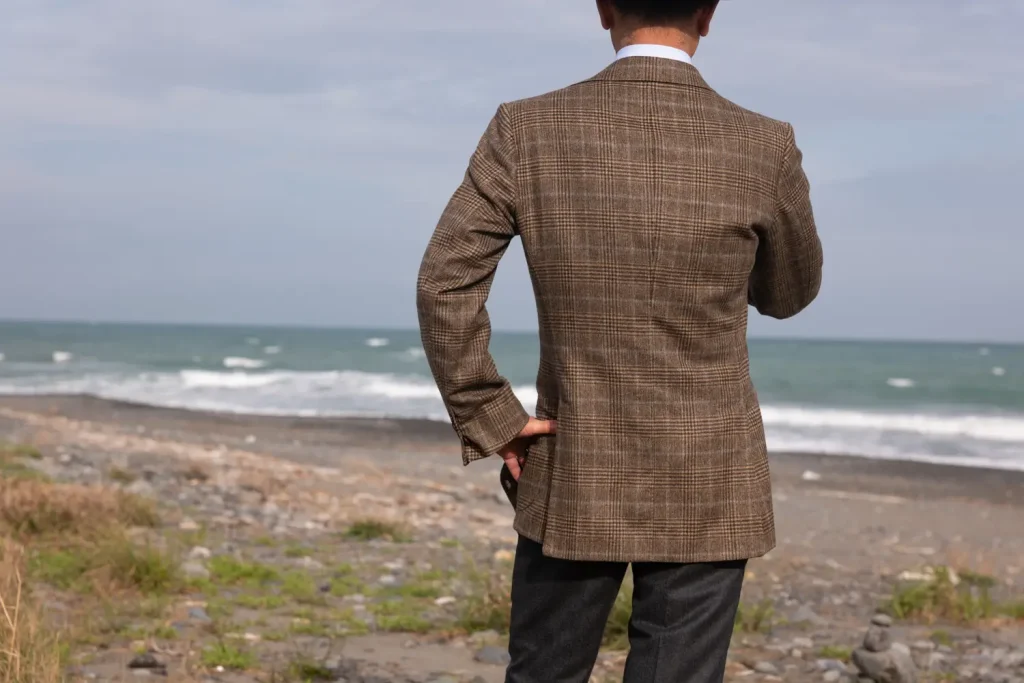
The line that runs from the shoulder, down through the side suppression at the waist, then opens out toward the hip is shaped without being overworked. With the slightly longer length and the deep side vents, the back composes itself into a clean, uncluttered silhouette.
A High Gorge and an Open Lapel
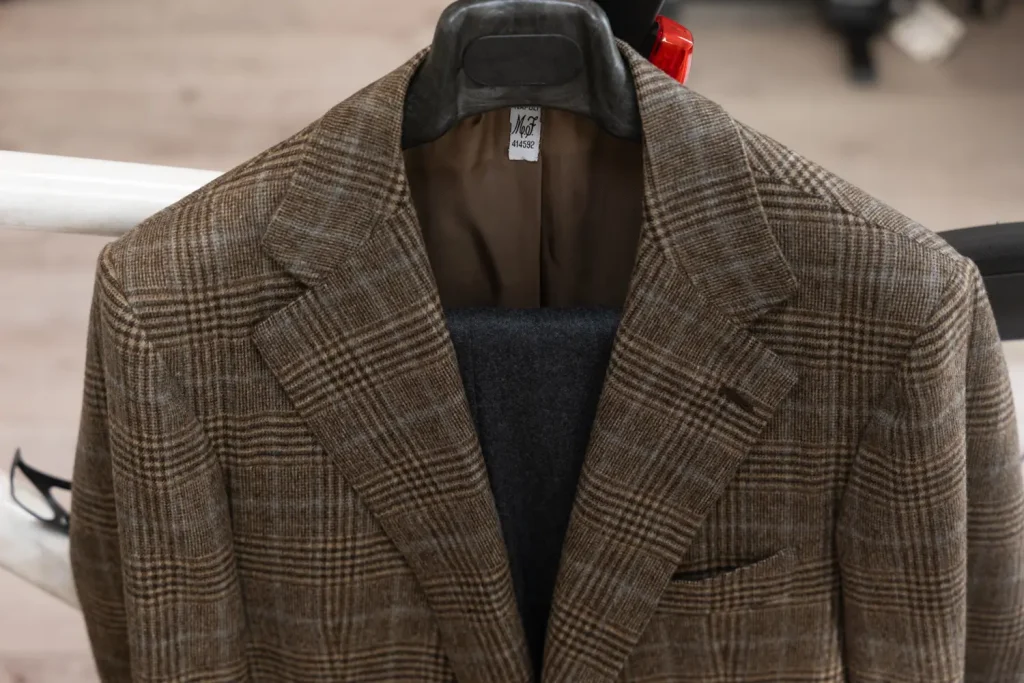
One of Formosa’s signatures is the slightly stronger curve cut into the lapel. Worn, that curve allows the lapel to fall open and lets the chest read as more powerful. It’s harder to see in photographs, but on the hanger that same curve causes the lapel to close inward rather than splay open — a small, deliberate detail.
The M.F. — Mario Formosa Label
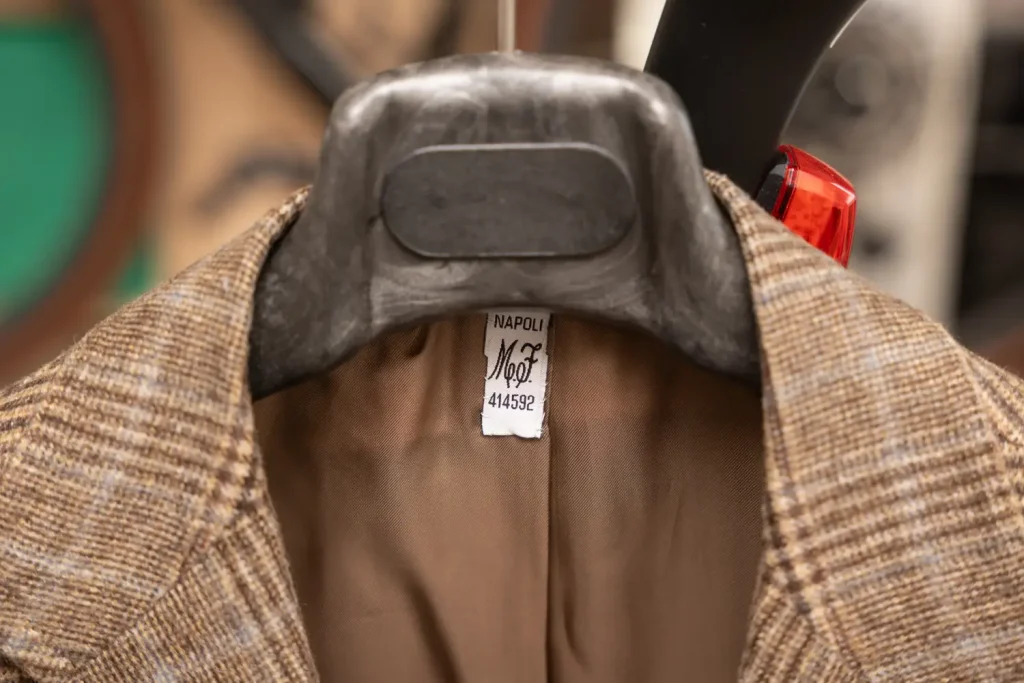
The label carries M.F. — the initials of Formosa’s founder, Mario Formosa.
What I’m covering here, then, is a Formosa cashmere jacket — modern and stylish in line, made from a vintage cashmere of measured weight, built by serious tailoring craft, and altogether light and easy on the body.