
It has been quite some time since I stopped wearing suits on a regular basis. Recently, however, a subtle change in my mindset has led me back to a pair of shoes I had long set aside — the John Lobb Barros.
Perhaps that small shift rekindled something. I found myself wanting to wear the black derby shoes that I used to pair with my suits, and before long I began to think about wearing suits again. Not in the way I did when I was younger, as part of everyday work attire, but rather as something to enjoy in daily life.
When I took a suit out of the closet — one that had been resting there for years — and tried it on again, it felt quite different from how I remembered it. Of course, my sensibilities have changed over time. Yet revisiting it also revealed details and impressions that I had never noticed before.
Today, I would like to introduce a Kiton suit that I purchased about twenty years ago at Tie Your Tie.
This time, I’d like to introduce a Kiton suit I bought at Tie Your Tie 20 years ago.
Tie Your Tie
For anyone with an interest in classic Italian tailoring, Tie Your Tie in Florence needs little introduction. The shop was owned by Franco Minucci, widely regarded as one of Italy’s most elegant men and celebrated as a true well-dresser.
Minucci curated an extraordinary selection of clothing and accessories, guided by his refined aesthetic and unmistakable point of view. The shop carried some of the finest names in Italian tailoring, including Kiton and Cesare Attolini, as well as shirts from Luigi Borrelli and Rigatti, trousers from Rota, and shoes from Marini and Il Micio. Ties and small accessories were also carefully selected and often subtly adapted to reflect Minucci’s personal vision of style.
Among the most notable offerings were bespoke garments from the Florentine tailor Seminara, as well as bespoke shoes from Marini of Rome. Tie Your Tie also introduced bespoke work by Hideaki Fukaya of Il Micio, long before he became internationally renowned. Even ready-to-wear pieces from houses such as Kiton and Attolini were often specially commissioned to reflect the distinctive aesthetic of the shop.
Perhaps most famous were the house ties, particularly the iconic sette pieghe — the seven-fold tie made without interlining. Yet the influence of Tie Your Tie extended far beyond ties. The shop did not merely represent classic Italian style; it helped shape the direction of modern menswear. Independent of passing trends, it proposed a timeless vision of masculine elegance, making it a place where true connoisseurs of style naturally gathered.
The world of products it presented was extraordinary. Guided by the uncompromising aesthetic of Franco Minucci, the offerings were unapologetically luxurious, with little regard for price. Yet the shop attracted admirers from all over the world. Among its well-known devotees was the Japanese footballer Kazuyoshi Miura.
In Japan, Tie Your Tie once operated boutiques in both Tokyo and Osaka. For a time it was frequently featured in influential fashion media and high-end men’s lifestyle magazines, so many readers may recognize the name.
Although the boutiques themselves disappeared following the passing of Franco Minucci, the ties that bear the Tie Your Tie name continue to be produced today.
Ciro Paone
The Tie Your Tie suit that I wear most often is a piece specially commissioned by the shop from Kiton in Naples. It is made from a slightly muted dark navy wool, a heavy fabric intended for autumn and winter, with a subtle Glen check running through it.
The details follow the familiar Neapolitan language of tailoring: a high gorge line, manica camicia sleeves, front darts, and side vents. The trousers sit high on the waist and feature double pleats with a gently tapered, slightly fuller leg. Yet the suit is not purely Neapolitan. The proportions — a comfortable body width and relaxed shoulders — together with the choice of fabric reflect a distinctly Florentine sensibility. In this way, the suit brings together the tailoring tradition of Naples with the quieter elegance of Florence.
A classic Italian tailored suit
For reference, Italian suit styles vary noticeably by region. To summarize in simple terms: Rome is represented by the urban refinement of Brioni; Milan tends toward a more fashion-driven aesthetic, exemplified by Armani or Tom Ford; Naples is known for its classic tailoring tradition, represented by houses such as Kiton and Cesare Attolini; and Florence is often associated with a slightly more relaxed elegance, typified by Liverano & Liverano.
Brands such as Armani and Tom Ford are widely known and easy to picture. However, it is helpful to understand the structure of the Italian tailoring world. Houses like Brioni, Kiton, and Attolini originally grew from traditional tailoring ateliers before expanding into larger manufacturers with their own production facilities. By contrast, figures such as Antonio Panico in Naples or Liverano & Liverano in Florence remain traditional sartorie — independent tailoring houses focused primarily on custom work.
When one becomes deeply drawn to the Neapolitan or Florentine tradition, the path often leads to the sartoria. Tailors such as Antonio Panico, Pirozzi, Ciardi, and Solito in Naples, as well as Liverano & Liverano in Florence, represent this world. These houses typically work on a bespoke basis, creating garments entirely by hand to the client’s measurements.
Each sartoria has its own distinctive style. When that style resonates with the wearer, it becomes possible to achieve a form of dress that ready-to-wear clothing simply cannot reproduce. At the same time, bespoke tailoring requires a certain level of experience — from understanding fabrics to navigating cost and delivery times. Without a clear image of how one wishes to dress, and without considering the entire composition of an outfit, the results can easily fall short of expectation.
Classic.
Italian tailoring is often collectively referred to as “Classico Italiano.” The word classic is well chosen. The suit and the tailored jacket originated as forms of uniform, and they still carry with them a number of implicit rules and enduring details. Within these fixed conventions lies the space for personal expression. In that sense, classic menswear has something in common with classical music: a composer’s score preserves the original intent, yet each performer interprets and expresses it differently through their own understanding and sensibility.

Kiton suits tend to feature a softer silhouette compared with other Neapolitan tailors such as Attolini and Panico, who are known for their more structured, British-influenced tailoring. The shoulders are slightly more relaxed, the body has a bit more room, and the overall silhouette sits somewhere in the middle.
The special order made for Tie Your Tie makes the most of these characteristics, resulting in a relaxed Florentine style with a comfortable, elegant balance.

Tie Your Tie was known for pairing ties in muted tones—such as browns and purples—creating subtle yet sophisticated color combinations. In this photo the tie has flipped over in the wind, which was simply my mistake for not tying it properly.
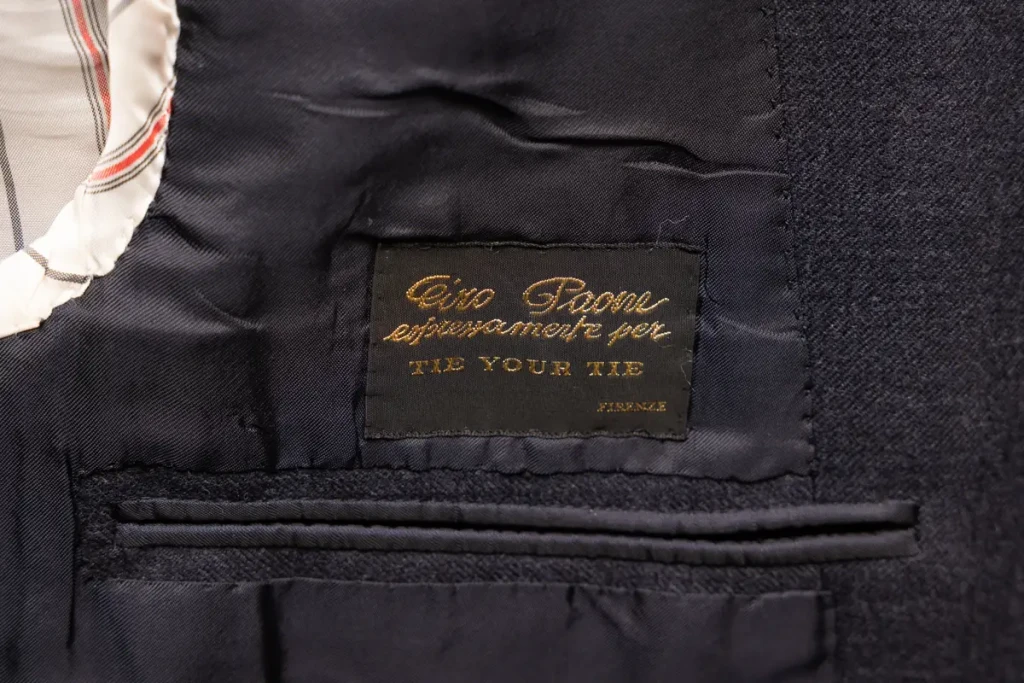
Although the label reads “Ciro Paone” instead of Kiton, it is the name of Kiton’s founder. Suits and jackets specially produced by Kiton for Tie Your Tie were labeled under the Ciro Paone name. The history and personal connections behind arrangements like this are part of what makes Italian classic style so intriguing.
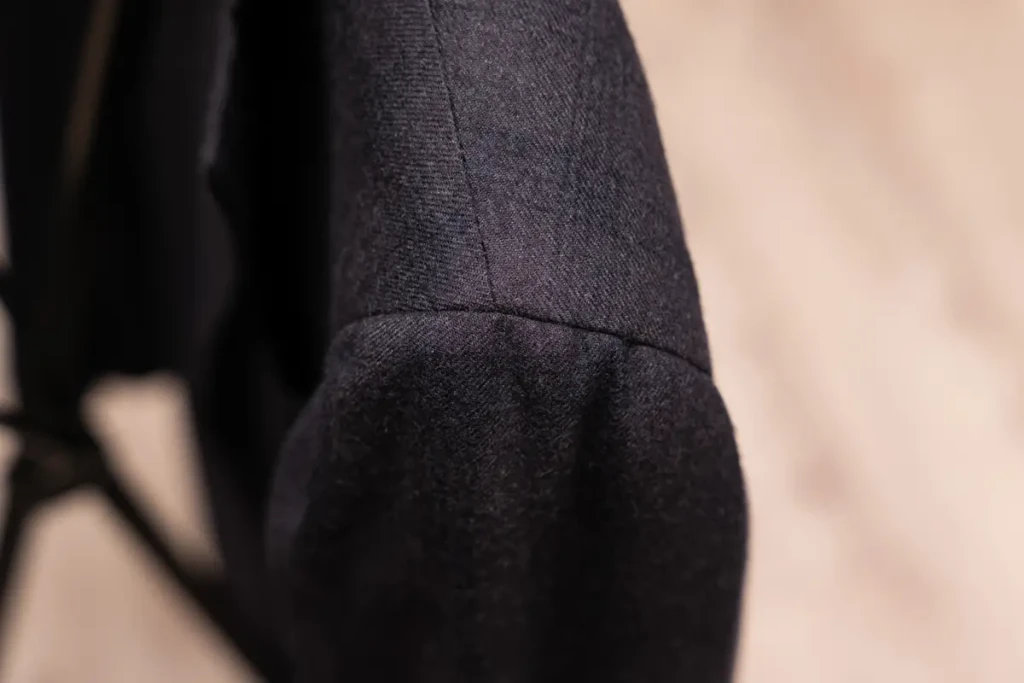
The slight wrinkles visible when the jacket is hung reflect the “manica camicia” sleeve construction, a signature of Neapolitan tailoring. The fabric itself carries a faint Glen check pattern.
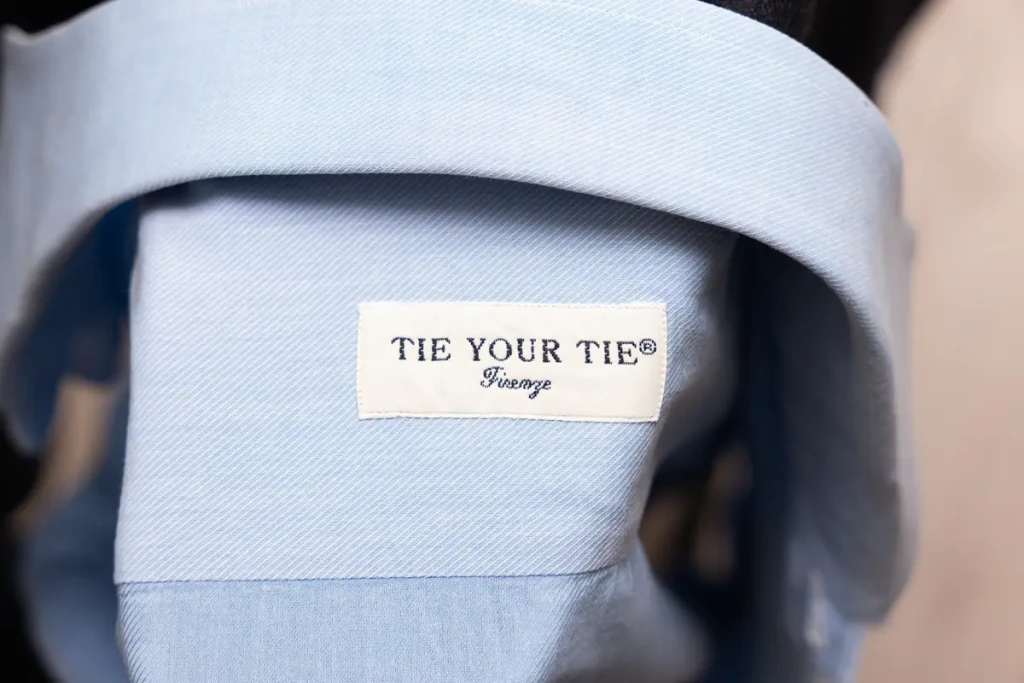
I paired the suit with an original Tie Your Tie shirt, of which I own several. Made from Oxford cloth, the fabric is surprisingly soft and comfortable. I usually remove the plastic collar stays when I buy the shirt. A well-made shirt should produce a natural collar roll without the collar tips lifting, and Tie Your Tie shirts are known for their particularly elegant roll.
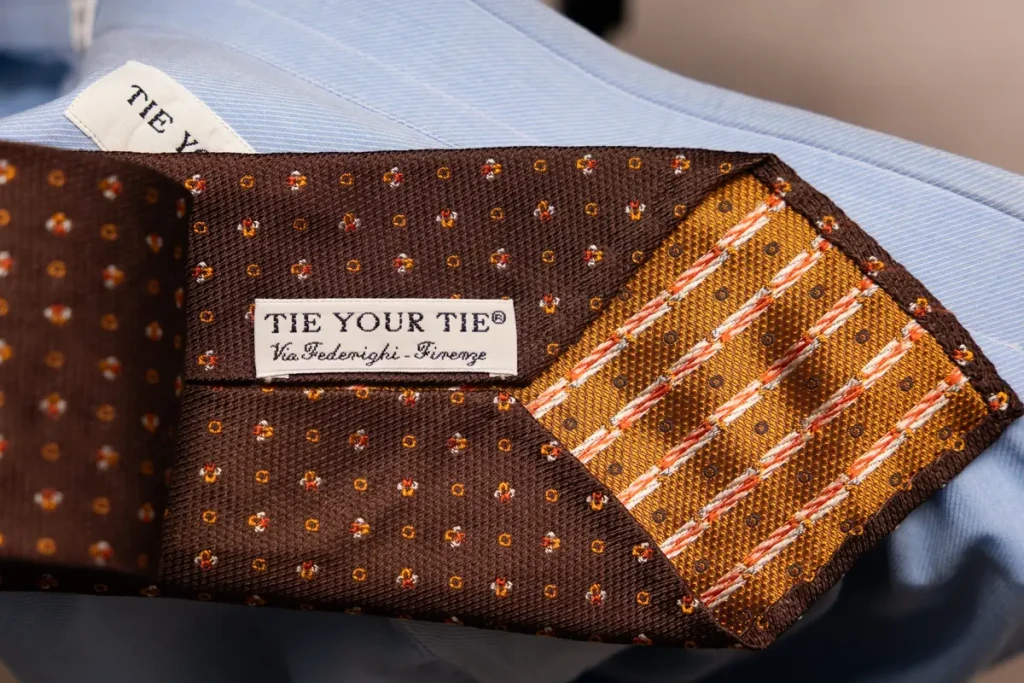
The tie features a brown irregular dot pattern and is made in the traditional sette pieghe construction, folded seven times without interlining. While Neapolitan house Marinella also produces sette pieghe ties, Tie Your Tie’s version uses a lighter fabric with a slightly more open weave, resulting in a softer, more relaxed look. I tend to choose Marinella for formal settings and Tie Your Tie when I want to introduce a more playful element.