
Buying the Formosa cashmere jacket at Artigiano ciao — and being moved by the way the shop’s owner thinks about clothes — pulled me toward Classico Italia, the Italian classic-tailoring tradition, and made me want to wear suits and jackets out of that lineage.
[ The Formosa Cashmere Jacket piece ]
The question I wanted answered was this: how do the jackets and suits tailored across the regions of Classico Italia manage to deliver both real comfort and a clean line at the same time?
If I can find an answer to the question that’s caught my curiosity, I think I’ll be able to enjoy jackets and suits — one of the more complete forms in the way men dress — with more understanding. That, in turn, helps train the eye.
The Formosa charcoal gray suit covered here gives form to a particular philosophy of how to dress — the maker’s, and the wearer’s — and that philosophy is different from what shows up in either a Brioni or a Kiton. This isn’t a question of which is better. It’s the difference between an off-the-rack Brioni or Kiton and a bespoke Formosa. The merits and the criteria on each side trace back to a different answer to a single question: how do you want to wear a suit?
Brioni Brunico
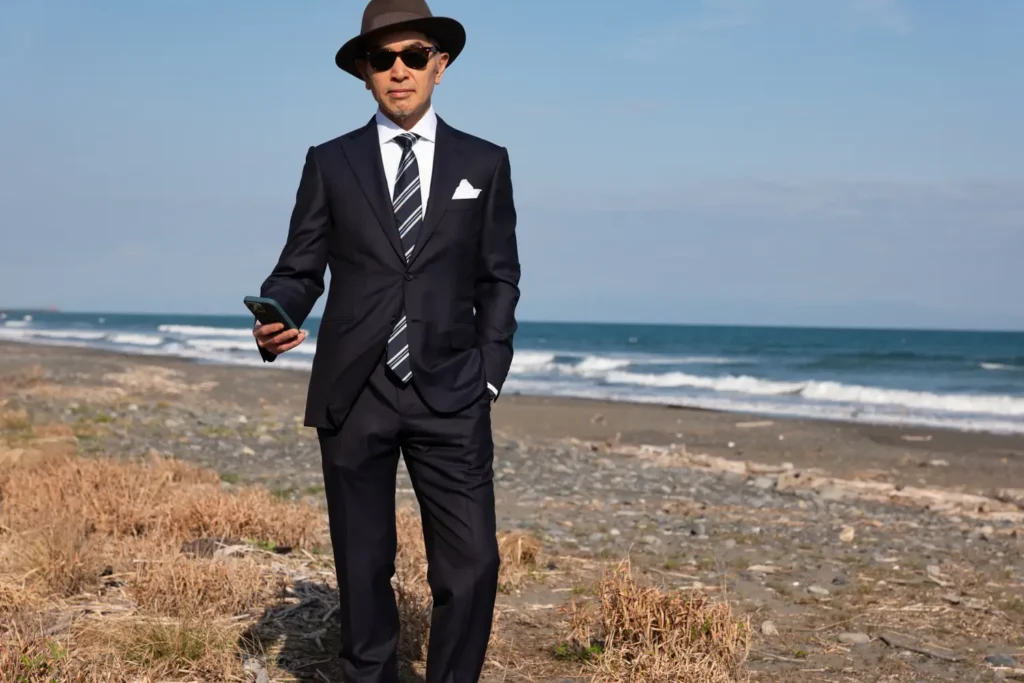
The Brunico is a post-2010 Brioni, so it’s cut close and slim, with a modern feel. The form is pared of any flourish, and you can read in it Brioni’s stance: the suit serves the wearer’s standing in public life.
Tie Your Tie Kiton
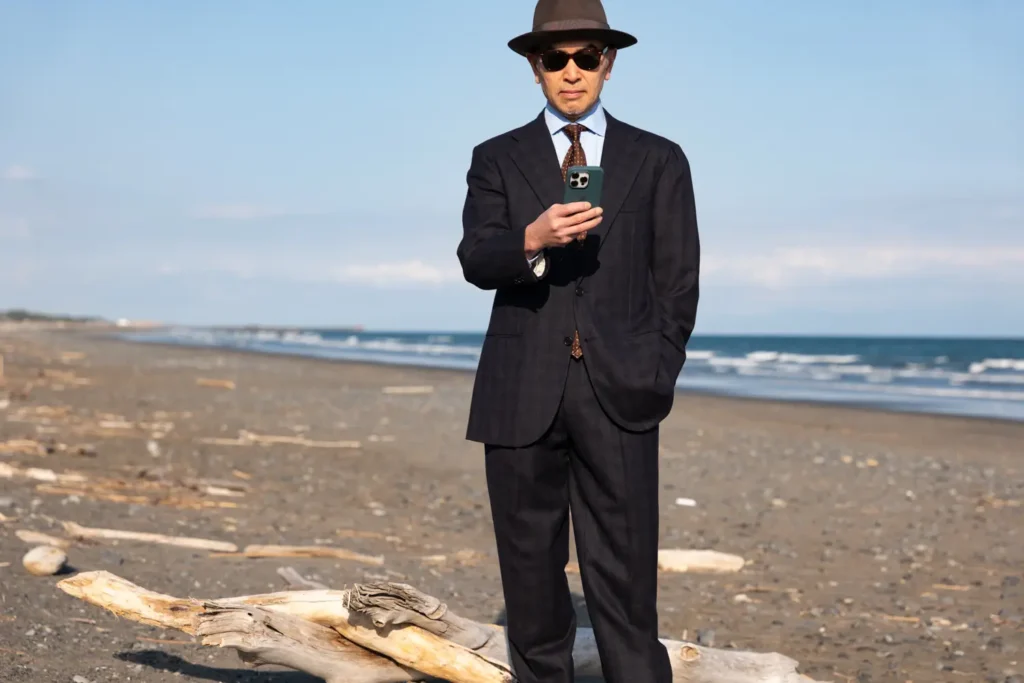
This is a 2005 suit, so the silhouette runs more relaxed than a post-2010 Brioni. Franco Minucci’s aesthetic comes through in the construction, and the result is a suit you can dress in with restraint and still find pleasure in.
Looking at the photographs side by side, I noticed the Tie Your Tie Kiton doesn’t have a concave shoulder — the line from shoulder to chest is built on rounded curves instead.
[ The Tie Your Tie Kiton piece ]
Formosa Charcoal Gray Suit
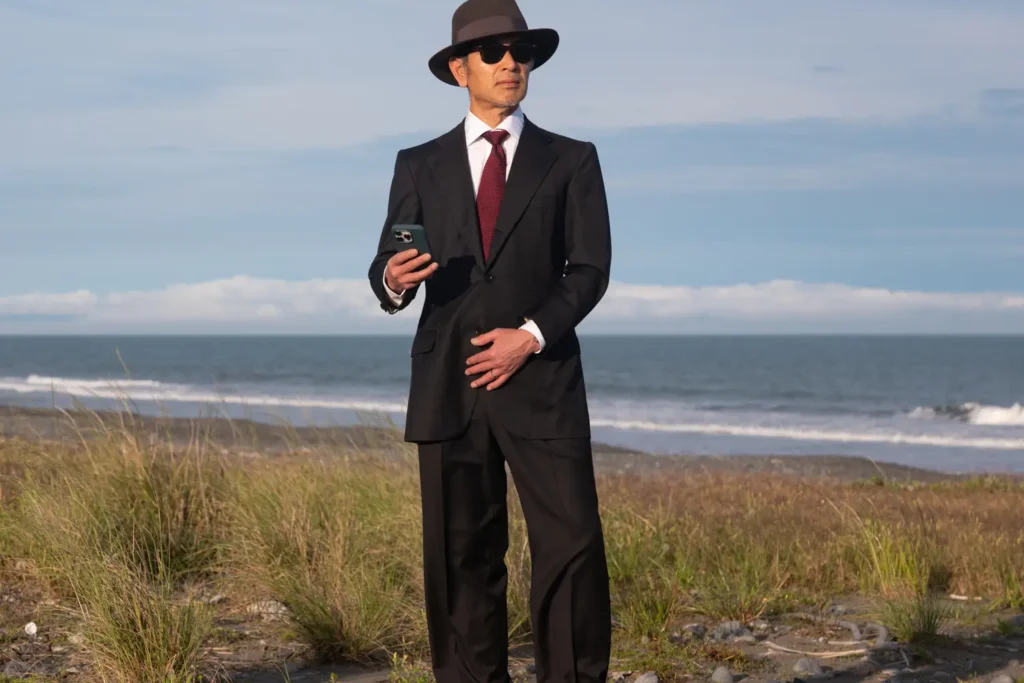
The Formosa Charcoal Gray Suit is also a 2005 piece, so like the Kiton, it sits in a more relaxed silhouette than the post-2010 Brioni. It comes out of the same Naples tradition as the Kiton, but here the shoulder is concave, and the overall form reads as a touch more linear and sharper.
I came into this suit secondhand — inherited it, in effect, from a previous owner. Worn on the body, it has real comfort, and a styling that draws out a more masculine presence — in measured form (and the measured part is the point).
Formosa Charcoal Gray Suit
The photographs were taken at the seaside, where the wind off the water was strong. Because the cloth is soft and light, the crease opens up and the trousers balloon. In practice, the trousers aren’t as wide as the pictures suggest — they sit at a measured width, clean in line.
A Protection-Detail Suit?
Looking at the photographs, the impression of myself in the suit came out different from what I’d imagined when I was checking the mirror at the shop — different, in a good way. This is a personal reading, but when I asked myself what kind of person I’d associate with my own image in the Formosa, the first thing that came to mind — strictly in movie terms — was someone working as a Secret Service agent on a protection detail.
Charcoal gray is as formal a color as dark navy, so my expectation, the way I’d had it with the Brioni, was that the suit would read as business or public office. That expectation was thoroughly upended.
In film terms, you might assume a dark suit with a hat and sunglasses would land closer to a mafia figure — the Godfather register. It doesn’t. It lands on a Secret Service protection detail instead.
The fact that it reads as Secret Service tells me something about the eye on both sides — Formosa’s tailoring, and the previous owner’s discernment in commissioning the suit bespoke. Working through why it reads that way, and why I find that discernment worth admiring, opens up one face of Neapolitan tailoring, and what it means to commission a suit from Formosa, a Neapolitan sarto.
1. Silhouette
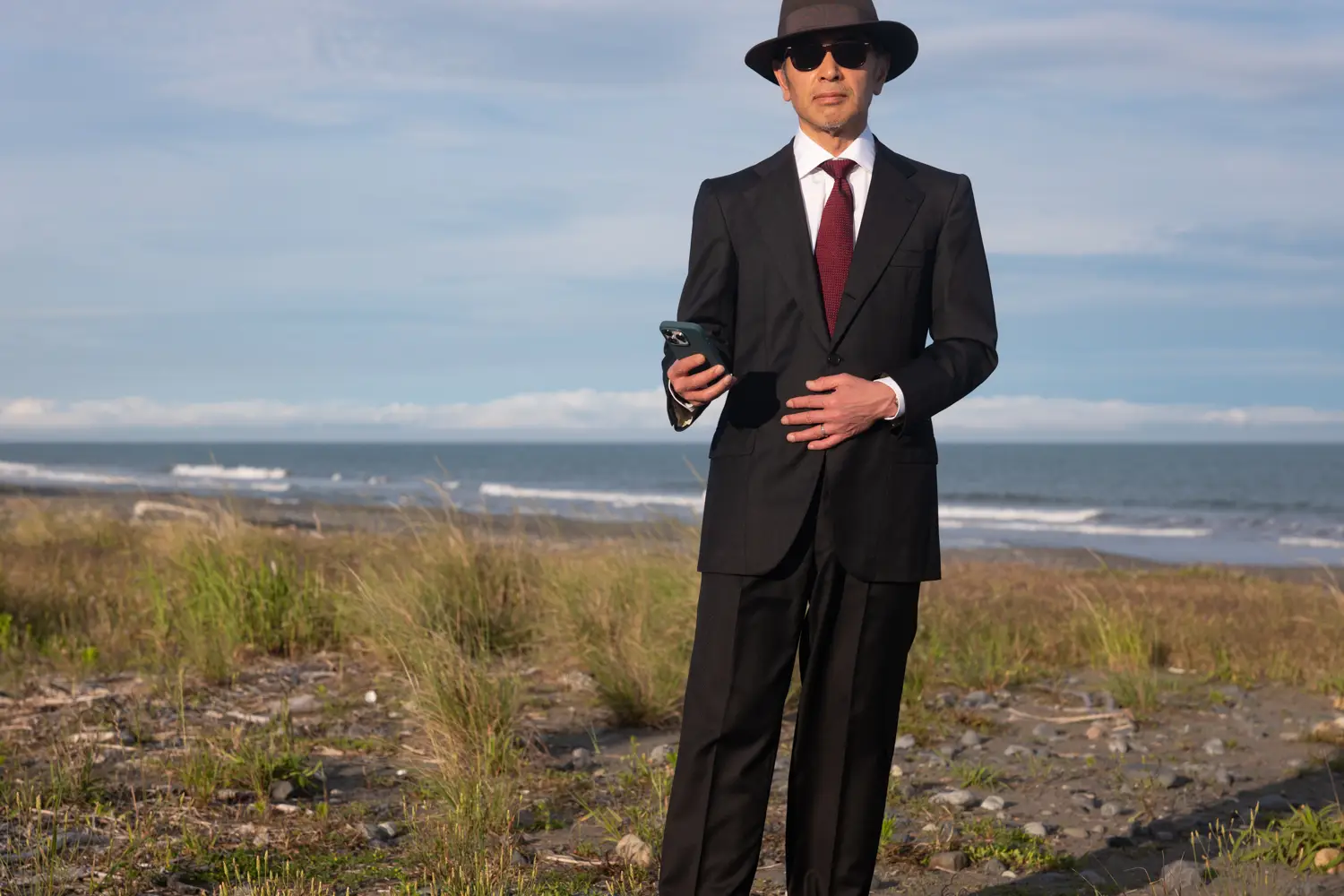
I touched on this in the Formosa cashmere jacket piece: one signature of Formosa’s tailoring is that the jacket is built to draw the eye up — a clean, vertically elongated line.
2. The Lapel

Undoing the front buttons, I open the jacket. One feature of the Formosa lapel is a gentle curve built into it, which means the styling holds whether you fasten the buttons or leave them open.
3. Shoulder and Chest

The concave shoulder, which didn’t read as strongly on the cashmere jacket, comes through clearly here. Looking at the jacket as a whole, the silhouette narrows just above the navel and flares out toward the shoulders and hips — it traces the shape of an X.
4. From the Back
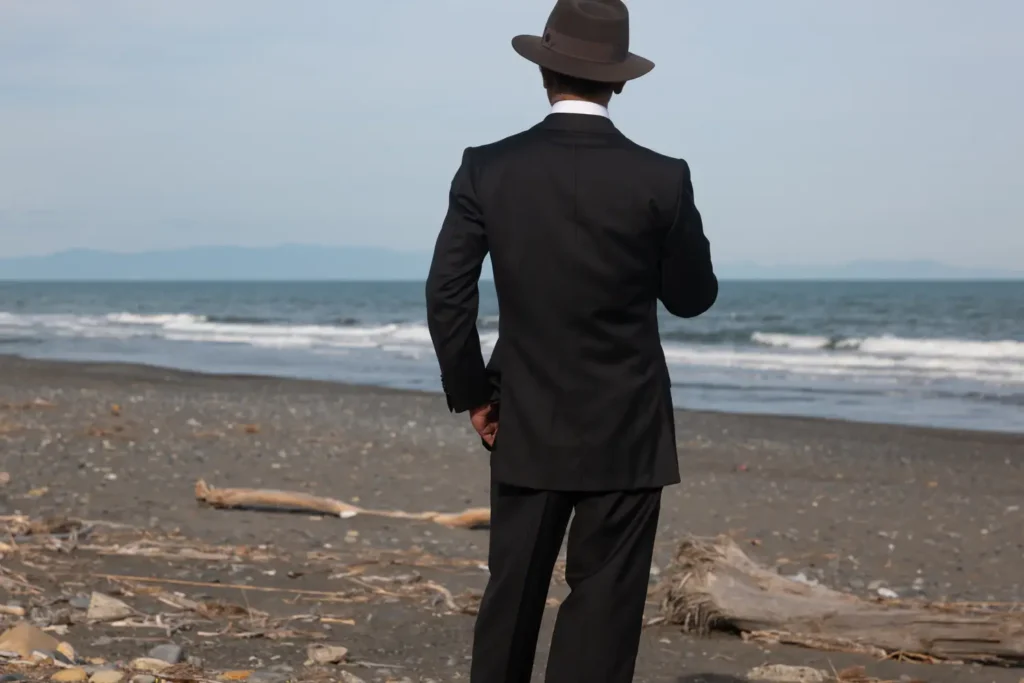
From the back, the Formosa signature — the vertically extended, clean line — comes through more clearly. The suit reads longer and trimmer than the actual measurements, and that’s down to the cut.
5. The Cloth
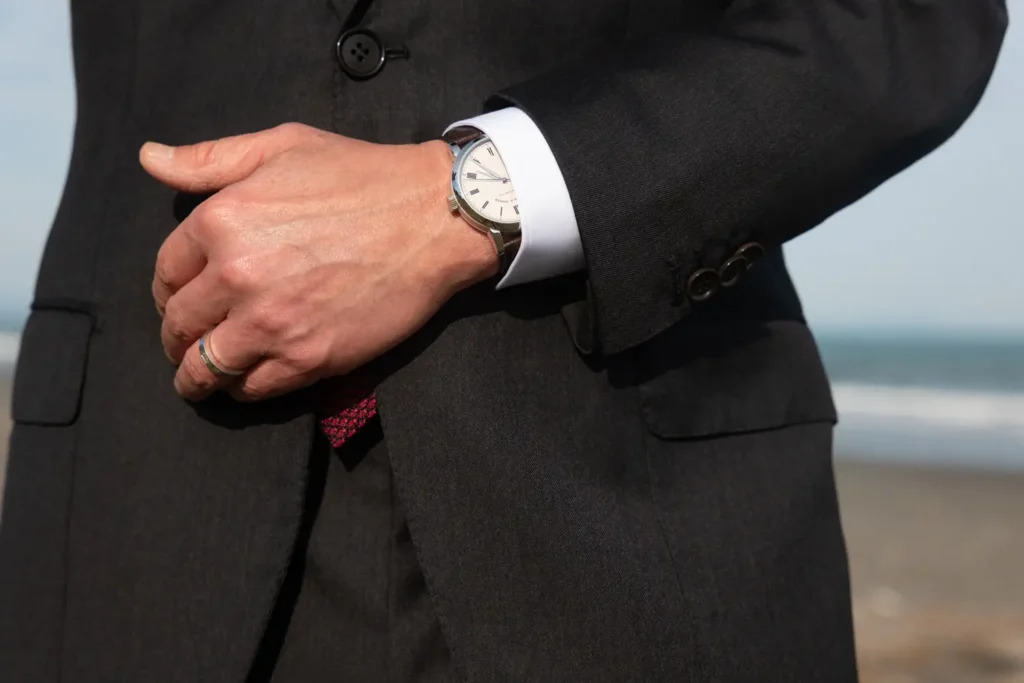
The color is a standard charcoal gray. Since it’s bespoke, I don’t have specifics on the cloth, but the hand tells me it’s a high-count, soft wool.